If you’ve ever unscrewed a cold soda, pried open a jar of pickles, or snapped a lid on a food storage container, you’ve probably never stopped to think about how those lids go from a blank piece of material to the tight, reliable seals you rely on every day. As a lid supplier who’s worked in this industry for over 12 years, I’ve walked the floors of dozens of production plants, troubleshooted line bottlenecks late at night, and learned firsthand just how much precision and consistency go into mass-producing even the simplest-looking lid. It’s not just stamping metal or molding plastic—it’s a highly orchestrated process that balances material science, speed, and quality to meet the demands of everything from global food brands to small craft breweries. Let me take you behind the scenes and break down exactly how lids are mass-produced. Lid
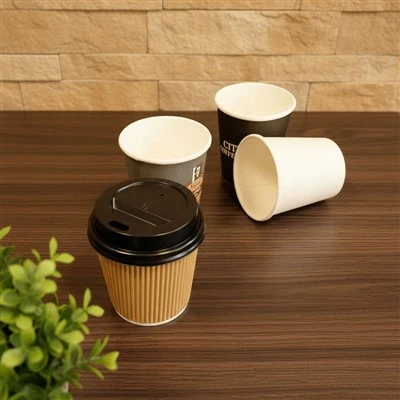
First, let’s start with material selection, because this step sets the entire foundation of a lid’s performance. The right material depends entirely on what the lid is sealing, but two categories dominate the market: metal (for cans, jars, and aerosol containers) and plastic (for food storage, cosmetic jars, and single-use beverage cups). For metal lids, the most common material is tin-plated steel or aluminum. Tin-plated steel is a go-to for food applications because it’s cheap, durable, and easy to shape, while aluminum is lighter, more corrosion-resistant, and perfect for beverage can ends that need to flex with carbonation. For plastic lids, polypropylene (PP) is the workhorse—it’s flexible, microwave-safe, and food-grade, making it ideal for takeout containers. Sometimes we use polyethylene terephthalate (PET) for rigid jar lids or low-density polyethylene (LDPE) for flexible squeeze bottle tops.
But here’s a detail most people don’t know: before any material even touches a production line, it goes through a rigorous inspection. For metal sheets, technicians test for uniform thickness (variations as small as 0.001 inches can cause seal leaks), scratch resistance, and adherence of the tin coating, which prevents food or beverage from reacting with the metal. For plastic pellets, we check for moisture content—even a tiny amount of water in pellets can create bubbles during molding, which weaken the lid’s structural integrity. In my early days as a supplier, I once sent a batch of PP lids to a client that had hidden moisture bubbles, and we had to scrap 20,000 units at our own cost. That mistake taught me never to skip the pre-production material checks, no matter how tight the deadline.
Once materials are approved, the production process splits into two main paths: metal lid manufacturing and plastic lid manufacturing, each with its own specialized equipment. Let’s start with metal lids, since that’s where I cut my teeth. The core process for metal lids is called deep draw stamping, a high-speed operation that can turn a flat metal sheet into a finished lid in less than two seconds. Here’s how it works: first, large coils of metal are fed into a stamping press, which cuts the metal into small, circular blanks using a sharp die. These blanks are then carried through a series of progressive dies—think of it as a conveyor belt of custom tools that shape the lid step by step. The first die forms the rim of the lid, the next adds the curl that will fit around a jar or can, and subsequent dies stamp in any tabs, vents, or indentations (like the pull tab on a soda can).
A critical part of metal lid production is sealing compound application. For screw-on jar lids, we apply a thin, uniform bead of food-grade rubber or plastisol around the inner rim. This is non-negotiable—without that compound, the lid won’t create an airtight seal, and stored food will spoil. In the old days, this was done manually, but modern plants use automated dispensing machines that can apply the compound in a perfect circle, with no gaps or excess. The machines are calibrated every hour to adjust for pressure, because even a 10% variation in flow rate can ruin a batch of lids. Once the compound is applied, lids go through a curing oven, which heats the compound to solidify it so it doesn’t smudge or come off during packaging.
For plastic lids, the process is mostly injection molding, though some thin, flexible lids use thermoforming. Injection molding is ideal for plastic because it allows for complex shapes—like lids with flip-top spouts, child-resistant closures, or embossed brand logos. Here’s how that works: plastic pellets are fed into a heated barrel, where they’re melted into a uniform liquid. This molten plastic is injected under high pressure (up to 10,000 pounds per square inch, depending on the lid size) into a mold cavity, which is the exact shape of the finished lid. The mold cools rapidly—usually with circulating water—so the plastic hardens in just a few seconds. Then the mold opens, and a robotic arm ejects the finished lid onto a conveyor belt.
Thermoforming, used for thinner lids like those on disposable yogurt cups, is a different process: a sheet of plastic is heated until it’s flexible, then stretched over a mold using suction and pressure. Excess plastic is trimmed away, and the lids are ejected. Thermoforming is faster than injection molding for simple designs, but it’s less precise, so it’s mostly used for single-use items where cost is king.
Now, quality control is the make-or-break step that separates reliable lid suppliers from ones that cut corners. At my facilities, we don’t just test lids at the end of production—we have checks at every stage. For metal lids, we use ultrasonic sensors to measure the thickness of the sealing compound, because even a tiny gap can let air in. We also perform leak tests: lids are submerged in water, and air is pumped into the inside; if bubbles come out, the lid is rejected. For plastic lids, we check for dimensional accuracy with vision systems that scan every lid as it moves down the line, rejecting ones that are too small to fit a jar or too big to seal properly. We also test the tensile strength of pull tabs and flip-top closures, making sure they don’t break off when a customer uses them.
In addition to in-line checks, we do periodic destructive tests. Once a week, we take a sample of 100 lids from each production run and simulate years of use: we twist screw-on lids 100 times to check for seal degradation, we drop lids from 6 feet to make sure they don’t crack, and we expose them to extreme temperatures (from -20°F to 160°F) to ensure the sealing compound and plastic don’t warp. A few years ago, a client asked us to supply lids for a line of frozen dinners, so we adjusted our cold-resistant material formula after testing lids at -25°F—otherwise, the lids would crack when a customer took them out of the freezer.
Packaging and distribution are the final steps, but they’re still important for a lid supplier to get right. Lids are delicate—metal lids can scratch, plastic lids can scuff, and sealing compounds can be damaged if they’re stacked too tightly. That’s why we use custom packaging: for small runs, lids are packed in paper trays that separate layers, and for large runs, we use shrink-wrapped pallets with protective edge caps to prevent damage during shipping. We also add traceability codes to every batch, so if a client ever has a quality issue, we can trace the lids back to the exact metal coil or plastic pellet batch they were made from. This is a huge relief for clients, especially large food brands that need to recall products quickly if there’s a problem.
Over the years, I’ve seen the industry evolve, too. 10 years ago, most mass-produced lids were one-size-fits-all, but now customers are asking for custom designs, sustainable materials, and faster lead times. That’s why my team has invested in flexible production lines that can switch between metal and plastic lids in 15 minutes, rather than the 2 hours it took before. We’ve also started offering lids made from recycled materials, like post-consumer plastic for food storage lids and recycled steel for beverage can ends—something that didn’t meet quality standards a decade ago, but is now a top request from eco-conscious brands.
At the end of the day, being a lid supplier isn’t just about stamping or molding parts. It’s about understanding that a lid is more than a small piece of plastic or metal—it’s the thing that keeps food safe, prevents spills, and lets consumers use products with confidence. If you’re in the market for reliable, custom mass-produced lids, I’d be happy to walk you through our production line, answer your questions, or work with you to develop a lid that fits your exact needs. Don’t hesitate to reach out to discuss your project.
Ripple Wall Paper Cup References
- Henton, J. (2021). Metal Packaging Materials and Manufacturing. Industrial Press.
- Rosato, D. V. (2019). Injection Molding Handbook (5th ed.). Hanser Publishers.
- Food and Drug Administration. (2022). Food-Grade Packaging Materials: Compliance Guidelines. U.S. Government Publishing Office.
- Society of Plastics Engineers. (2020). Thermoforming for Packaging Applications. SPE Publications.
- American Iron and Steel Institute. (2021). Tin-Plated Steel for Food Packaging: Production and Quality Standards. AISI Press.
Wuhan Xinyongan Industry and Trade Co., Ltd.
Address: No. 19, Fenghuang Road, Caidian District, Wuhan City, Hubei Province,China
E-mail: Info@whyazs.com
WebSite: https://www.ipackpartner.com/
