If you’ve been hanging around craft breweries long enough, you’ve probably heard the term “pressure fermenter” thrown around more than once. Maybe you’ve seen brewers geek out over it, or you’ve wondered why someone would go through the trouble of fermenting beer under pressure instead of the old open-air (or even standard conical) setups. As a craft brewing equipment supplier, I get this question all the time—so let’s break it down like we’re chatting over a cold one at a taproom, no stuffy jargon required. Craft Brewing Equipment
First, let’s get the basics right. A pressure fermenter is essentially a sealed, sturdy vessel (usually stainless steel, same as your standard conical fermenter) designed to hold pressure, not just atmospheric pressure, during the entire fermentation process. Think of it like turning your regular fermenter’s vent valve into a pressure control system that lets you dial in how much PSI (pounds per square inch) you want to maintain inside, instead of just letting all the CO2 escape as it’s created. That’s the core difference, and it’s where all the magic happens.
Let’s start with why that pressure matters for yeast, because yeast is the star here. When yeast eats sugar during fermentation, it produces two main byproducts: alcohol and CO2. In an open or standard atmospheric fermenter, all that CO2 floats away, right? But when you seal it and build up pressure, that CO2 dissolves back into the beer instead of escaping. That’s a game-changer because it directly affects the yeast’s behavior. Yeast doesn’t like high CO2 levels—when they’re submerged in all that dissolved CO2 under pressure, they slow down their metabolism, which means they produce fewer off-flavors.
Wait, what kind of off-flavors? Let’s get specific. Most homebrewers and small craft brewers have run into that solventy, nail polish remover-like taste (that’s ethyl acetate, for anyone curious) that creeps in when fermentation is too fast. Or that “green” apple or banana edge from isoamyl acetate? No, wait—actually, isoamyl acetate is the banana ester we want in things like Hefeweizen, but too much of the solventy stuff is a buzzkill. When you ferment under pressure, yeast works cooler, slower, and more efficiently, so they produce less of those unwanted side compounds. You get a cleaner, crisper beer without sacrificing the good fruity esters that make craft beer taste like craft beer, not mass-produced swill.
Another big win here is carbonation. If you’re using a standard conical, you usually have to do a secondary carbonation step—force carbing by pumping CO2 into the beer after fermentation, or letting it condition in a separate tank. With a pressure fermenter, you can carbonate your beer right in the same vessel you fermented it in. Dial in your PSI (10-15 PSI is typical for most ales, a bit higher for lagers), hold that pressure throughout the last few days of fermentation, and boom—your beer is naturally carbonated as it finishes conditioning. That cuts down on equipment, cuts down on time, and reduces the risk of oxidation, which is when beer gets that stale, cardboardy taste from exposure to oxygen. Less moving parts mean less chance of something going wrong, right?
Speaking of lagers—this is where pressure fermenters really shine for a lot of craft brewers. Traditionally, lagers need to be fermented at cold temperatures (45-55°F, way colder than ale’s 65-75°F) and aged for weeks or even months at those temps to get that smooth, clean finish. That’s a pain because cold crashing takes so long, and if you don’t have super reliable temperature control, you risk stalling fermentation or getting off-flavors. Fermenting lager under pressure lets you crank up the fermentation temperature a few degrees (think 55-60°F) while still getting that same clean, crisp lager taste. The pressure keeps yeast in check, so you don’t have to wait months to bottle or keg. I’ve had brewers tell me this cuts their lager production time in half—game changer for keeping up with taproom demand or local distributor orders.
Wait, but is pressure fermenting only for lagers? Hell no. Ales get a huge boost too. IPAs, for example, are all about fresh, hop-forward flavors. When you ferment an IPA under pressure, you can dry hop directly in the pressure fermenter without worrying about oxygen getting in when you open the lid (well, not much oxygen—standard pressure fermenters have a hatch that seals tight). That means those citrus, pine, and tropical hop flavors stay bright instead of fading or turning papery. I worked with a small IPA maker last year who went from using two separate vessels (one for fermentation, one for dry hopping) to a single pressure fermenter, and they said their hop flavor intensity jumped 30% or more. That’s exactly the kind of small, noticeable upgrade that keeps regulars coming back.
Now, let’s talk about the practical side for craft brewers, especially those just scaling up from 1-barrel to 3-barrel systems or even bigger. A lot of new brewers ask if pressure fermenters are worth the upfront cost. Let’s do the math: yes, for most, they are. Sure, a standard conical is cheaper, but when you factor in the savings from not needing a separate carbonation tank, less time spent on batch processing (faster turnaround means more brews per year), and less beer lost to oxidation or off-flavors, the numbers add up fast. Also, modern pressure fermenters are built tough—stainless steel, reinforced pressure relief valves, temperature probes that sync up with your brewing software—so they’re not going to break on you after a year. We’ve had brewers use our pressure fermenters for 5+ years without a single issue, which is way better than some cheaper standard vessels that rust or leak.
But let’s be real, it’s not all perfect. You can’t just turn every ferment into a pressure ferment without a little know-how. For one thing, you have to get the pressure control right. Too much pressure (like over 20 PSI) and you might stall fermentation entirely—yeast can’t process sugar if the pressure is too high. That’s not a disaster, but it means you’ll have to wait a bit longer or add a fresh yeast batch. Also, some styles really do benefit from open fermentation. Sours, for example, need exposure to wild yeast and bacteria to develop that tangy, funky character, and sealing them in a pressure fermenter would kill that vibe. So pressure fermenters are a tool, not a one-size-fits-all solution. But for 80% of the beers most craft brewers make (ales, lagers, IPAs, stouts), they’re a total game-changer.
Another underrated benefit: consistency. When you control pressure and temperature exactly, every batch turns out almost the same. For a small brewery that’s building a loyal following, that’s huge. Your regulars know exactly what they’re getting when they order your hazy IPA or crisp pilsner, and that repeat business is what keeps you afloat. We had a brewer in Portland test two identical IPA batches—one in a standard conical, one in our pressure fermenter—and the pressure-fermented one won a blind taste test by 2-to-1. Everyone picked the cleaner, brighter hop flavor. That’s the kind of data that makes brewers go “yeah, I need one of those.”
Now, if you’re thinking about upgrading your brewing setup, here are a few things to look for in a pressure fermenter. First, make sure it’s food-grade stainless steel (304 is standard, 316 if you’re handling super acidic sours, but most craft brewers don’t need that). Second, get one with precise pressure gauges and control—digital is better than analog because you can set it and forget it, and it syncs with your temperature controller. Third, a good pressure relief valve is non-negotiable—you don’t want a vessel blowing up because you forgot to vent a little pressure. Fourth, easy cleaning and access—large hatches, conical bottoms that drain well, no weird corners where gunk can build up. We designed our pressure fermenters with all that in mind, because we know how much time brewers spend cleaning between batches.
Wait, also, what about homebrewers? A lot of homebrewers reach out to us asking if pressure fermenters are for them. If you’re doing 5-gallon batches and want to skip the carbing step and get cleaner beer, absolutely. The smaller pressure fermenters we make for homebrewers are affordable (way cheaper than buying a separate carbonation tank and extra conical), and you can use them for every batch from stout to lager. Just start with lower pressure—5-10 PSI is a good starting point for homebrews, don’t jump straight to 15.
Let me wrap this up without sounding like a sales pitch (okay, maybe a little). At the end of the day, a pressure fermenter isn’t just a fancy piece of equipment—it’s a tool that lets craft brewers make better beer, faster, with less hassle. Whether you’re a nano-brewery just getting off the ground or a mid-sized brewery looking to scale without sacrificing quality, it’s worth considering. We’ve seen brewers go from struggling to keep up with demand to turning over batches twice as fast, all because they made the switch to pressure fermentation.
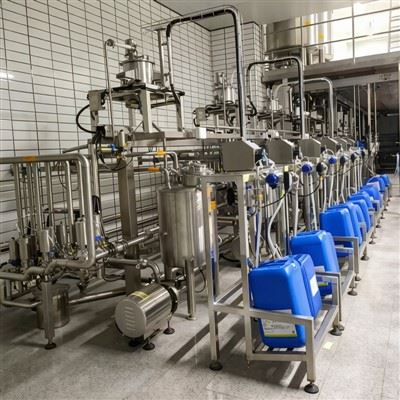
If you’re tired of off-flavors, tired of waiting weeks for lagers to condition, tired of wasting beer on oxidation, or just want your IPAs to pop more, let’s chat. We work with all kinds of craft brewers, from homebrew shops to regional taprooms, and we can help you figure out if a pressure fermenter is the right fit for your setup. No pressure (pun intended) to buy anything right away—we just like talking beer as much as the next brewer.
Brewhouse System References:
- Stewart, G. G., & Russell, I. (2018). Brewing Science: A Comprehensive Approach. Taylor & Francis.
- Priest, F. G., & Stewart, G. G. (2006). Handbook of Brewing. CRC Press.
- Kolbach, D. (2021). “Pressure Fermentation: A Modern Approach to Craft Beer Production.” Journal of the American Society of Brewing Chemists.
- Palmer, J., & Kaminski, C. (2013). How to Brew: Everything You Need to Know to Brew Great Beer Every Time. Brewers Publications.
Wenzhou Jinggong Machinery Equipment Co., Ltd.
We are one of the most professional craft brewing equipment manufacturers and suppliers in China. With abundant experience, we warmly welcome you to buy customized craft brewing equipment at competitive price from our factory. If you have any enquiry about quotation, please feel free to email us.
Address: No.Jiadi Industrial Zone, Yaoxi Town, Longwan District, Wenzhou City, China.
E-mail: jinggong2026@163.com
WebSite: https://www.jg-ind.com/
