If you’ve ever walked through a fabrication shop or a job site where welded connection fittings go up, you’ve probably noticed that distortion isn’t just a minor hassle—it’s a showstopper. I’ve been in the welded connection fittings supply business for almost 12 years, and I can’t tell you how many times a customer has called me panicking because a batch of their elbows, tees, or couplings came out of the welder warped so bad they couldn’t line up with the pipe run. Some of these folks just wing it, clamp the fitting tight, crank up the amperage, and hope for the best—but that approach almost never works. Distortion isn’t some random flaw; it’s a predictable result of how heat moves through metal during welding. And over the years, I’ve honed a set of practical, science-backed strategies to handle it, not just as a supplier who ships the fittings, but as someone who works side-by-side with welders and fabricators every week. Welded Connection Fittings
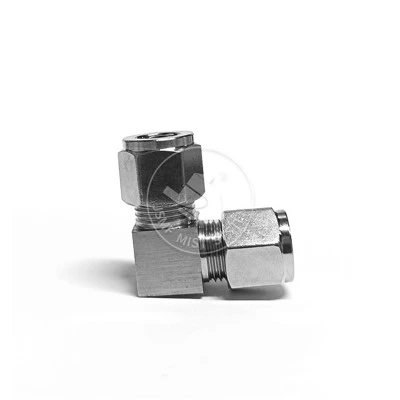
Let’s start with the basics of why distortion happens, because if you don’t understand the root cause, you’ll never fix it right. Welding works by melting a small area of the fitting and the pipe (or whatever you’re connecting) to create a strong bond. When that tiny area heats up, the metal around it expands. But the metal further away from the weld stays cool and rigid, so it can’t expand the way the hot area wants to. Once the weld cools, the hot, expanded metal shrinks as it returns to room temperature. That shrinkage pulls on the surrounding cool metal, and that’s what causes warping, bending, or even cracking. For connection fittings—like 90-degree elbows, reducing tees, or threaded couplings—this is extra tricky because these parts aren’t flat sheets or solid bars; they have curves, threaded ends, and uneven wall thicknesses. A 90-degree elbow might have a thicker wall on the straight ends than on the bend, so heat builds up unevenly, making distortion worse. Early in my career, a customer once sent back 50 tees that were warped so the branch no longer lined up square with the run, and when we dug into why, we found their welder had cranked too much heat on the thin branch without accounting for the thicker run’s heat sink. That’s when I realized: the first step to handling distortion is matching your approach to the specific fitting design.
Now, let’s get into the strategies I actually recommend to my customers, ones that have cut distortion rates by 80% for the fabricators who stick to them. First, pre-weld preparation is non-negotiable. I can’t tell you how many times I’ve seen welders skip this step because it adds 10 minutes to their shift, but it’s the single biggest factor in reducing distortion. One of the simplest pre-weld steps is tack welding strategy. A lot of welders just tack a few spots around the fitting and call it good, but that lets the metal move too freely as it heats. Instead, I tell them to use consistent, small tack welds—about ¼-inch long, spaced every 2 to 3 inches around the joint—and place them at symmetric points. For a tee, that means tacks at 12 o’clock, 3 o’clock, 6 o’clock, and 9 o’clock, not just two spots on one side. Symmetry keeps the expansion and contraction balanced, so one side doesn’t pull more than the other. Another pre-weld step: clamping. Clamping the fitting securely to the pipe (or to a work jig) before welding eliminates that wiggle room that lets distortion take hold. But not all clamps are equal. I’ve seen welders use big C-clamps that crush the fitting’s threads, ruining its usability. Instead, use spring clamps or padded clamps that fit around the joint without damaging the functional parts of the fitting. For larger fittings, a back-up bar—solid metal that sits behind the weld joint—acts as a heat sink, drawing excess heat away from the weld area and reducing how much the metal expands. I keep a stock of standard back-up bars in my warehouse, because my customers use them all the time for tees and elbows.
Next, the actual welding parameters. This is where a lot of people mess up: they use too much heat. Welders often think higher amperage means a stronger weld, but for preventing distortion, lower heat with the right travel speed is better. For carbon steel fittings, which make up 90% of what I supply, I recommend using a 15 to 20% lower amperage than what’s listed on most generic welding charts, and increasing travel speed by 10%. The key is to make a narrow, controlled weld instead of a wide, deep one that heats a large area. For example, when welding a 2-inch threaded coupling to a pipe, a welder using 140 amps at 6 inches per minute will create less distortion than one using 170 amps at 4 inches per minute. Another parameter tip: for fittings with uneven wall thickness, adjust the heat for the thinner side. A reducing tee has a thicker run and a thinner branch, so you should turn the amperage down slightly for the branch to avoid overheating that thin, flexible wall. I had a fabricator last year who was warping 4-inch reducing tees every other weld; once he adjusted the amperage for the thin branch, his distortion rate dropped to zero. Also, avoid weaving the weld bead. Weaving spreads heat across a wider area, which increases distortion. A straight, stringer bead (no weaving) keeps the heat concentrated exactly where it needs to be, cutting down on unwanted expansion.
Then there’s post-weld handling, which I know sounds counterintuitive—shouldn’t the weld just cool on its own? But how you cool the metal affects distortion too. Natural air cooling is the safest for most carbon steel fittings, but cooling too slowly can lead to residual stress, and cooling too fast (like spraying water on the weld) can cause uneven contraction, which actually makes distortion worse. For most of my customers, I recommend letting the weld cool to room temperature naturally in a still area, away from drafts that could create uneven cooling. For high-stress applications, like pressure piping, a post-weld stress relief heat treatment can help reduce both distortion and the risk of cracking. I work with a local stress relief shop that partners with a lot of my clients, and they tell me that 9 out of 10 times, adding a 1-hour stress treat at 1,100 degrees Fahrenheit eliminates any residual distortion that might have snuck in. Another simple post-weld step: straightening small distortions before the weld fully cools. If you catch warping within the first 5 minutes of finishing the weld, before the metal sets, you can tap it with a mallet or pull it into alignment with clamps—this is called hot straightening, and it’s way easier than trying to fix it after it’s cold. I’ve had welders bring me fittings they fixed this way, and they say it’s saved them hours of rework.
Of course, no strategy works for every application, so I always tailor advice to the type of fitting and the customer’s use case. For example, stainless steel connection fittings are a different animal than carbon steel. Stainless has a higher coefficient of thermal expansion, meaning it expands and contracts more than carbon steel, so distortion is more likely, and the strategies need to adjust. For stainless, I tell my customers to use even smaller tack welds, spaced a little closer together, and to use a shielding gas that’s pure argon instead of a mix—this prevents oxidation and keeps the weld strong without needing extra heat. For exotic alloys, like Hastelloy or aluminum, I work closely with the customer to adjust parameters even more, because those metals have unique thermal properties. Aluminum, for instance, expands twice as much as steel, so tack welds need to be even smaller, and you should clamp the fitting more securely to prevent movement during welding.
I also tell my customers to be proactive instead of reactive. A lot of them wait until they see a warped fitting to fix things, but testing a small batch first can save a lot of hassle. Before committing to a large order of fittings, run a test weld on 2 or 3 pieces, measure for distortion, adjust your parameters, and then proceed. Last quarter, a construction company placed an order for 200 forged steel elbows, and they were worried about distortion because their previous supplier’s elbows had come warped. We worked with them to run a test weld, adjusted their tack spacing and amperage, and when they ran the full batch, every elbow lined up perfectly. That’s the kind of relationship I build with my customers—this isn’t just selling a part; it’s solving a problem.

At the end of the day, distortion is a challenge, but it’s not an insurmountable one. It comes down to understanding why it happens, following practical pre, during, and post-weld steps, and matching those steps to the specific fitting you’re working with. For welded connection fittings, which are the backbone of piping systems in construction, manufacturing, and infrastructure, avoiding distortion is about more than just making a part look good—it’s about ensuring the system is safe, leak-free, and long-lasting. I’ve been in this business long enough to know that a customer’s success is my success. If you’re struggling with distortion on your welded connection fittings, or if you have questions about selecting the right fittings for your application, don’t hesitate to reach out to connect and discuss your project needs.
Snap-in Connection Piece References:
- ASME Boiler and Pressure Vessel Code, Section IX: Welding Qualifications.
- George E. Linnert, Welding Metallurgy, Volume 2: Carbon and Alloy Steels.
- American Welding Society (AWS) D1.1 Structural Welding Code – Steel.
- J.F. Lancaster, Metallurgy of Welding, 6th Edition.
- William Riley, Practical Welding: A Guide for Fabricators and Fitters.
Jinsheng Mist Forest-High Pressure Mist System
Jinsheng Mist Forest-High Pressure Mist System is one of the most experienced welded connection fittings manufacturers and suppliers in China, featured by quality products and low price. Please rest assured to wholesale bulk welded connection fittings in stock here and get pricelist from our factory. Customized orders are welcome.
Address: 109 Yonghong Road, Wenjiang District, Chengdu City, Sichuan Province, China
E-mail: nebufly@jinshengwusen.cn
WebSite: https://www.jswsmist.com/
