If you’re in the steel casting game, you know carburizers aren’t just random additives tossed into the mix—they’re the backbone of getting that right carbon content, which directly dictates the strength, hardness, and overall quality of your final castings. As a carburizer supplier who’s been knee-deep in this industry for over a decade, I’ve talked to dozens of foundry owners, metallurgists, and production managers who swear by different products, and honestly? The “best” carburizer isn’t one-size-fits-all—it depends on your specific casting needs, your furnace setup, and even your budget. But let’s break down the most common options, what works best when, and why so many of our regulars come back for the stuff we’ve refined over the years. Carburizer

First, let’s get the basics straight: carburizers are carbon-rich materials added to molten steel to adjust its carbon percentage (usually between 0.2% and 2.0% for steel castings, depending on if it’s low-, medium-, or high-carbon steel). The big no-nos here are impurities—like sulfur, nitrogen, or ash—because they mess with the steel’s microstructure, leading to defects like porosity or brittleness. That’s why not all carburizers are created equal, and skimping on low-grade stuff might save a few bucks upfront, but it’ll cost you in rejected parts down the line.
Let’s start with the most widely used option in foundries today: calcined petroleum coke (CPC). This is the workhorse of carburizers, and for good reason. It’s made by heating raw petroleum coke to super high temps (around 1200°C) to remove volatile matter, which leaves it with a carbon content of 98% or more. The impurities are really low too—usually sulfur under 0.5%, ash less than 0.3%. From what I’ve seen, CPC is perfect for most general steel castings, like those used in machinery parts, pipes, or automotive components. It burns consistently in induction furnaces (the most common setup for small to medium foundries) and doesn’t cause excessive fumes, which is a win for shop floors with air quality rules. A lot of our customers who make medium-carbon steel castings (the go-to for most structural parts) stick to CPC because it’s reliable and doesn’t require any extra steps to clean up impurities. The only downside? It’s not the fastest carburizer to dissolve—takes about 10 to 15 minutes in molten steel, so you can’t add it last minute if you’re rushing a heat.
Next up, there’s graphite petroleum coke (GPC), also called synthetic graphite carburizer. This one’s made by heating petroleum coke even hotter—up to 3000°C—to turn it into a graphite structure, which is way more soluble than regular CPC. The carbon content here is even higher, usually 99%+, and sulfur is super low (under 0.3%). Now, why would someone pay more for GPC? If you’re making high-quality steel castings, like for aerospace parts or heavy equipment that needs extreme strength, the speed of dissolution is a game-changer. GPC dissolves in 5 to 8 minutes, so it’s great if you’re working with limited furnace time or need precise carbon control for tight tolerances. We sell a lot of GPC to foundries that run large electric arc furnaces (EAFs) because those can handle the slightly higher upfront cost, and the fast dissolution means less energy waste. I once had a customer who was using regular CPC and had 2% of his castings rejected due to inconsistent carbon; switching to GPC cut his rejection rate down to less than 0.5%—that’s a huge difference for their bottom line.
Then there’s coal-based carburizer, specifically calcined anthracite coal. This is the budget option, no doubt about it. It’s made by heating high-grade anthracite coal to remove moisture and volatiles, with carbon content around 95% to 98%. The problem here is impurities—sulfur can be up to 1%, and ash is higher, around 0.5% to 1.5%. So when would you use this? Only for low-end, non-critical steel castings, like decorative hardware or small utility parts. We don’t push this to customers making industrial-grade castings because the impurities lead to more defects, but some small foundries that are just starting out or have tight budgets for trivial projects do go for it. I always warn them, though, that they’ll end up with more reworks later if they try to use coal-based for anything that needs to hold up.
Wait, there’s also natural graphite carburizer, which is made from mined graphite flakes. This one’s super high carbon (99%+), but it’s more expensive than GPC because of the mining and processing. The big advantage here is that it dissolves almost instantly—like 2 to 3 minutes—so if you’re in a pinch and need to adjust carbon right before casting, natural graphite is your guy. But it’s not as pure as synthetic graphite sometimes, and the flakes can cause a bit of porosity if you don’t add it correctly. We don’t recommend it for large-scale production because the cost adds up fast, but it’s a good backup for foundries that occasionally have to fix a carbon imbalance mid-heat.
Now, let’s talk about what actually matters when picking, because I see a lot of customers overcomplicating it. First, know your steel grade. If you’re making ductile iron or low-carbon steel (for things like sheet metal parts), you don’t need a super fancy carburizer—CPC will do the trick. If you’re making high-carbon tool steel or heavy machinery castings, GPC or natural graphite is non-negotiable. Then, check your furnace type: induction furnaces work best with CPC because the slower burn is more controlled, while EAFs love GPC because the high heat helps it dissolve fast. Oh, and don’t sleep on sulfur levels! High sulfur in your carburizer will make steel brittle, so if you’re casting parts that need to withstand shock (like gears or crankshafts), you need a carburizer with under 0.4% sulfur—CPC or GPC, not coal-based.
I also want to call out a common mistake I see: some people mix carburizer types to save money, like adding a little coal-based to CPC. That might seem smart, but the impurities add up, and you’ll end up with inconsistent carbon in your steel. We do custom blends for some customers, but only if they tell us exactly what their carbon target is and their impurity limits are—no random mixing, that’s how you get bad castings.
As a supplier, we test every batch of carburizer we send out to make sure it meets those low impurity standards—no cutting corners here. We’ve had customers come to us after dealing with other suppliers’ carburizers that had 1% sulfur, which made their entire heat of steel unusable. That’s the stuff that gives carburizers a bad name, and we refuse to do that. Our CPC has a consistent 98.5% carbon, 0.4% max sulfur, and 0.3% ash, which is the sweet spot for most general steel castings. Our GPC is even better—99.2% carbon, 0.25% max sulfur, which is why it’s become so popular with high-volume foundries.
Let me wrap this up with a quick breakdown to make it easy: if you’re making general-purpose steel castings (machinery parts, pipes, utility items), go with calcined petroleum coke. If you’re making high-performance, critical castings (aerospace, heavy equipment, gears), spring for graphite petroleum coke. If you’re on a super tight budget for non-critical parts, coal-based is okay—just test a small batch first. And if you ever need a last-minute carbon fix, natural graphite is your go-to.
At the end of the day, the best carburizer for your steel castings is the one that lines up with your specific needs—not the cheapest, not the most expensive. If you’re not sure, just reach out—we’ll walk you through your setup, your casting specs, and even send you small test batches so you can try it before committing to a full order. No pressure, just honest advice from someone who’s been in the trenches with this stuff for years.
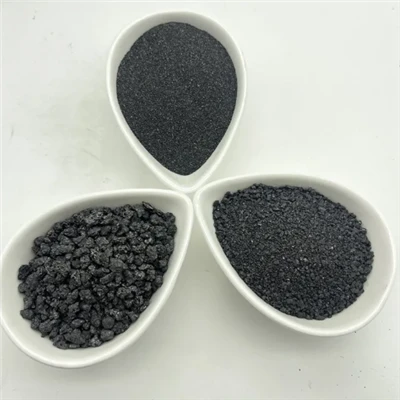
Don’t let bad carburizer ruin your castings—let’s get you the right product for your process. Get in touch to chat through your requirements and find the perfect fit for your steel casting operation.
Regular Power Graphite Electrode References
- ASM International. (2019). Steel Castings: Technology and Applications. ASM Handbook, Vol. 15.
- The British Foundry Association. (2021). Carburizers for Ferrous Foundries: Quality Standards and Application Guidelines.
- Zhang, L., & Wang, H. (2020). Effect of Carburizer Impurities on Microstructure and Mechanical Properties of Carbon Steel Castings. Journal of Materials Processing Technology, 278, 116542.
Hebei Fengchao Import and Export Co., Ltd.
Hebei Fengchao Import and Export Co., Ltd. is one of the most professional carburizer manufacturers and suppliers in China. As we have world-leading production equipment and strong manufacturing capabilities, we warmly welcome you to wholesale bulk premium carburizer made in China here from our factory. Also, quotation is available.
Address: Yigao Intelligent Plaza, Building A, Congtai District, Handan City, Hebei Province, China
E-mail: China@fc-graphite.com
WebSite: https://www.fc-graphite.com/
