When it comes to protecting photovoltaic (PV) systems from the often-unseen threat of voltage surges, there’s a quiet debate that I hear from installers, homeowners, and even fellow suppliers every single week: should you go the professional installation route for your PV Surge Protective Devices (SPD), or take the DIY approach? As someone who’s spent the last decade working directly with PV system designers, electricians, and homeowners as a PV SPD supplier, I don’t just see this as a technical choice—I see it as a choice that can make or break a solar system’s long-term performance, reliability, and lifespan. PV Surge Protective Device
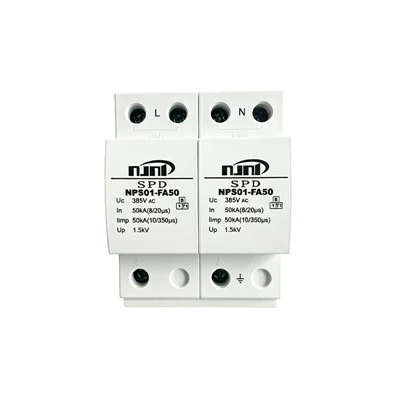
Let me start with a story that’s stuck with me for years. A few back, a homeowner named Jake reached out to our support team panicking. His 12-panel rooftop PV system had stopped producing power, and when his local electrician inspected it, he found the array’s main PV SPD had failed catastrophically—so badly that it had fried three of his solar panels and his grid-tied inverter. When Jake admitted he’d bought an SPD online and installed it himself to save $150, the electrician shook his head and pointed to the burned, blackened wiring. “You installed the SPD backward,” he said. “The terminal labeled ‘PV Array’ was wired to the grid side, and that mismatch sent a surge straight through the system when a summer storm rolled through.” That incident cost Jake over $8,000 in repairs—not to mention the weeks he went without solar power. It’s a stark example of how a single DIY misstep can erase any upfront savings on an SPD.
First, let’s ground this in the science of how PV SPDs work, because that’s where the critical differences between professional and DIY installation come into play. PV systems are designed to convert DC power from solar panels into AC power for the grid, and they operate at specific voltage levels—usually between 24V and 600V for residential systems, up to 1,000V or higher for commercial arrays. Surges in PV systems come from two primary sources: atmospheric lightning strikes (which can induce massive voltage spikes in rooftop wiring) and switching surges from the inverter turning on or off, or grid electrical changes. A PV SPD’s entire job is to divert these excess voltage spikes to the ground, protecting the panels and inverter from damage.
But here’s the part most DIY guides skip: SPDs aren’t one-size-fits-all. A residential rooftop system needs a different SPD than a ground-mounted commercial array, and indoor vs. outdoor installations require different enclosure ratings to withstand temperature swings, humidity, and UV exposure. Even more importantly, SPDs have to be installed in the exact correct location and wired to industry standards like NEC 690 (in the U.S.) or IEC 60364 (internationally) to work as intended. If you install an SPD on the wrong side of the inverter, or use undersized wiring to connect it to the ground rod, it might not divert a surge at all—and in some cases, it can become a fire hazard.
That’s where professional installation starts to make sense, but I don’t want to paint DIY as universally bad. I’ve seen plenty of homeowners who are comfortable with basic home electrical work successfully install smaller, off-grid PV systems, but even then, I always encourage them to double-check their work with a certified electrician. For grid-tied residential systems, though, the risks of DIY installation far outweigh any cost savings.
Let’s break down the key technical factors that separate professional PV SPD installation from DIY work. First, site assessment. A professional installer won’t just grab an SPD off a shelf—they’ll assess the PV array’s voltage, the local lightning risk (from data like lightning strike frequency maps for the area), the distance between the array and the inverter, and the layout of the home’s electrical panel. For example, a home in Florida, where thunderstorms are frequent and severe, might need a higher-rated surge protection device than a home in the Pacific Northwest, where lightning is much rarer. A DIYer might not have access to that kind of site-specific data, leading them to pick an SPD that’s either underrated (and fails during a surge) or overrated (wasting money on unnecessary features that don’t add real protection).
Next, compliance with electrical codes. This is a non-negotiable for any PV system, especially if it’s connected to the grid. In the U.S., NEC 690.71 mandates that all PV systems have surge protective devices installed on both the array side and the inverter side to prevent damage from voltage surges. The wiring for PV SPDs has to be a specific gauge—usually 10 AWG for residential systems—because undersized wiring can create resistance that reduces the SPD’s ability to divert surges. A professional electrician will also ensure the SPD is properly grounded, with a ground rod that meets NEC requirements (at least 8 feet deep, or 10 feet if it’s driven through concrete) to provide a low-resistance path for surges. A DIYer might use a shorter ground rod or thinner wiring to save time, which means if a surge hits, the electricity can’t reach the ground quickly enough, and instead flows through the system’s sensitive components.
Then there’s post-installation testing. A professional installer will run a series of tests after fitting an SPD: a continuity test to make sure the ground connection is solid, a voltage test to confirm the SPD is matched to the array’s voltage, and even a surge test using specialized equipment to ensure it’s working as designed. A DIYer might not have access to that testing equipment, so they won’t know if their installation is correct—until a surge comes, and by then it’s too late.
I also hear a lot of customers say, “But the DIY SPD is cheaper!” Let’s do the math. A basic PV SPD for a residential system costs between $50 and $150, while a professional installation adds between $100 and $300 to the total PV system cost. That’s a $200 upfront difference. But the average cost to replace a single solar panel is $300 to $800, and a grid-tied inverter can cost $1,500 to $3,000. If your DIY-installed SPD fails during a storm, you’re looking at thousands in repairs, plus lost production time while the system is offline. Over the 25-year lifespan of a typical PV system, that upfront $200 savings could end up costing you tens of thousands of dollars in avoidable damage.
But wait—what about commercial systems? That’s an even bigger space where professional installation is non-negotiable. Commercial PV arrays are larger, often with multiple inverters, and operate at higher voltages (up to 1,500V in many new installations). A miswired SPD on a commercial array can shut down a 500kW system, which produces enough power for 100 homes, costing the business thousands of dollars per day in lost revenue. We work with several commercial solar contractors who tell us they won’t even consider a DIY SPD installation for their clients—because one bad installation would ruin their reputation.
That said, I want to be clear: not all professional installations are created equal. As a supplier, I’ve seen cases where an electrician cut corners on SPD installation—using the wrong wiring, skipping ground testing, or even using an SPD that’s not certified for PV systems. The best practice is to work with a contractor who has specific experience with PV systems, and who uses SPDs that are certified to standards like UL 1449 (the U.S. safety standard for surge protection devices) or IEC 61643-11 (the international standard for low-voltage surge protective devices). When we supply SPDs, we always provide clear installation guides, and we encourage our customers to work with certified installers to ensure proper setup.
Another common misconception I hear is: “My inverter comes with built-in surge protection, so I don’t need an additional SPD.” That’s a myth. Inverter-mounted SPDs are designed to protect the inverter itself, but they don’t always provide full protection for the solar array. The array is exposed directly to outdoor conditions, and lightning can induce surges that travel along the long DC wires between the array and the inverter, bypassing the inverter’s internal protection. A properly installed main PV SPD at the array’s disconnect provides a first line of defense that stops surges before they reach the inverter and panels.
I also want to touch on warranty considerations. Most reputable PV system warranties require that all components are installed per industry standards. If a DIY-installed SPD fails and causes damage, the manufacturer of your solar panels or inverter may void your warranty. That’s a huge risk—many PV system warranties are worth tens of thousands of dollars, and a single bad DIY installation can void them entirely. Professional installers, on the other hand, use certified components and follow code standards, so their work is covered by the manufacturers’ warranties, giving you peace of mind that if something goes wrong, you’re protected.
Let me circle back to that Jake story I shared earlier. He learned his lesson the hard way, and now he’s an advocate for professional SPD installation. Last year, he reached out to us to buy a replacement SPD for his system, but this time he hired a certified installer to do the work. The electrician checked his ground rod, verified the wiring was correct, and tested the SPD before powering the system back on. A few months later, Jake emailed us a photo of his system producing full power, with a note that a small storm had rolled through his area, and his new SPD had worked exactly as it was supposed to.
At the end of the day, choosing between professional installation and DIY for PV SPDs isn’t just about skill—it’s about risk, reliability, and long-term value. For residential grid-tied systems, professional installation is the smart choice that protects your investment in solar power. For off-grid homeowners with electrical experience, DIY can work, but only if you take the time to learn the code requirements, test your work, and double-check your setup. For commercial systems, professional installation is non-negotiable, given the size and cost of the assets at stake.
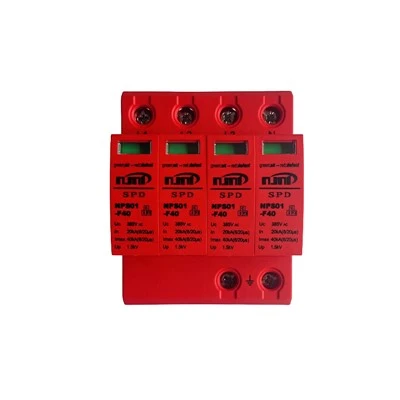
If you’re planning to install or upgrade your PV system, and you have questions about proper SPD installation, our team is here to help. We supply high-quality, certified PV SPDs for all residential, commercial, and off-grid applications, and we can connect you with experienced installers in your area to ensure your system is protected correctly. Don’t let a small upfront savings lead to a huge loss down the line—protect your solar investment with professional, code-compliant SPD installation.
T1+T2 7KA Surge Protective Device References
- National Electrical Manufacturers Association (NEMA). 2022. Standards for Surge Protective Devices.
- International Electrotechnical Commission (IEC). 2021. IEC 61643-11: Low-voltage surge protective devices – Part 11: Surge protective devices installed in low-voltage power systems – Requirements and test methods.
- National Fire Protection Association (NFPA). 2023. NFPA 70: National Electrical Code (NEC) Article 690, Solar Photovoltaic Systems.
- Solar Energy Industries Association (SEIA). 2022. Best Practices for Surge Protection in PV Systems.
- Underwriters Laboratories (UL). 2021. UL 1449: Surge Protective Devices – Safety Standard.
Nanjing Ningpu Lightning Protection Equipment Manufacturing Co., Ltd.
As one of the most professional pv surge protective device manufacturers and suppliers in China, we’re featured by quality products and good price. Please rest assured to buy customized pv surge protective device made in China here from our factory. Also, pricelist is available.
Address: Building 1, No.20 Shengyuan Road, Lishui Economic Development Zone, Nanjing City, Jiangsu Province, China
E-mail: xuhaiyan@npspd.com
WebSite: https://www.npspd.com/
