Hey there, let’s cut through the jargon real quick—if you’ve ever been driving down a highway, scrolling TikTok on a road trip, or even made a random Zoom call that didn’t drop mid-presentation, you’ve probably crossed paths with a monopole tower without even knowing it. I’m Jake, and I’ve spent the last 7 years working with The Monopole Tower team, designing, installing, and troubleshooting these bad boys for telecom companies, utility firms, and even event organizers across the country. If you’ve ever wondered “what the heck is a monopole tower, and why do people lose their minds over them?”, stick around. No stuffy textbook definitions here—just real talk from someone who’s spent way too many weekends at heights that make my hands shake. The Monopole Tower
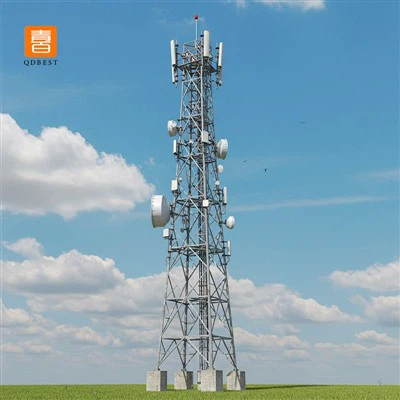
First off, let’s dump the basic tower types to set the scene. You’ve seen the old-school lattice towers, right? The super tall, grid-like metal frameworks that look like giant Tinker Toys, usually on the outskirts of towns or out in farm fields. They work, but they’re a pain. They take up way more space—like, 2 to 3 times more than a monopole—so rural farmers complain about lost land, and city councils go ballistic over “visual blight” when you try to put one downtown. Also, they’re a nightmare to install. You need a whole crew for weeks, special heavy equipment that can barely fit down backroads, and a million permits just to move the parts.
That’s where monopole towers come in. At their core, a monopole is a single, slender metal pole—usually steel, sometimes fiberglass for specific environments—tapered at the top to hold all the antennas, transmitters, and gear you need for telecom, 5G, Wi-Fi, or even things like weather sensors and small broadcast equipment. They’re called “monopole” because “mono” means one, and “pole” is exactly that: one solid pole, not a bunch of interwoven beams. Sounds simple, but don’t let the plain-Jane name fool you—these things are engineered to withstand hurricanes, ice storms, and even that random squirrel that decides to build a nest in your antenna array (yes, that’s a real problem we fix way more than you’d think).
Let’s break down the key bits that make these towers actually work, because “single pole” is only the tip of the iceberg. First, the foundation. You can’t just drop a steel pole in the ground and call it a day, especially if it’s holding 100+ feet of gear. Most monopoles use a concrete mat foundation—think of a giant, thick pancake of reinforced concrete, sometimes 10 to 15 feet deep— that distributes the tower’s weight and the force of wind evenly across the ground. For rocky or unstable soil, we might use helical piers (those big, screw-in metal posts you’ve probably seen for deck foundations) to anchor it down. I once worked a site in coastal Florida where the soil is basically sand, so we had to add extra steel rebar to the mat and even a layer of crushed stone under the concrete to stop the whole tower from leaning like the Tower of Pisa. Took us an extra week, but that tower’s still standing after three hurricanes, so we did our job right.
Next, the pole itself. We use galvanized steel 90% of the time because it’s strong, rust-resistant, and not as pricey as fancy alloys. The taper is intentional— the base is way thicker than the top (usually 2 to 4 feet wide at the bottom, narrowing to 1 to 2 feet at the top) to handle all the wind load high up. The height varies a ton too: from 30 feet for small neighborhood Wi-Fi nodes up to 200+ feet for 5G and long-range telecom. Wait, you might be thinking “5G needs tall towers, right?” Nope—actually, mid-band 5G uses smaller, shorter monopoles because it has better penetration than old 4G, but it needs more of them. That’s why you’re seeing more slim, 60 to 80 foot monopoles popping up on street corners and parking garages these days, not just the giant ones out in the country.
Then there’s the top, the part that actually does the work. The antennas, radios, and all the wiring get mounted on either a small platform at the very top or sometimes just brackets bolted straight to the pole. We also add things like lightning rods (duh) and sometimes camouflage kits—hey, city councils hate how industrial these look, so we can wrap them in lattice to look like tree trunks, or even paint them to match the surrounding buildings. I did a job in downtown Chicago a few years back where we hid a 70 foot monopole in a fake oak tree for a café district—you’d never know it was a telecom tower unless you climbed it. Clever, right?
Now, let’s get to the real reason everyone’s obsessed with monopoles these days: why they’re way better than the old lattice towers for most modern needs. First, space. A monopole takes up like 100 to 200 square feet of land, compared to 500+ for a lattice tower. That’s a huge win for cities where land is expensive and hard to come by, or rural farmers who don’t want to lose 1/10 of an acre of corn for a tower. Installation is way faster too—we can set a typical 80 foot monopole in about 3 days, start to finish, compared to 2 weeks for a lattice tower. Less time on site means less disruption for local businesses, less traffic, and way fewer complaints from people annoyed by construction noise.
But the biggest one? Aesthetics. I can’t tell you how many times city councils shot down lattice tower proposals over how ugly they are. Monopoles are slim, blend in, and with that camouflage option, they’re almost invisible. That’s why 5G rollout blew up demand for these things—carriers needed to put thousands of small towers across cities fast, and monopoles were the only thing that could fit without sparking a “not in my backyard” (NIMBY) revolt. I’ve talked to so many city planners who told me they approved our monopole for a downtown spot because it looked like a street light, not a giant metal structure.
Of course, monopoles aren’t perfect. No piece of infrastructure is. First, they have a lower wind load capacity than some larger lattice towers, so for super remote areas with crazy high winds (like parts of the Great Plains where tornadoes are common), we have to spec extra-thick steel or add guy wires. Wait, guy wires—sometimes we use those for shorter monopoles, like 30 to 50 foot ones, to keep them stable. But they’re less common now because cities hate how guy wires block sidewalks or bike lanes. The modern design trend is free-standing monopoles for that exact reason.
Another downside? They hold less gear than lattice towers. If you need a tower for multiple broadcasters, multiple telecom providers, and maybe even a utility company all in one? A lattice tower can fit way more antennas. But for most small to mid-sized projects—small cell 5G, neighborhood Wi-Fi, utility sensor networks, even cellular repeaters for apartment complexes—monopoles have more than enough capacity. I’ve had clients tell me they tried a lattice tower for a new subdivision, got denied by the city, and switched to a 60 foot monopole that fit all their gear and got approved on the first try. Win-win.
Now, let’s talk about the stuff that doesn’t make the marketing brochures—common myths and real-world headaches. First myth: monopoles are only for telecom. Nope, we install them for utility companies to monitor power lines, for national parks to get trail cameras and emergency radios, even for event venues to boost Wi-Fi during festivals. I just finished a job for a music festival in Texas where we put up 10 temporary monopoles to handle the 100k+ people streaming videos and posting photos—no dropped sets, no angry fans.
Another myth: they’re super easy to maintain. Not so fast. All that gear at the top needs regular checks—after a storm, after a year of ice and wind, sometimes even after a squirrel chews through a cable. We have a team of climbers (me and the guys I work with, actually) that go up every 12 to 18 months to inspect connections, tighten bolts, replace old wiring. Once, we had a monopole in Oklahoma where a piece of metal had come loose during a tornado, and we had to rappel 120 feet up in 40 mph wind to fix it. Not for the faint of heart, but that’s how we keep the signals running.
Also, there’s the code stuff. Every area has its own rules for tower height, setback from roads or homes, even lighting requirements for aviation. We do all the permitting work for our clients, so they don’t have to deal with filling out 17 forms and waiting 6 months for approval. I’ve seen so many small telecom companies waste months on permits for lattice towers that never get approved, then come to us for monopoles that take a fraction of the time to clear.
Wait, let’s get personal here. I’ve been on more tower tops than I can count, and there’s a funny little quirk about monopoles—when you’re up there, they don’t sway nearly as much as lattice towers. The solid pole gives more stability, so less motion sickness for the crew up there. That’s a small thing, but when you’re 150 feet up for 8 hours straight, it makes a huge difference. I once spent a whole day replacing antennas on a lattice tower, and I was so dizzy I had to sit in my truck for 20 minutes after. Same job on a monopole a month later? No dizziness, just a few sore muscles and a great view of the city.
Now, why work with us at The Monopole Tower team? Let’s be real—there are a million companies selling monopoles these days, but not all of them know the ins and outs of making them work for every site. We don’t do “one size fits all” poles. Every project gets a custom design: soil tests, wind load calculations, permit guidance, even post-install maintenance plans. I’ve had clients come to us after a bad experience with a cheap monopole that leaned in a year because the foundation was shoddy—we rebuilt it for them, no extra hassle. We also source all our steel locally, so we keep costs down and delivery times fast, which is a huge plus when clients are on a tight timeline for a 5G rollout or a new subdivision.
But here’s the thing: at the end of the day, monopole towers are the unsung heroes of modern connectivity. You don’t see them, most people don’t know what they are, but they’re the reason you can video call your family from a remote camping spot, stream your favorite show in a downtown apartment, or get that GPS signal when you’re lost on a backroad. When 5G gets rolled out to every small town and every neighborhood, these slim, unassuming poles will be the backbone of it all.

If you’re a telecom provider, a utility company, a city planner, or even someone who needs connectivity for a special event and you’re looking for a monopole tower that’s built right, approved fast, and doesn’t come with a bunch of hidden headaches, hit us up to chat through your project. We don’t do pushy sales pitches—we just give you the real info, break down the costs, and make sure you get exactly what you need, no compromises.
Substation Structures Reference:
- Federal Communications Commission. (2022). Small Cell Deployment Guidelines for Monopole Structures.
- National Telecommunications and Information Administration. (2021). Monopole Tower Engineering and Load Capacity Standards.
- North American Electric Reliability Corporation. (2023). Utility Monopole Installation and Maintenance Best Practices.
Qingdao BEST Steel Structure Co., Ltd.
Qingdao BEST Steel Structure Co., Ltd. is one of the most professional the monopole tower manufacturers and suppliers in China. We warmly welcome you to buy customized the monopole tower made in China here from our factory. If you have any enquiry about OEM service, please feel free to email us.
Address: Jiaobei Industrial Park, Qingdao, China
E-mail: salesmanager@qdbsstower.com
WebSite: https://www.qdbsstower.com/
