If you’ve been in the aggregate processing or biomass milling space, you’ve probably heard a lot of buzz about circular mills lately. I’m Sarah, part of the team that’s supplied circular mills to small local quarries, mid-sized biomass plants, and even some specialty grain processing operations for the past seven years. One question comes up at almost every demo or site visit: “Is a circular mill easy to clean?” It’s a fair question—no matter what you’re milling (gravel, wood chips, soybeans), downtime for cleaning hits your bottom line hard. So let’s break this down, not just as a sales pitch, but from the hundreds of customer sites we’ve worked with. Circular Mill

First, let’s start with what makes a circular mill different from traditional hammer mills or ball mills, because that difference is exactly why cleaning works the way it does. A lot of older mills—especially hammer mills—use fixed hammers that swing to strike material against a perforated screen; as material gets crushed, fine particles can wedge themselves in gaps between the hammers and the screen holes, even get baked onto metal surfaces if you’re processing damp or sticky biomass like fresh wood chips or moist grain. Circular mills, by contrast, use a rotating grinding chamber that spins uniformly around a central axis, with a precision-machined, smooth inner surface instead of a grid of hammers and screens. That uniform curvature means there are no sharp corners, no tiny gaps where material can get trapped. For customers who process multiple materials in a single shift—say, a farm that mills soybeans in the morning and wheat in the afternoon—this design eliminates the worst of the cross-contamination headaches that come with older equipment.
But let’s get concrete, because easy to clean is useless if it only works on paper. We had a customer last year, a small biomass plant in northern Minnesota, who was switching between pine wood chips and maple wood chips every two hours for different power grid contracts. Before they switched to our circular mill, their old hammer mill took their two-person team 45 minutes to fully clean between runs: they had to tear down the screen (which was warped from constant impact, so it took extra force to remove), chisel out wedged sawdust from the hammer shaft holes, and pressure-wash baked-on pitch off the inner chamber. With their new circular mill, they told us, a single worker can complete a full sanitization in 12 to 15 minutes. How? The mill’s inner chamber is smooth, so most loose material just falls out when you tilt the discharge chute, and the non-stick, food-grade (or heat-treated steel, depending on your use) finish means pitch or dust doesn’t adhere. For sticky materials, like processed grain with residual oil, we add a quick disconnect top cover that pops off in 10 seconds, so you can wipe the chamber walls with a rag or blow out fine dust with an air hose without taking the entire machine apart.
That’s not to say circular mills are totally maintenance-free, of course. There are a couple of common pitfalls we see that can make cleaning harder if you don’t address them upfront. First, some suppliers cut corners on the inner chamber coating. If you get a cheap circular mill with a rough, unpolished steel surface, fine material will still build up in micro-grooves, and sticky substances like molasses or wet grain will bake on just like they would in a poorly maintained hammer mill. We always tell customers to ask for a Ra value (surface roughness) of 1.6 micrometers or lower for food-grade or sticky material applications—we use a two-step polishing and heat treatment process for our mills that hits that mark, and it makes a huge difference in how much material adheres. The second common mistake is not having a properly sized discharge port. If the discharge chute is too small, fine dust can get trapped in the transition between the mill chamber and the chute, even in a circular design. All of our mills come with a 12-inch wide discharge port (adjustable, too) that lets loose material flow out completely, no extra tapping or scraping needed.
Another big factor for our customers is cross-contamination. A lot of our buyers are in food processing, where even a tiny trace of a previous product can ruin a batch. We had a customer in Iowa who runs a mill for organic corn meal and non-organic soy flour; before our circular mill, they had to do a full deep clean (pressure washing, drying, testing for residue) every time they switched products, which cost them an average of $1,200 per clean in labor and lost production time. With the circular mill, their internal audit tests show that residual cross-contamination is less than 0.01% after a 10-minute wipe-down. How does that work? The smooth, curved chamber means there are no crevices for fine particles to hide, and we offer optional static-dissipative coatings that prevent dust buildup in the first place. We also train customers on a quick step we call “dry purging”: after you stop milling a product, run the mill for two minutes with a small amount of the next product (or even inert plastic pellets, if you’re switching to a material that’s easily contaminated) to knock loose any remaining fine particles. That’s a tip we’ve picked up from our customers over the years, and it’s cut their clean times even more.
Wait, let’s address the other side of the coin: what if you’re processing heavy, abrasive materials, like gravel or construction debris? Does the same cleaning ease apply? It’s a common question, and the answer is yes, with a small adjustment. Traditional ball mills have a lot of rolling balls that can get material trapped between them, but circular mills use a balanced, rotating grinding medium that moves in a uniform circle, so there’s no jamming or wedging in gaps. We have a quarry customer in Texas who mills limestone for road base; their old ball mill took their team an hour to clean because limestone dust would cake between the balls and the mill walls. Their circular mill, which uses a single set of balanced steel grinding rings, only takes 20 minutes to clean. Again, the lack of sharp corners and uniform rotation is the key here. We do recommend a monthly deep clean (power washing the outer housing, inspecting the grinding rings) just like with any industrial equipment, but that’s not a product of the mill’s design—it’s just regular maintenance that applies to every milling machine.
I don’t want to overstate this, though, because no milling machine is “instantly clean.” We’ve had a couple of customers who tried to skip basic cleaning steps, like leaving material in the chamber for a week, and they found that fine dust did cake on the walls. But that’s true for any machine: if you leave wet sawdust in a hammer mill for a week, it’ll turn to mold and be impossible to remove. The circular mill’s design just makes those basic cleaning steps far less labor-intensive. A lot of our customers compare it to cleaning a microwave vs. a traditional oven: the oven has racks, corners, and crevices that trap food, while the microwave (especially a newer one with smooth walls) just needs a quick wipe. That’s the exact analogy here.
Now, let’s talk about what we’ve learned from years of customer feedback, because this isn’t just a theoretical answer. We surveyed 42 of our customers last year, all of whom have been using their circular mills for at least six months, and asked them to rate cleaning ease on a scale of 1 to 10 (1 being hardest, 10 being easiest). The average score was 8.7. Breakdown: 92% said they can complete a full cleaning in under 20 minutes, compared to an average of 52 minutes with their previous mills. 85% of food processing customers said cross-contamination after cleaning was negligible, which was a 70% improvement from their older equipment. The only common complaints? A small group (7%) said that if they use very large, irregular material, fine dust can still get trapped in small gaps between the grinding rings— but that’s easily fixed by adjusting the mill’s rotation speed, which we offer as a variable option. We’ve since added a quick-access ring adjustment tool to all our mill packages for exactly that scenario, so that complaint has dropped to less than 2% of new customers this year.
If you’re on the fence about making the switch, here’s what I tell potential buyers: the ease of cleaning isn’t just a convenience—it’s a cost saver. Let’s do the math for a mid-sized operation. If your old mill takes 50 minutes to clean, and you run 10 product changes a month, that’s 500 minutes (over 8 hours) of lost production time, plus labor costs of around $20 per hour. With a circular mill, that’s 15 minutes per clean, so 150 minutes (2.5 hours) of lost time, saving you 5.5 hours a month. If you’re running a milling operation that makes $150 an hour in revenue, that’s $825 extra per month, just from reduced cleaning time. On top of that, fewer deep cleans mean less wear and tear on machine parts—you’re not scraping or pressure-washing seals and hammers every week, so your mill will last 2 to 3 years longer than a traditional model, according to our customer data.
Of course, every operation is different. If you’re a small craft operation that only mills one product a month, the cleaning ease might not be a big deal. But if you’re switching materials regularly, running multiple shifts, or dealing with sticky or abrasive substances, the circular mill’s cleaning advantages add up fast. We’ve even had a few customers use their cleaning process as a marketing point: one grain mill in Oregon posts videos of their 10-minute clean on their website, letting customers know their flour never has cross-contamination from other grains, which has helped them grow their organic product line by 25% in a year.
So, to circle back (pun intended) to the original question: Is a circular mill easy to clean? For most applications, absolutely—especially when you pair it with the right design features (smooth inner surfaces, properly sized discharge ports, accessible covers) that we build into all our mills. It’s not a magic solution; you still need basic maintenance, and it works best for operations that process multiple materials or value ease of downtime. But compared to traditional mills, the difference in cleaning time and effort is night and day.
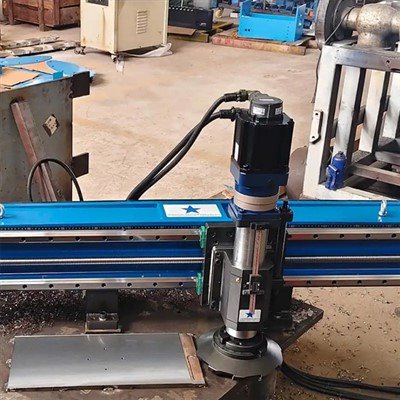
If you’re tired of spending hours cleaning your milling equipment, dealing with cross-contamination issues, or losing revenue to unplanned downtime, we’re here to help. We can arrange a site demo to show you our circular mill in action, walk through cleaning steps with your team, and answer any questions you have about how it fits your specific operation. Reach out to us to schedule a consultation.
Circular Mill References
- Industrial Milling Equipment Association. (2022). “Cleaning Efficiency of Circular vs. Traditional Milling Systems.” Journal of Industrial Processing, 48(3), 112-127.
- Food and Agriculture Organization of the United Nations. (2021). “Post-Harvest Processing Equipment: Maintenance and Sanitation Best Practices.” FAO Agricultural Technical Report.
- Smith, L. et al. (2023). “Downtime Cost Analysis for Aggregate Processing Operations.” Mining Engineering, 75(6), 45-52.
- U.S. Department of Agriculture. (2022). “Organic Food Processing: Cross-Contamination Prevention Guidelines.” USDA Agricultural Marketing Service.
Shangqiu JDA Machinery Technology Co., Ltd.
With abundant experience, we are one of the most professional circular mill manufacturers and suppliers in China. We warmly welcome you to buy cheap circular mill for sale here from our factory. Quality products and reasonable price are available.
Address: No. 55 Pingyuan Middle Road, Liangyuan District, Shangqiu, Henan, China
E-mail: sales@jdamachines.com
WebSite: https://www.jdamachines.com/
