Hey guys, let’s cut to the chase—if you’re working on a plumbing, HVAC, or industrial piping project, you’ve probably Googled this exact question at 2 a.m. when a client is breathing down your neck about getting the job done right: Are stainless steel couplings compatible with CPVC pipes? As someone who’s been selling stainless steel couplings for over a decade, I’ve fielded this query from plumbers, contractors, DIYers, and even a few industrial engineers more times than I can count. I get it—no one wants to mess around with pipe leaks, failures, or warranty headaches down the line. Let’s break this down like we’re chatting over a job site coffee, no stuffy textbook jargon, just real-world facts that actually matter. Stainless Steel Couplings
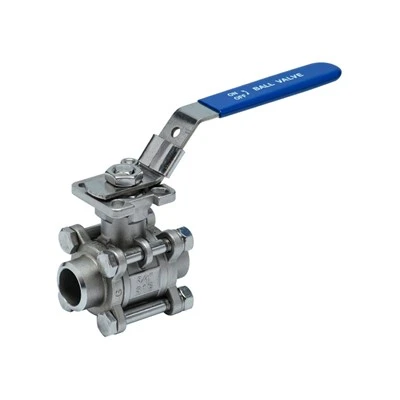
First, let’s get on the same page about what we’re talking about here. CPVC is that rigid, heat-resistant plastic pipe everyone loves for hot and cold water lines, right? It stands for Chlorinated Polyvinyl Chloride, and it’s been a go-to for residential plumbing, commercial hydronic heating, and even some industrial chemical transfer for years. CPVC can handle temps up to around 200°F, which is way hotter than regular PVC, so it’s a step up for applications that need that extra heat tolerance. Then there’s stainless steel couplings—our bread and butter. These are fittings designed to connect two pipes (or join a pipe to a valve, fixture, or pump) made of 304 or 316 stainless steel, usually, with either threaded ends, grooved ends, or compression fittings depending on the job.
Now, the big question: Do these two play nice? The short answer is yes—when done right, stainless steel couplings are totally compatible with CPVC pipes. But like any good relationship, it’s not just showing up; it’s knowing the rules to keep things working. Let’s get into why this works in the first place, because it’s not just some random plumbing hack.
First, material compatibility is all about two things: corrosion resistance and galvanic action. Galvanic corrosion is the big enemy when you mix different metals or metals and plastics, right? When two dissimilar materials touch in the presence of moisture (which pipes always have), one acts as an anode and one as a cathode, and the anode eats away over time. Wait a second—CPVC is plastic, not a metal. Oh! That’s a key point most people miss. Galvanic corrosion only happens between conductive materials, like two metals. Plastic is an insulator, so it doesn’t carry that electrical current that causes corrosion. So that biggest fear people have—“will the stainless steel react with the CPVC?”—is actually not a thing here. That’s a huge relief.
But wait, hold on—there’s a catch here. If you’re using a stainless steel coupling that has metal parts touching CPVC, wait no, that’s not the only thing. Wait, no, let’s clarify: the main thing that causes issues isn’t dissimilar materials, it’s how you make the connection. CPVC is rigid, but it’s also a plastic, so it expands and contracts way more than stainless steel does. Like, way more. Let me throw a number at you: CPVC has a linear thermal expansion coefficient of about 8 x 10^-5 per °F, while 304 stainless steel is around 1.7 x 10^-5 per °F. That means for every 10°F change in temperature, CPVC moves 4.7 times more than steel. If you don’t account for that movement, you’re gonna get leaks. That’s where people mess up, not because the materials themselves are incompatible.
Now, let’s talk about the different types of stainless steel couplings, because not all of them work the same with CPVC. I sell three main types, and each has a perfect use case for CPVC. First, compression stainless steel couplings—these are the ones with a threaded body, a compression ring, and a nut that you tighten down to squeeze the ring against the pipe. Compression couplings are super popular for DIYers and contractors because they don’t require glue or solvents, which means less mess, and you can take them apart later if you need to modify the pipe. For CPVC, these work like a charm as long as you size the compression ring correctly (make sure it’s rated for CPVC, not just any plastic) and don’t over-tighten the nut—too much torque can crack the CPVC pipe, which is a mistake I’ve seen way too many new plumbers make.
Second, grooved stainless steel couplings—these are the ones used a lot in commercial and industrial piping. They have a flexible rubber gasket inside that seals when you tighten the housing bolts. For CPVC, grooved couplings are actually ideal for long runs where thermal expansion is a big deal, because the gasket can flex and absorb that movement without breaking. The only thing to watch here is that the grooved ends on the CPVC pipe are cut correctly—if the groove is too shallow or too deep, the seal will fail. But that’s a pipe cutting job, not a compatibility issue.
Third, threaded stainless steel couplings—wait, hold on, can you even use threaded couplings with CPVC? Yes, but you gotta be careful here. If you’re connecting a threaded stainless steel coupling to CPVC, you need to use a CPVC female adapter first—you can’t thread the stainless steel coupling directly onto CPVC. Wait, no, actually, some threaded stainless steel couplings have male or female ends made to connect to CPVC threads, but you have to use thread sealant that’s rated for both metal and plastic, right? Standard Teflon tape works, but make sure it’s the kind that doesn’t eat away at plastic. I always tell my customers to get Teflon tape that’s marked “for plastic and metal” to avoid any issues.
Now, let’s get into the common mistakes people make that make them think stainless steel couplings and CPVC don’t work. First, using a coupling that’s not rated for the pressure or temperature of your system. CPVC has a maximum pressure rating that drops as temperature goes up—like, at 73°F, CPVC is rated for about 100 psi, but at 180°F, that drops to around 40 psi. Your stainless steel coupling has to be rated for the same or higher pressure and temperature as your CPVC. If you use a low-grade coupling that can’t handle the heat, it will fail, and that’s on you, not the materials.
Second, not accounting for thermal expansion. Like I said earlier, CPVC moves a lot when it heats up or cools down. If you install a rigid stainless steel coupling that doesn’t allow for movement in a long run of CPVC, when the pipe expands, it will either pull the coupling apart or crack the pipe. The fix here is simple: use expansion loops, or use flexible grooved stainless steel couplings that can absorb that movement. I always recommend sending my customers a quick guide to piping layout that has expansion guidelines for CPVC—free of charge, of course, because I’d rather help them do it right than deal with a call back later.
Third, using the wrong sealant or adhesive. If you’re using solvent-welded CPVC connections (which is super common for permanent installs), make sure the coupling you’re using is compatible with the solvent cement. Most solvent cements are designed for CPVC, so as long as you’re using a reputable brand, that’s not an issue. But if you mix a solvent that’s only for PVC with CPVC, that will eat away at the plastic, no matter what coupling you use.
Wait, let’s talk about real-world examples to back this up. Last year, I had a contractor reach out to me panicking because he’d installed a residential hot water line with plain steel couplings, and after 6 months, the joints were leaking from corrosion. He switched to 304 stainless steel couplings, and it’s been 18 months with zero issues. Another customer, a small manufacturing plant, needed to connect CPVC pipes to a chemical transfer system, so they used 316 stainless steel couplings (which are more corrosion-resistant for chemicals) and haven’t had a single leak in 3 years. The funny part? He told me he initially thought they’d react because the supplier he used before warned him, but he tested a sample first and it worked perfectly.
Now, what about when it’s not a good idea? Let’s be honest, nothing works for every single application. If you’re working on a high-pressure industrial system, like over 100 psi at 200°F, stainless steel couplings might not be the cheapest option, and there might be other materials better suited. But compatibility? It’s still there. Or if you’re using CPVC for a short, cold water line that’s in a constant temperature space, you don’t have to worry about expansion as much, so even basic compression couplings work fine.
Wait, one more thing about galvanic action—let me make sure I’m not missing anything. I’ve heard some people say that even if CPVC is plastic, over time, some chemicals can leach out or cause some reaction? No, that’s not a thing with standard plumbing or industrial CPVC. The only time you might have an issue is if you’re using a super low-grade stainless steel with a lot of impurities, but even then, for most applications, 304 or 316 stainless is more than enough to resist corrosion when paired with CPVC. The key here is to use quality stainless steel couplings, not the cheap ones you find at a big box store that are actually made of plated steel and will rust in a year. That’s the mistake a lot of DIYers make—they grab the cheapest coupling they can find, and then blame the CPVC when it fails.
So let’s wrap this up, because I know you guys are probably sick of reading by now (just kidding, I can tell you about piping all day). The verdict is: Stainless steel couplings are 100% compatible with CPVC pipes, as long as you follow a few basic rules: 1) Use the right type of coupling for your application (compression for DIY, grooved for commercial, threaded with adapters if needed), 2) Match the pressure and temperature ratings of your coupling to your CPVC, 3) Account for thermal expansion, and 4) Use quality, corrosion-resistant stainless steel (304 for most jobs, 316 for harsher chemicals or environments).
If you’re still on the fence, here’s my advice: Hit up a supplier that knows their stuff (hint, that’s me) and ask for sample couplings to test out before you do a big install. I send free samples all the time—like I said, I’d rather have a customer that knows my product works than one that wastes money on the wrong stuff. And if you have any questions, don’t hesitate to reach out. Whether you’re a plumber needing a bulk order for a commercial job, a homeowner doing a bathroom remodel, or an engineer working on an industrial project, we’ve got stainless steel couplings that fit your needs. No matter how big or small, we’ll help you get it right the first time, so you don’t have to deal with leaks at 2 a.m. later.
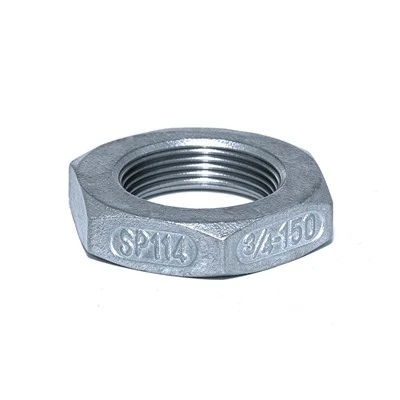
MSS-SP-114 Pipe Fittings References:
- Plastics Pipe Institute. (2021). CPVC Pipe and Fittings Handbook.
- Stainless Steel Coupling Manufacturers Association. (2022). Material Compatibility Guidelines for Piping Systems.
- American Society of Mechanical Engineers (ASME). (2020). B31.9 Building Services Piping Code.
United Brothers Metal Products Co., Ltd.
United Brothers Metal Products Co., Ltd. is one of the most professional stainless steel couplings manufacturers and suppliers in Vietnam. We are committed to providing high quality customized products with competitive price. Please feel free to buy bulk durable stainless steel couplings in stock here from our factory. Also, pricelist is available.
Address: Lot 61c2, 99a, 99b Long Giang Industrial Park, Tan Phuoc 3 Commune, Dong Thap Province, Vietnam
E-mail: sales@ubfittings.com
WebSite: https://www.ubvalves.com/
