If you’re in the jewelry game, you’ve probably heard the hype around 3D printers for designs—custom pendants, rings, even tiny earrings, all printed in resin or metal and ready for casting. And yeah, they’ve completely changed how small designers and brands work. But as someone who sells these printers (I’ve been on the ground with customers from one-person studios to mid-sized jewelry teams for the last 7 years), I see way more of the ugly side than the sales brochures care to mention. Let’s cut the marketing fluff and talk about the real disadvantages that no one posts on Instagram. Jewelry 3D Printer
First off, the learning curve is way steeper than people think. I get it—everyone loves the idea of plugging in a machine, uploading a design, and hitting print. But jewelry 3D printing isn’t like printing a random meme on your home Ender. Even if you’re used to 3D modeling, the precision required here is insane. A ring that’s off by 0.2mm? That’s a stone that won’t sit right, or a band that digs into a finger, or even a casting that breaks. I’ve had so many new customers come to me 2 months after buying a printer, frustrated because their first 10 prints were junk—layer lines that show up like scars, supports that are impossible to remove without scratching the metal, or a design that warps mid-print because they didn’t calibrate the bed right. Calibration isn’t a one-time thing, either. Temperature changes in your shop, the type of resin you’re using, even the humidity—all of it messes with the machine, so you’re spending 30-45 minutes every morning just getting it set up to print. A lot of people don’t account for that time, and they end up seeing the printer as a money pit instead of a tool.
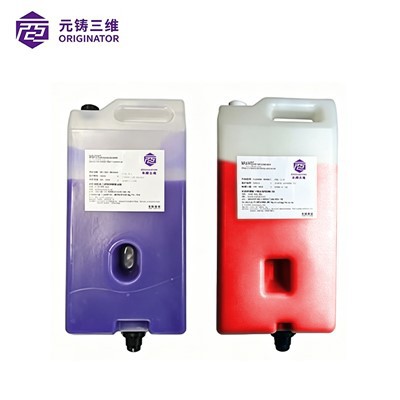
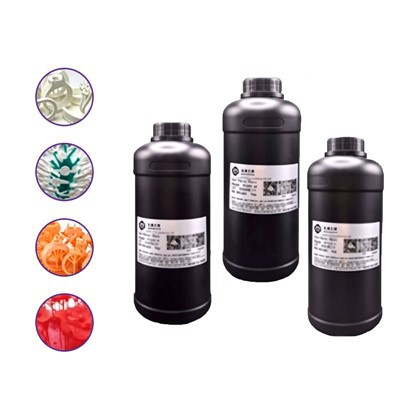
Then there’s the cost that’s way higher than the upfront price tag. Let’s do the math: you buy a basic jewelry resin printer for, say, $2,500 (that’s the mid-range stuff, not the cheap $500 ones that break every 5 prints). Then, you need specialty resin—standard 3D printer resin won’t work for jewelry; it has to be casting resin, which is $80-$120 a liter. A single ring might use 20-30 grams, so a liter only gets you 30-40 pieces. If you’re doing metal 3D printers, those are even crazier—starting at $15,000, and metal powder is $100-$200 a kilogram, with a lot of waste because you can’t reuse every bit. Also, you can’t skip the post-processing stuff: support removal tools, sandpaper, tumblers, ultrasonic cleaners, all of which add up to a few hundred dollars more. And let’s not forget maintenance—no part on these machines lasts forever. The LCD screen might crack, the resin tank wears out, the print head clogs, and replacements aren’t cheap. I had a customer last year who spent $1,800 on repairs in 6 months, just because he skipped regular cleaning. The upfront cost is just the tip of the iceberg; the real operating costs will surprise most new buyers.
Quality consistency is another big one. Even the best printers will have off prints here and there, and that’s a huge deal in jewelry. A customer orders a custom engagement ring, and if your print has a thin spot that breaks when you cast it, you’re either rushing to reprint it (losing time and money) or telling the client it’s delayed. I’ve heard stories of studios that lost big clients because they had 3 failed prints for a one-off piece. It’s not like a CNC machine or hand carving, where if you know what you’re doing, each piece is almost identical. With 3D printing, factors like how long you leave the resin in the UV chamber, how evenly the layer is applied, even the batch of resin you use—all make small differences that add up. If you’re running a small shop, that inconsistency can kill your reputation.
Also, material limitations. A lot of people think “3D print anything” is true, but for jewelry, it’s not that simple. If you want to print in gold or silver, you have to use the casting resin method, where you print a wax or resin piece, surround it in investment plaster, melt out the resin, then pour the metal. That works, but it’s an extra step. Direct metal 3D printers can print in actual gold, but they can’t do intricate details as well as casting, and the finish isn’t as smooth as hand-carved wax. You can’t print really thick pieces without them warping, and tiny, delicate details (like filigree or micro-pavé settings) have a high failure rate. I’ve had customers come to me wanting to print a lace-style ring that’s 1mm thick—every time, 7 out of 10 prints have a broken strand, and fixing it after is almost impossible. You can’t just design whatever you want; you have to adapt to what the printer can handle, which crushes some creative ideas.
Then there’s waste and environmental impact. Wait, people don’t talk about this much, but it’s a real issue. Those failed prints I mentioned? Resin prints can’t be recycled easily—most places will only take them if they’re pure, unhardened resin, which your failed prints aren’t. Metal powder waste from direct metal printers is toxic, and a lot of small shops don’t have the proper disposal setups. I’ve had customers tell me they’re throwing away 2-3 prints a week, and that adds up to a lot of plastic and metal going to landfills. Also, the energy use—these machines run 10-12 hours a day, and even the metal printers use a ton of electricity, which isn’t cheap if your shop has high utility bills. I had a customer in a small studio last year who saw his electric bill go up by $300 a month once he ran his printer full time, which was a big hit to his profit margin.
Skill gaps in post-processing too. A lot of new 3D printer owners think once the print is done, they’re halfway there. No way. Removing supports from a small ring can take 15 minutes if you know what you’re doing, but hours if you’re new, and if you mess it up, you scratch the print so bad it’s ruined. Tumbling to get a smooth finish? If you leave the piece in too long, it wears down tiny details. Ultrasonic cleaning? Too hot, and the resin can soften. I’ve had so many customers bring me their prints after they spent 3 hours on post-processing, asking if I can fix the scratches or the missing details. That’s extra work for them, which cuts into the time they could spend designing or making more pieces.
Wait, let’s also address the reliability. Cheap printers (the ones under $1,500) are super tempting, but they break all the time. A customer last year bought a $800 resin printer for his home studio, and it died 3 months in. The manufacturer wouldn’t cover the repair because he didn’t use their branded resin, so he had to buy a new one. The mid-range printers are better, but even they have downtime. If your printer breaks when you have a big order due, that’s a disaster. I had a customer who missed a wedding band order because his print head clogged, and he had to outsource the rest—costing him $500 in rush fees and a lost client. Reliability isn’t guaranteed, and when you’re running a business, downtime equals money lost.
Also, market oversaturation. Here’s the thing: more and more small jewelry shops are getting 3D printers, which means custom designs are way more common. The barrier to entry is lower, so you’re competing with hundreds of other designers who can pump out similar pieces in a week. I’ve had customers tell me their unique designs are now being copied by other shops because they can print them fast. You can’t rely on the 3D printer to make your brand stand out anymore; you have to put in the work to create something no one else has. A lot of people got into 3D printing thinking it would give them a competitive edge, but it’s now just a baseline tool, like a saw or a polishing wheel.
Wait, let’s make this real, not just a list. I’ve had a customer named Mia who owns a small studio in Portland. She bought a mid-range resin printer 18 months ago, thinking she could double her output. Turns out, she spends 6 hours a week calibrating and fixing failed prints, and her post-processing time went up by 4 hours a week—so she actually has less time for designing. She’s now considering going back to hand carving most pieces, because the 3D printer is more hassle than it’s worth for her small team. That’s the kind of story I hear all the time.
But before you think I’m just bashing printers—they have advantages, too, obviously. I sell them, after all. They let small designers make custom pieces without outsourcing, which cuts costs and speeds up turnaround. But the disadvantages are real, and a lot of salespeople skip over them. If you’re thinking of buying one, don’t just look at the glossy ads. Factor in the time you’ll spend learning, the ongoing costs, the failed prints, and the extra work of post-processing.
If you’re in the market for a jewelry 3D printer, I can walk you through what makes sense for your shop—no sales fluff, just honest info about what will work for your size and budget. Just reach out, and we can chat about your workflow, the kind of pieces you make, and what you need to get the job done without the headaches.
Wax 3D Printer References
- "The Hidden Costs of Jewelry 3D Printing" – Journal of Jewelry Manufacturing Technology, 2022
- "Learning Curves in Additive Manufacturing for Small Businesses" – Additive Manufacturing and Design Review, 2023
- "Sustainability Challenges in Jewelry 3D Printing" – International Journal of Sustainable Fashion and Textiles, 2021
- "Quality Consistency in Resin 3D Printing for Custom Jewelry" – Jewelry Industry Research Bulletin, 2022
Hangzhou Originator 3D Technology Co., Ltd.
Hangzhou Originator 3D Technology Co., Ltd. is one of the most experienced jewelry 3d printer manufacturers and suppliers in China. With abundant experience, we warmly welcome you to wholesale high quality jewelry 3d printer made in China here from our factory. Contact us for more details.
Address: Room 403, Building 2, Block B, Heda Incubation Park,No. 452, 6th Avenue, Xiasha, Qiantang District,Hangzhou, Zhejiang, China
E-mail: Sales@originator3d.com
WebSite: https://www.originator3d.com/
