If you’ve ever walked the floor of a fabrication shop, window manufacturing plant, or aluminum framing workshop, you know a single head aluminium cutter isn’t just a tool—it’s the machine that turns raw extrusion into precise, usable parts. As someone who’s been supplying these machines for over a decade, I get asked a lot: should a shop buy new, or sink their budget into a used unit? It’s not a yes/no question, and the performance gap between the two isn’t just about how old the machine is. It’s about precision consistency, maintenance reliability, safety compliance, and long-term uptime—details that make or get jobs done on schedule. Single Head Aluminium Cutter
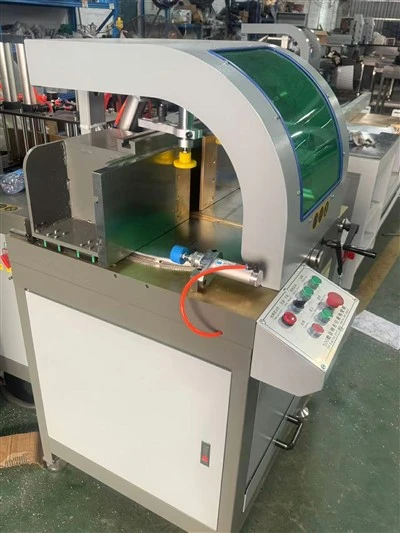
Let’s start with what a single head aluminium cutter does: it cuts aluminum extrusion at a 90 or 45 degree angle, usually with a circular saw blade, to create frames, window sashes, door headers, and custom structural parts. Every cut has to be dead on within a fraction of a millimeter; even a 0.2 millimeter gap can lead to leaks in a window, wobbly frames, or scrap material that costs a shop hundreds in wasted aluminum and labor. That’s where the first big performance split shows up between new and used machines.
A brand new single head cutter comes off our assembly line calibrated to ISO 9001 tolerances, right down to the blade’s cutting axis and the fence’s alignment. We test every unit before it leaves the warehouse: we run 50 test cuts on 6061 aluminum, measure each angle with a laser protractor, and confirm that cut lengths are within 0.1 mm of the programmed dimension. We build each new machine with precision-ground steel components, servo-driven positioning systems that hold consistent speed, and a saw head that locks into place with hardened steel pins—no play, no shift mid-cut. For a shop that does high-volume production, like a window factory cranking out 100 frames a day, that consistency translates to almost zero rework. I’ve had customers tell me that when they switched to new cutters, their scrap rate dropped from 8% to less than 2% in the first month. That’s not a small win; that’s thousands of dollars saved every quarter.
Used single head aluminium cutters, on the other hand, have already had years (sometimes decades) of vibration, wear, and alignment drift. Most used machines on the market were built with cast iron frames, which are durable but prone to warping if they’re moved multiple times or subjected to heavy load. The guide rails that move the saw head can get scored from metal shavings, and the locking mechanisms can wear down to the point where they don’t hold tight between cuts. A friend of mine who runs a small fabrication shop bought a 12-year-old used cutter last year, and within two weeks he noticed that some cuts were coming out 0.8 millimeters off. He tried recalibrating it himself, but the frame was warped so bad the alignment wouldn’t hold. He ended up having to buy a new fence and replace two guide rails, which cost nearly half what he’d paid for the used machine. That’s the hidden performance cost of used: those numbers that sound like a steal at first can balloon into maintenance bills that erase any savings.
Next, let’s talk about blade performance and cutting efficiency. A new cutter is set up with a sharp, high-tungsten carbide blade sized for aluminum—thin enough to make clean cuts, hard enough to last through thousands of runs without dulling. The motor on a new unit is matched to the saw head: 3 to 5 horsepower for most models, with variable speed control that adjusts to different aluminum alloys (thicker extrusions need slower speed, thinner ones can go faster). That means a new cutter can cut 10 to 12 pieces of 2-inch aluminum extrusion per minute, with no burrs or rough edges. Burrs force workers to spend extra time grinding and sanding, which adds 10 to 15 minutes per part.
Used cutters almost always have blades that are past their prime. Most sellers don’t mention that the blade has only 500 more cuts left, or that it’s been used on steel before (a big no-no, since steel blades chip aluminum). Even if you replace the blade, the motor on a used unit is often worn out: brushes get worn down, windings can be loose, and the speed won’t hold steady. I’ve seen used cutters that take twice as long to make a cut, leave burrs so thick they need a second pass, or even produce uneven cuts because the motor slows mid-run when it hits dense aluminum. For a small shop doing custom jobs, that slowdown might not be a huge deal, but if you’re trying to meet a tight deadline for a big order, that extra time adds up to missed deliveries and lost clients.
Safety is another area where new vs used performance differs, and it’s not just about passing inspections— it’s about keeping your workers safe. Every new single head cutter we build meets the latest OSHA and CE standards: fully enclosed blade guards that stop accidental contact, emergency stop buttons placed at three points on the machine, and interlocks that shut down the saw head if the guard is open. We also add features like blade brake systems that stop the blade within 2 seconds of releasing the trigger, which prevents kickback. I’ve seen too many shops with used cutters that have missing blade guards, broken emergency stops, or blade brakes that don’t work—these are machines that pose a major risk of serious injury. A former customer bought a used cutter from an online auction two years ago, and the blade guard was so worn it could barely cover half the saw. A worker’s glove caught on the blade, and he ended up missing two months of work. That’s a performance hit you can’t put a price on: lost productivity, worker’s comp claims, and morale issues that ripple through the whole shop.
Then there’s uptime and reliability. A new single head cutter comes with a 12-month parts and labor warranty, and we have a 24/7 support team that can troubleshoot issues over the phone or send a technician out within 48 hours if something goes wrong. We also build our machines with easy-to-source replacement parts, so if a guide rail or a motor part breaks, you can get it next-day from our warehouse. Used cutters, especially older models built before 2010, often have parts that are no longer manufactured. I’ve heard stories of shops that had to wait 3 weeks for a custom replacement part for their used cutter, which shut down the entire fabrication line for nearly a month. For a shop that runs two shifts, that’s thousands of dollars in lost revenue every day.
Now, let’s be fair—used cutters do have a place. If you’re a new startup with a tiny budget, doing small, low-volume jobs, a well-maintained used cutter from a reputable dealer might work for you. But even then, you have to check the alignment, the blade condition, the motor, and the safety features before you buy. Most “used” machines on social media marketplaces are sold by private owners who don’t disclose wear and tear, so you could end up with a machine that’s two steps away from breaking down. A lot of people think a used cutter is just a cheaper version of a new one, but that’s not true—performance is about more than the initial cost.
I’ve had customers come to me after buying a used cutter, frustrated with the constant maintenance and rework, and they end up upgrading to a new machine. One customer in Dallas spent $8,000 on a 10-year-old used cutter, and after six months, he’d spent another $3,500 on parts and repairs. When he bought our new cutter for $12,000, his total cost over a year was $12,000, vs. $11,500 for the used one. But his scrap rate dropped from 10% to 1%, and his production time per frame went from 2 hours to 1.2 hours. That extra time let him take on two more orders a month, which earned him $15,000 in new revenue. The numbers don’t lie—sometimes the cheaper option ends up being the more expensive one in the long run.
At the end of the day, the performance difference between new and used single head aluminium cutters boils down to consistency. A new machine is built to hold its precision and reliability for 10+ years, with parts that are designed to work as intended. A used machine, no matter how well it looks on the outside, has already had years of use that wear down those critical components. For any shop that cares about quality, safety, and bottom line, that’s a gap you can’t afford to ignore.
If you’re looking to upgrade your single head aluminium cutter, or if you’re not sure which machine is right for your shop, we’re here to help. We can walk you through the differences in performance, show you test cuts from our machines, and answer any questions you have about specs, warranties, and support. Don’t let a used cutter’s lower price tag lead to more work, more waste, and more headaches for your team—let’s connect and find the right solution for your needs.
Dual Head Aluminium Cutter References:
- American National Standards Institute (ANSI). Safety Requirements for Metal Cutting Circular Saws, 2018.
- European Committee for Standardization (CEN). Machine Tools Safety – Single Head Cutting Machines for Aluminum and Similar Materials, 2020.
- Fabricators & Manufacturers Association International (FMA). Tooling Performance Benchmarks for Aluminum Extrusion Processing, 2022.
- Occupational Safety and Health Administration (OSHA). Powered Industrial Truck and Machine Safety Guidelines, 2021.
- Journal of Manufacturing Processes. Precision Tolerance Degradation in Used Industrial Machine Tools: Causes and Mitigation, Vol. 47, 2021.
Kanghong Building Materials Technology Sdn. Bhd.
As one of the most professional single head aluminium cutter manufacturers and suppliers in China, we have world-leading production equipment and strong manufacturing capabilities. Please feel free to wholesale advanced single head aluminium cutter for sale here from our factory. Customized orders are welcome.
Address: No.601, Block 2, Xinlianchang Industrial Park, No.2 Taixing Second Road, Taiping South Industrial Zone, Dali Town, Nanhai District, Foshan City
E-mail: 631871392@qq.com
WebSite: https://www.kanghong-building.com/
