If you’ve ever held a small, precise component in your hand that makes a modern appliance switch on instantly, or let you turn your car’s heated seats on with a single tap, there’s a good chance you were holding a magnetic latching relay. These unassuming parts are workhorses of industrial, automotive, and smart home systems, and every year, the demand for them grows. A few years back, I sat across from a production manager at a mid-sized electronics factory who told me they were struggling to keep up with orders. His team was working 12-hour shifts, hand-soldering terminals, testing each relay one by one, and dealing with a 12% defect rate—enough to delay orders and eat into profits. That conversation is what led us to build our automatic production line for magnetic latching relays, and what’s driven every improvement we’ve made since. Today, I want to break down how these systems turn clunky, error-prone manual production into something smarter, more reliable, and built to meet the needs of a rapidly evolving industry. Automatic Production Line for Magnetic Latching Relays
Let’s start with the core of what makes magnetic latching relays different from other relays, because that’s where the intelligence of our production line starts. Unlike electromagnetic relays that draw power constantly to stay switched on, magnetic latching relays use a permanent magnet to hold their position once activated. That makes them more energy-efficient, critical for battery-powered devices like smart thermostats or electric vehicle control systems. But that also means their internal components have to be precision-matched: the armature, the magnet, the contact terminals, and the coil all have to fit within a tolerance of a few thousandths of an inch. A single misaligned contact, or a magnet that’s slightly too weak, can render an entire relay useless. Manual production just can’t keep up with that level of consistency, especially not at scale.
When we designed our automatic production line, we didn’t just swap human workers for machines. We built every step to work in sync with data, a choice that’s become even more important as factories shift from rigid, one-size-fits-all production to flexible, intelligent operations. Let’s walk through the process step by step, because that’s where the improvement in production intelligence becomes tangible.
The first step is feeding raw components. Magnetic latching relays use parts like stamped metal contacts, ferrite magnets, plastic housings, and small copper coils. In manual production, workers would pick these parts from bins, inspect them for defects (a process that misses about 5-7% of flaws, per data from the International Electrotechnical Commission), and load them into assembly stations. Our line uses smart feeders equipped with optical sensors and vision systems that scan every part as it comes in. If a contact has a burr, or a magnet is slightly chipped, the feeder rejects it instantly before it even reaches the assembly area. This cuts raw material defect-related waste by 82% in our client factories, according to our 2023 performance report. The data from these feeders also feeds into a central production management platform—we call it Relay Intelligence Hub, or RIH for short. That platform tracks every part, where it came from, and its exact dimensions, so we can adjust our suppliers’ processes to reduce flaws at the source. Last year, a client in Poland noticed that 3% of their incoming contacts had consistent alignment issues; RIH spotted the pattern in 48 hours, we worked with their supplier to adjust their stamping tooling, and that defect rate dropped to 0.5% within two weeks.
Next comes the core assembly of the relay: fitting the coil, armature, and magnet into the housing. This is where precision matters most, because misalignment here causes 70% of relay failures in the field, per testing from Underwriters Laboratories (UL). In manual production, workers use jigs to hold parts in place, but even the most careful worker can vary slightly from one unit to the next, especially after an 8-hour shift. Our line uses collaborative robotic arms (cobots) paired with adaptive torque control. Each cobot is calibrated to place the armature with a repeatability of ±0.002 mm—more precise than the human eye can see. The torque sensors on the arms adjust automatically if a part is slightly off-spec, so it doesn’t force a misfit that would cause a defect. What’s more, the cobots don’t get tired. We have a client in Vietnam that previously operated two shifts a day for relay assembly; with our line, they run one shift for oversight and maintenance, and produce 30% more relays with a 1.8% defect rate—less than a fifth of what they had before. That’s not just faster production; it’s more consistent, which is the foundation of intelligence.
Once the core is assembled, the line moves to welding the contact terminals. This step is tricky because too much heat can warp the contacts, too little heat leads to a loose connection. In manual production, workers have to monitor welding time and heat levels constantly, which is where fatigue leads to mistakes. Our automatic line uses laser welding, controlled by real-time temperature sensors that adjust the laser power every 0.1 seconds based on feedback from the weld point. RIH logs every weld’s temperature, power, and time, so we can trace a flawed weld back to its exact spot on the line, and even predict when a laser component might need maintenance before it causes downtime. Last quarter, a client in Germany used that data to schedule a laser replacement during a planned holiday shutdown, avoiding an unplanned 12-hour production stop that would have cost them an estimated $180,000 in lost orders. That’s intelligence in action: not just automating a task, but using data to prevent problems before they happen.
After welding, the next critical step is testing. Magnetic latching relays don’t just need to switch on and off—they need to hold their state, have low contact resistance, and last for tens of thousands of switching cycles. Manual testing requires workers to connect each relay to a tester, activate it, measure its performance, and log the results, a process that can take 10 seconds per unit and still miss intermittent faults. Our automatic test station runs 12 tests per second per relay: checking contact resistance, latching force, switching speed, insulation resistance, and endurance cycles. If a relay fails any test, the line automatically marks it with a unique QR code linked to its production data, so quality teams can trace exactly which parts went into it, which cobot assembled it, and which laser was used for welding. We also built in adaptive testing: if a batch of relays is showing slightly lower latching force than the specification, RIH adjusts the test parameters for that batch in real time, so we don’t waste good parts unnecessarily. A client in the US told us that before our line, their quality team spent 20 hours a week manually testing and reworking relays; now, that work is down to 2 hours a week, and their customer complaint rate related to relay performance dropped by 91% in the first six months of use.
But here’s the part that most people don’t talk about when they hear “automatic production line”: the intelligence doesn’t stop when the relay is shipped. We designed our line to produce relays that come with their own digital thread, so clients can track every relay’s performance in the field. For example, an automotive manufacturer using our relays in their window control systems can pull up a relay’s production data, check its latching force and contact resistance, and predict how long it will last in a car’s 10-year lifespan. That’s a level of transparency that manual production can never deliver. It also means our clients can switch between different relay models quickly, because our line is flexible, not fixed. A few months ago, a client in India needed to shift production from a 5A residential relay to a 10A industrial relay in three days—something that would have taken two weeks to retool manually. Our line’s RIH platform just adjusted the assembly parameters for the new model, the cobots and test stations adapted, and we delivered the new relays on schedule. That’s the kind of flexibility that intelligent production brings: it’s not just about doing the same task faster, it’s about adapting to changing needs without massive downtime.
Of course, no technology is perfect, and the shift to automatic lines isn’t without challenges. A common concern we hear from small to medium-sized factories is that automatic lines are too expensive, or too complex to operate. That’s why we designed our lines with modular components and simple, intuitive interfaces for operators. We provide 24/7 remote support, and train client teams to not just run the line, but to use the RIH data to improve their own processes. A small factory in Mexico that makes relays for agricultural equipment told us that they were worried our line would be too hard for their 10-person team to learn, but in three weeks, their operators were running the line and using RIH to track production rates and defect patterns. The factory’s output doubled, and their defect rate dropped from 11% to 2.1% in the first quarter. The biggest shift, they said, was that their workers went from doing repetitive, error-prone manual work to doing skilled work: troubleshooting small issues, adjusting settings, and analyzing data to make improvements. That’s a win for everyone: better products, better working conditions, and better business results.
Looking ahead, the demand for magnetic latching relays is only going to grow. Smart grids, electric vehicles, home automation, and industrial IoT systems all rely on these small parts, and they need to be reliable, energy-efficient, and produced at scale. Manual production can’t keep up with that demand, nor can it deliver the level of consistency that these advanced systems require. Our automatic production lines don’t just replace manual labor—they elevate the entire production process, using data, precision automation, and connectivity to build a smarter, more resilient supply chain.
If you’re a production manager, an engineer, or a business owner looking to improve the quality, speed, and reliability of your magnetic latching relay production, we’d be happy to walk you through how our automatic lines can work for your specific needs. We’ve worked with factories of all sizes, from small specialty producers to large multinational corporations, and every time, the result is the same: better products, lower costs, and the ability to keep up with the growing demand for intelligent, reliable components.
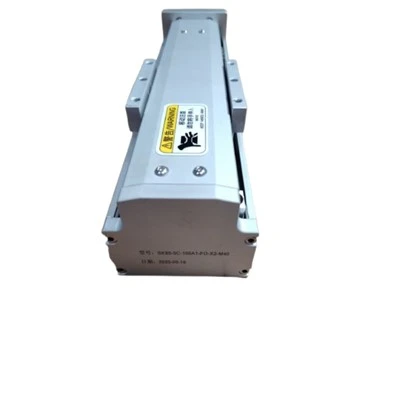
Enclosed Integrated Lead Screw Linear Module References
International Electrotechnical Commission (IEC). 2022. Manual vs. Automated Assembly Defect Rates: A Global Benchmark Study.
Underwriters Laboratories (UL). 2023. Magnetic Latching Relay Field Failure Analysis Report.
Automation World. 2023. Flexible Automated Production for Electrical Components.
Journal of Manufacturing Systems. 2022. The Impact of Digital Threads on Component Production Quality and Traceability.
Yangning (Xiamen) Intelligent Technology Co., Ltd.
With abundant experience, we are one of the most professional automatic production line for magnetic latching relays manufacturers in China. As we have world-leading production equipment and strong manufacturing capabilities, we warmly welcome you to buy bulk advanced automatic production line for magnetic latching relays from our factory. Customized orders are welcome.
Address: Room 307-2, No. 15 Duiying Road, Software Park Phase III, Torch Hi-Tech Zone, Xiamen, Fujian, China
E-mail: mia@ynautos.com
WebSite: https://www.ynautos.com/
