If you’ve ever spent time in industrial settings—whether at a manufacturing plant, a water treatment facility, or even in commercial HVAC systems—you’ve probably encountered valves working behind the scenes to control the flow of liquids, gases, or steam. Two of the most common types you’ll hear about are solenoid valves and butterfly valves, and as someone who’s spent the last 12 years supplying solenoid valves to businesses across North America, I’ve lost count of how many times customers have asked me: “Which one do I need for my application?” Solenoid Valves
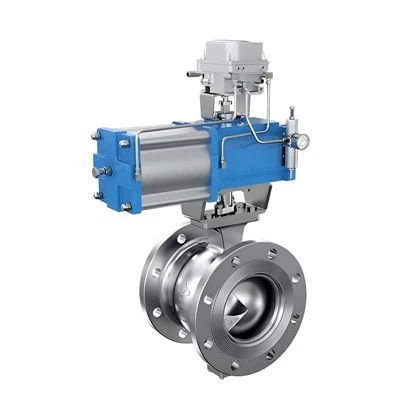
It makes sense to mix them up, at first. Both are flow-control valves, and at a glance, they both look like metal parts connected to pipes. But after seeing clients waste thousands of dollars by buying the wrong one for their system, I’ve learned that their differences go way beyond surface appearance. They operate on entirely different principles, serve very specific use cases, and come with their own sets of pros, cons, and maintenance needs. Let’s break this down in plain terms, not the jargon-heavy whitepapers you’ll find online.
First, let’s start with how each valve works—because that’s the foundation of everything else.
A solenoid valve is an electrically operated valve that uses a coil (the “solenoid” part) to open or close a flow path. When you send an electrical signal—usually 12V, 24V, or 110/220V, depending on the setup—through the coil, it creates a magnetic field. That magnetic field pulls a small piston, plunger, or diaphragm inside the valve body, which either opens a port to let flow through or closes it to stop flow. When the power cuts out, a spring inside the valve pushes that plunger back to its original position, closing (or opening, depending on whether it’s normally open or normally closed) the valve.
For a small, continuous process like a water dispenser in a office building, or a chemical injection system in a food and beverage plant, a solenoid valve is perfect because it responds instantly—literally in milliseconds. You can automate it easily, because it’s wired directly to sensors, timers, or a PLC (programmable logic controller). I recently worked with a craft brewery client that needed to dose precise amounts of sanitizer into their bottling line every 10 minutes; solenoid valves were the only thing that could do that without human intervention, and they haven’t had to replace a single one of our valves in three years.
Butterfly valves, on the other hand, are operated mechanically—usually by a handle, a gearbox, or an electric actuator, but not by an electromagnet. They consist of a circular metal disc (the “butterfly”) mounted on a rod that runs through the center of the pipe. Turning the rod (using the handle or actuator) twists the disc 90 degrees: parallel to the pipe wall, that’s open, perpendicular to the wall, that’s closed. You can also adjust the disc to be partially open, so it acts like a throttle to control flow rate—something most solenoid valves don’t do well, or at all.
I saw this first-hand at a municipal water treatment plant last year, when they were upgrading their main pipeline for raw water intake. They needed a valve that could control large volumes of flow over a wide range—they needed to dial it down in the winter when demand was low, and open it fully in summer. A solenoid valve would have been too small, too slow, and way more expensive for a 48-inch pipe. The butterfly valve was the clear choice, because it’s built for large pipe diameters and high flow rates without the bulk or cost of a gate valve or ball valve.
Now that you know how they work, let’s talk about the key differences that matter for real-world applications. This is where most people get tripped up, so I’ll make this easy to remember.
Size and Flow Capacity is probably the biggest one. Solenoid valves are almost always small—think ½ inch to 2 inches, with a max of around 6 inches in some special cases. That’s because the solenoid coil’s magnetic force can only move so much pressure, so they’re limited to low-to-medium flow rates. If you need to control a 12-inch pipe carrying thousands of gallons of water per minute, a solenoid valve just can’t handle that load. Butterfly valves, though, are built for large pipes—they come in sizes from 2 inches all the way up to 120 inches, perfect for industrial pipelines, water systems, and HVAC systems that move massive volumes.
That said, don’t write off small butterfly valves entirely—they do exist, but they’re not common because their mechanical design is less efficient for small flow control. For small pipes, solenoid valves are simpler, more compact, and cheaper.
Automation and Precision is another huge difference. Solenoid valves are the gold standard for automated systems because they’re direct-electric. You don’t need any extra actuators or levers—just plug them into your control system, and you can trigger them to open/close on a schedule, based on sensor readings, or even remotely via a phone app. They’re also incredibly precise for on/off applications: if you need to inject exactly 10ml of acid into a reactor every 5 seconds, a solenoid valve can do that with near-perfect accuracy, because it doesn’t have the mechanical slack that comes with a butterfly valve’s handle or actuator.
But butterfly valves can be automated too, right? Yes, but they require an electric actuator or pneumatic actuator to operate the rod, which adds cost and complexity. And while you can adjust a butterfly valve to be partially open, their precision isn’t as tight as a solenoid valve. I’ve had clients come to me complaining that their butterfly valve throttling was causing inconsistent flow, and it took them months to fix by switching to a modulating solenoid valve for their small injection process. So for high-precision automated on/off or modulation, solenoid valves win.
Response Time is a close runner-up. Like I said earlier, solenoid valves respond in 10 to 100 milliseconds. That’s critical for applications where you need immediate shutoff—think of a gas line in a kitchen that needs to close instantly if a leak is detected, or a cooling system for a CNC machine that needs to cut water flow right away if the temperature spikes. A butterfly valve, even when automated, takes 1 to 5 seconds to open or close—way too slow for those time-sensitive situations. The municipal plant I mentioned earlier? Their butterfly valve takes 3 seconds to go from open to closed, and they never had an issue because their system didn’t need instant shutoff. But a robotics client I worked with last year had to scrap a whole batch of parts when their butterfly valve’s slow response led to a coolant spill, costing them $12,000. That’s the kind of mistake you avoid when you pick the right valve for the job.
Pressure and Temperature Ratings are another area where they differ. Solenoid valves are generally used for lower pressure and temperature applications. Most standard solenoid valves work between 0 to 150 PSI and temperatures between -20°F to 350°F. That’s fine for most small industrial processes, consumer appliances, and HVAC systems. But if you’re dealing with high pressure—like a steam line in a power plant, or a high-pressure gas pipeline—solenoid valves have to be specialized, expensive, and rare. Butterfly valves, though, come in models for high pressure (up to 1500 PSI for some heavy-duty models) and high temperatures (up to 1000°F for metal-bodied butterfly valves). That makes them the go-to for harsh, high-stakes industrial environments.
Maintenance and Longevity is something I’ve been asked about a lot, especially by clients who don’t want downtime. Solenoid valves have fewer moving parts—usually just the plunger, a spring, and the coil. That means less to go wrong, right? Well, not exactly. The plunger and the seal inside the solenoid valve can wear out over time, especially if you’re switching it on and off hundreds of times a day. The coil can also burn out if you send the wrong voltage, which is usually a user error, but it happens. Replacement parts for solenoid valves are cheap, though—usually $50 to $200 for a full repair kit—and most repairs take 15 minutes.
Butterfly valves have more moving parts, especially when they’re automated. The disc, the rod, the seals around the pipe, and the actuator all need regular checks to make sure they’re not leaking or seizing. The rubber seals on butterfly valves can degrade over time, especially if they’re exposed to harsh chemicals or extreme temperatures, and replacing them takes a bit more work than fixing a solenoid valve. But for large butterfly valves, the tradeoff is that they last longer in continuous, high-flow applications than most solenoid valves would. I’ve seen a butterfly valve running 24/7 in a pipeline last 15 years, while the solenoid valves in the same client’s small injection system needed replacement every 3 to 5 years.
Cost is probably the first thing most business owners think about, and it’s not a one-size-fits-all answer. For small applications (pipes under 2 inches), solenoid valves are almost always cheaper upfront and over the life of the system. A 1-inch brass solenoid valve costs $50 to $150, while a 1-inch butterfly valve costs $30 to $80, but add an actuator to the butterfly valve and that jumps to $200 to $500. For large applications (pipes over 6 inches), butterfly valves are way cheaper: a 12-inch butterfly valve costs $1,500 to $3,000, while a solenoid valve of the same size is specialized, hard to find, and costs $10,000 or more. That’s a no-brainer for most industrial plant managers.
Now, let’s talk about the common misconceptions I hear all the time. Some people think solenoid valves are only for water, but that’s not true—they work for air, gas, oil, and even light chemicals, as long as they’re compatible with the valve body material. Others think butterfly valves can’t be automated, but they absolutely can—you just need to plan for the extra cost and time. And I’ve had a client swear that solenoid valves leak more, but that’s only if you pick a cheap, low-quality valve. All our solenoid valves come with PTFE seals that last 5+ years under normal use, so leaks are rare if you install them correctly.
So when do you pick which valve? Let’s sum this up with a quick guide that I share with every customer who calls me:
Pick a solenoid valve if you need:
- Small pipes (under 6 inches)
- Fast, on/off or precise flow control
- Easy automation or remote control
- Quick response time for safety or process needs
- Low cost for small, individual valves
Pick a butterfly valve if you need:
- Large pipes (6 inches and up)
- Control of high flow rates over a wide range
- Operation of high pressure or high temperature systems
- A valve that can throttle flow for large processes
- Cost-effectiveness for large-diameter pipelines
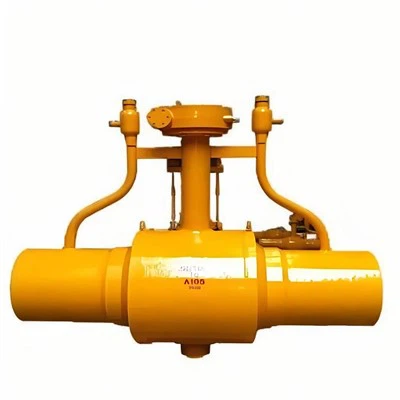
At the end of the day, there’s no “better” valve—just the right valve for your specific application. I’ve seen solenoid valves work perfectly for a coffee shop’s espresso machine steam control, and I’ve seen butterfly valves keep a city’s water supply running through a brutal winter. The worst mistake I see is forcing a valve to do a job it wasn’t designed for: a customer once tried to use a solenoid valve on a 10-inch wastewater pipe, and it failed within a month, costing them $8,000 in cleanup and downtime. That’s the kind of mistake we help clients avoid every day.
Ball Valve If you’re not sure which valve you need for your next project—whether you’re building a new industrial line, upgrading your HVAC system, or troubleshooting a leak in your pipeline—reach out to our team to discuss your requirements. We don’t just sell solenoid valves; we work with clients to figure out what will work best for their specific needs, no hard sells, no confusing jargon. We’ve helped everyone from small cafes to large manufacturing plants pick the right valves, and we’re here to help you too.
References
- Miller, J. (2021). Industrial Flow Control Valves: A Practical Guide. Industrial Press Inc.
- Smith, L. (2019). Valves for Water and Wastewater Applications. CRC Press.
- Technical Manual: Solenoid Valves for Industrial Processes. Automation Direct, 2022.
- Butterfly Valves: Selection and Application. Siemens Energy, 2020.
Wuxi PYNOS Flow-tech Co., Ltd.
As one of the leading solenoid valves manufacturers and suppliers in China, we offer a wide range of products with superior quality. We warmly welcome you to buy high quality solenoid valves made in China here from our factory. We also accept customized orders.
Address: Sales Center: 7th Floor, No.19 Qingyuan RD, Wuxi City, Jiangsu Prov., China
E-mail: Info@pynosvalve.com
WebSite: https://www.pynosvalves.com/
