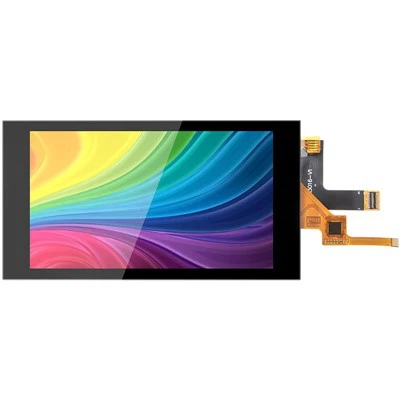
When it comes to TFT LCD touch screens, an aspect that often piques the interest of many customers is the backlight type. As a seasoned supplier in the TFT LCD touch screen industry, I’ve had countless interactions with clients who are eager to understand the nuances of different backlight technologies. In this blog, I’ll delve into the various backlight types for TFT LCD touch screens, their advantages, disadvantages, and applications, so that you can make an informed decision for your specific needs. TFT LCD Touch Screen
Types of Backlights
Cold Cathode Fluorescent Lamp (CCFL)
CCFL was one of the earliest backlight technologies used in TFT LCD touch screens. It works by passing an electric current through a gas – filled tube, which contains mercury vapor. When the current is applied, the mercury atoms emit ultraviolet light, which then hits a phosphor coating on the inside of the tube, producing visible light.
One of the main advantages of CCFL backlights is their high brightness. They can achieve a relatively uniform backlight distribution across the screen, which is crucial for applications where consistent illumination is required, such as in some industrial control panels. CCFLs also have a relatively long lifespan, with many models capable of operating for tens of thousands of hours.
However, CCFL backlights also have several drawbacks. They are relatively power – hungry compared to newer technologies. The power consumption not only increases operating costs but also generates more heat, which can be a concern in some applications. Additionally, CCFLs contain mercury, which is a toxic substance. Disposal of CCFL – backlit displays needs to be handled carefully to comply with environmental regulations. Another limitation is that CCFLs have a relatively slow response time, which can lead to issues in fast – moving images or video applications.
CCFL backlights have been widely used in older monitors, laptops, and some industrial and medical equipment. But as technology has advanced, their usage has declined in consumer electronic devices.
Light – Emitting Diode (LED)
LED backlighting has become the dominant technology for TFT LCD touch screens in recent years. There are two main types of LED backlighting: edge – lit and direct – lit.
Edge – lit LED backlighting: In this design, LEDs are placed around the edges of the LCD panel. The light is then guided across the panel through a light guide plate. This design allows for thinner display panels, as the LEDs can be hidden in the frame of the screen. Edge – lit LED backlights are also more energy – efficient than CCFLs, as LEDs consume less power. They produce less heat, which not only reduces cooling requirements but also increases the overall reliability of the display. However, edge – lit LED backlighting may suffer from uneven illumination, especially in larger screens. Areas near the edges may appear brighter than the center of the screen.
Direct – lit LED backlighting: With direct – lit LED backlighting, LEDs are placed directly behind the LCD panel. This design provides more uniform illumination across the entire screen, as each LED can contribute to the overall brightness of a specific area. Direct – lit LED backlights also offer better control over local dimming, which can enhance contrast ratios, especially in applications where black levels are important, such as in high – end televisions and some professional monitors. However, direct – lit LED backlights tend to make the display thicker and are generally more expensive to manufacture compared to edge – lit designs.
LEDs offer other benefits as well. They have a faster response time than CCFLs, making them suitable for applications that require displaying fast – moving content, such as gaming monitors and high – definition video players. LEDs are also more environmentally friendly as they do not contain mercury.
Organic Light – Emitting Diode (OLED)
OLED is a relatively new and advanced backlight technology. Unlike CCFL and LED backlights, which are used to illuminate an LCD panel, each pixel in an OLED display emits its own light. This means that OLED displays do not require a separate backlight unit.
The main advantage of OLED technology is its excellent contrast ratio. Since each pixel can be turned on or off independently, true blacks can be achieved, which results in a more vibrant and immersive visual experience. OLED displays also have a very wide viewing angle, with little to no color shift or loss of contrast when viewed from different perspectives. They offer a very fast response time, making them ideal for applications such as high – end smartphones, gaming consoles, and virtual reality displays.
However, OLED technology also has its limitations. One of the main issues is OLED burn – in. If a static image is displayed on the screen for a long period of time, the pixels that are constantly lit can degrade at a different rate than the others, resulting in a permanent ghost image on the screen. Another drawback is that OLED displays are generally more expensive to produce than LCD displays with LED backlighting, especially for larger screen sizes.
Applications of Different Backlight Types
When considering the choice of backlight type for a TFT LCD touch screen, the application is a crucial factor.
For consumer electronics such as smartphones and tablets, LEDs are the most common backlight choice. Their energy efficiency, thin form factor, and ability to provide a good balance between brightness and color accuracy make them ideal for these portable devices. OLEDs are also increasingly being used in high – end smartphones due to their superior display quality, although the higher cost can limit their use in the budget – conscious market segments.
In industrial applications, the choice depends on the specific requirements. For applications where high brightness and uniform illumination are needed, such as in outdoor industrial control panels or large – format displays for factory monitoring, CCFL or direct – lit LED backlights may be preferred. On the other hand, if power consumption and heat generation are major concerns, edge – lit LED backlights may be a better option.
Gaming monitors often use direct – lit LED backlights or OLED technology. Direct – lit LEDs can provide high contrast ratios and good local dimming, while OLEDs offer the fastest response times and the best contrast for an immersive gaming experience.
Making the Right Choice
As a TFT LCD touch screen supplier, I understand that choosing the right backlight type can be a challenging task. It’s important to consider factors such as the intended application, budget, power consumption requirements, and display quality expectations.
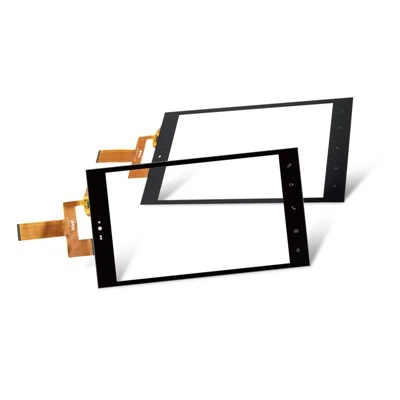
If you’re looking for a cost – effective solution with a long – established track record, CCFL backlights might be a good option for certain industrial or legacy applications. However, if energy efficiency, thin form factor, and fast response times are important, LED backlighting is likely the way to go. And for those who demand the highest display quality with excellent contrast ratios and wide viewing angles, OLED technology may be worth the higher investment, especially for high – end consumer devices or professional applications.
TFT LCD Touch Screen I encourage you to reach out to us to discuss your specific requirements. Our team of experts is always ready to provide you with detailed information and guidance on selecting the best TFT LCD touch screen with the appropriate backlight type for your project. Whether you’re a manufacturer of consumer electronics, an industrial equipment provider, or involved in any other field that requires high – quality displays, we can work with you to find the perfect solution.
References
- "Fundamentals of Flat Panel Displays" by Daniel A. Firester
- "Display Technology Handbook" by Paul Scheier
Shenzhen Mingqi Photoelectric Co., Ltd.
We’re well-known as one of the leading TFT LCD touch screen manufacturers and suppliers in China, featured by quality products and good price. Please rest assured to buy bulk customized TFT LCD touch screen from our factory. Welcome to view our website for more information.
Address: 3rd Floor, Building A, Fufang Science and Technology Park, Xintian Community, Fuhai Street, Baoan District, Shenzhen, Guangdong
E-mail: mingqisales@gmail.com
WebSite: https://www.mq-screen.com/
