As someone who’s spent over a decade designing, manufacturing, and installing acoustic operable partitions (AOPs) for commercial spaces, I’ve lost count of how many times customers have asked this exact question during a consult: “Wait, do these things actually cancel noise, or are they just fancy room dividers?” It’s a fair question—too many brands overpromise and underdeliver when it comes to acoustic performance, and when most people picture an operable partition, they think of the wobbly folding doors that fold back into a closet at a community center, not the sleek, custom units we install in boardrooms, hotel ballrooms, and co-working spaces. Acoustic Operable Partitions
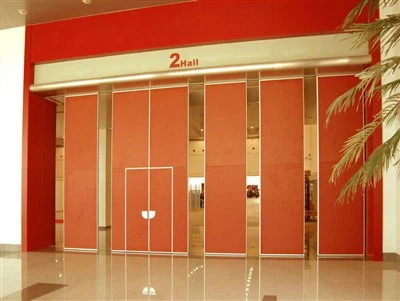
Let’s start with the basics: what an acoustic operable partition is, and what “noise cancellation” actually means, because there’s a lot of confusion around terms here. First, AOPs (also called moveable walls, operable partitions, or demountable walls) are modular, vertically suspended systems that glide along a ceiling track to split a single large space into multiple smaller rooms, or merge them back into one. They’re designed to be reconfigured in minutes, which makes them ideal for spaces that host everything from small team meetings to trade shows.
Now, noise cancellation—most people think of active noise cancellation (ANC), the tech in headphones that uses microphones to pick up ambient sound and plays an inverted sound wave to cancel it out. That’s the kind of noise cancellation you get in a Bose QuietComfort or Sony WH-1000XM5, and for a long time, that’s what customers thought AOPs should have. Here’s the key distinction: AOPs don’t use active noise cancellation tech. But that doesn’t mean they don’t have industry-leading noise control features that are often confused with noise cancellation.
Let’s break down the two core acoustic performance metrics for partitions, because this is where most of the misinformation comes in: Sound Transmission Class (STC) and Noise Reduction Coefficient (NRC). STC rates how much sound is blocked from traveling through a barrier; higher STC means less sound leaks through. For context, a standard interior drywall wall is usually STC 30 to 35, which is enough to separate a bedroom from a hallway but not enough to drown out a loud TV or a conversation in the next room. A high-performance acoustic operable partition? We regularly produce units with STC 50 to 55. That’s equivalent to a solid concrete wall. To put that in real terms: a partition with STC 55 will block almost all speech and background noise—you won’t hear someone talking in the adjacent space, and a vacuum cleaner won’t carry through the wall.
NRC, meanwhile, measures how much sound a surface absorbs rather than reflects. A typical wall has an NRC of 0.1, meaning it absorbs only 10% of sound, reflecting the rest. A good AOP core material (usually mineral wool, foam, or fiberglass) will have an NRC of 0.6 to 0.8, meaning it absorbs 60 to 80% of sound that hits it, reducing echo and reverberation. That’s a big deal in open spaces where sound bounces off ceilings, floors, and hard walls—our partitions cut down on that echo far more than a standard divider would.
So why do people think AOPs have noise cancellation? Because their performance is often better than the passive barriers they’re used to. Let’s clear up the myth first: AOPs do not use active noise cancellation. That’s not their design, and adding ANC to a moveable wall would be impractical, expensive, and counterproductive—ANC requires power, and AOPs are meant to be reconfigured quickly without outlets or complex wiring in most cases. But what many customers don’t realize is that passive noise control (the kind AOPs excel at) is often exactly what they need, and it’s far more reliable for large spaces than active noise cancellation.
Let’s use a real example I dealt with last year: a mid-sized hotel in downtown Chicago. They had a ballroom that they split into three spaces for corporate events, each needing enough privacy for breakout sessions. The client initially asked for “partitions with noise cancellation to keep the next room’s presentations from being heard.” We walked them through the difference: their primary problem was sound transmission between spaces, not background ambient noise. An STC 52 AOP would block 99% of speech sounds, which is more than enough for their use case. If they’d opted for a unit with ANC, it would have added thousands to the cost, required permanent wiring across the ceiling track, and failed when power went out during the occasional event. The STC 52 partition we installed hit their exact needs, and they’ve told us repeatedly that attendees can’t hear conversations in adjacent breakout rooms.
That’s not to say there’s no overlap between AOPs and noise cancellation tech—some higher-end units do integrate controlled sound-absorbing panels, and we can add optional noise-masking features for spaces that need additional privacy, like executive boardrooms or recording studio ancillary spaces. Wait, noise masking is another term people mix up with noise cancellation. Noise masking is when a system plays a low, consistent background sound (often called pink noise) to make speech and other unwanted sounds less noticeable. We offer that as an add-on for clients who have very specific needs, like law firms that need client consultations to be completely private, or healthcare clinics that want to keep patient conversations confidential. But that’s a separate feature from the core AOP’s acoustic performance, and it’s not the same as the noise cancellation in headphones.
Now, let’s talk about what actually makes an AOP high-performing, because not all partitions are created equal. A lot of cheaper, generic operable partitions are made with thin metal frames and little to no sound-dampening core, so their STC rating is as low as 25 or 30—they’re basically decorative, not functional for noise control. The difference comes down to three key design choices:
First, the core material. The best AOPs use a dense, sound-absorbent mineral wool core, not cardboard or lightweight foam. Mineral wool is non-combustible, absorbs high-frequency sounds (like speech) far better than lighter materials, and adds mass to the partition to block low-frequency sounds (like bass from music or HVAC systems). That mass is key—sound travels through solid objects, so a heavier partition will block more sound. Our standard AOP panels weigh around 100 pounds per square foot, compared to a cheap partition that might be 40 pounds per square foot.
Second, the sealing system. Even the best core material is useless if gaps between the panels or along the ceiling track let sound leak through. High-performance AOPs have a multi-point sealing system: rubber gaskets along the top, bottom, and sides of each panel that compress when the panel is locked into place, and interlocking joints between panels that create a tight, soundproof seal. Cheaper partitions often only have a single rubber strip, so sound can leak through the edges, cutting their effective STC rating by 10 or more points. We test every one of our partitions in an independent acoustic lab to confirm their STC rating, so customers know exactly what they’re getting—no guesswork, no overinflated claims.
Third, installation. An AOP is only as good as how it’s installed. A panel that’s not perfectly plumb will have gaps, and a ceiling track that’s not level will cause panels to shift, creating sound leaks. We work with contractors to measure every space down to the 1/8 inch, and we provide step-by-step installation guides and on-site support to make sure each partition is installed correctly. Last year, a client in Austin tried to install a cheap AOP themselves, and when they reached out to us frustrated that sound was leaking through, we found that they’d left a half-inch gap between the bottom of the panels and the floor—something our installation team would never have allowed.
Let’s address a common misconception head-on: many people assume that because AOPs are “portable” or “moveable,” they can’t offer the same noise control as a fixed wall. That’s just not true. The STC 55 rating we offer is on par with a solid 2×4 wall covered with 5/8 inch drywall on both sides, and it’s far higher than the STC 40 you’d get from a standard stud wall with only one layer of drywall. The only time an AOP will underperform is if it’s not designed or installed correctly—cut corners on materials or installation, and you’ll get a divider that looks good but does nothing to control noise.
So to circle back to the original question: Do acoustic operable partitions have noise cancellation features? The short answer is: No, they don’t use active noise cancellation tech like headphones. But the better, more useful answer is: They offer far more effective passive noise control than most people realize, and for 90% of commercial and hospitality spaces, that’s exactly what they need. The confusion comes from two places: brands marketing basic partitions as “noise canceling” to sell more units, and customers conflating active noise cancellation with any kind of effective sound control.
If you’re in the market for an AOP, here’s what to look for to make sure you’re getting a system that delivers on noise control:
- Ask for an independent STC test rating. Any reputable manufacturer will have this on hand—if they can’t provide it, walk away.
- Inspect the sealing system. Make sure the panels have gaskets on all edges, not just the sides, and that the interlocking joints are tight.
- Avoid the cheapest option. A $200 per linear foot partition will never have the same STC rating as a $500 per linear foot high-performance model.
We’ve worked with clients across industries—from co-working spaces that need to split open floors into quiet work areas, to hotels that host weddings and conferences, to corporate offices that need flexible meeting spaces. One of our longest-standing clients is a tech startup in San Francisco that uses our STC 50 partitions to split their large open workspace into team rooms. They told us that before installing our partitions, team meetings could be heard across the entire office, making it hard for people to focus on deep work. Now, even adjacent teams can’t hear each other’s conversations, and they can reconfigure the space in 15 minutes when they need to host all-hands meetings.

If you’re evaluating acoustic operable partitions for your space, whether you’re designing a new hotel ballroom, renovating an office, or looking to upgrade your event space, we’re here to help you cut through the noise. We’ll walk you through the difference between noise control and noise cancellation, review your specific needs, and provide a custom quote tailored to your space and budget. Don’t settle for a partition that looks good on paper—make sure it actually delivers the acoustic performance you need.
Folding Operable Partitions References
- American National Standards Institute (ANSI). (2018). Methods for Calculation of the Sound Transmission Class of Building Elements. ANSI/ASA S12.60-2018.
- Noise Control Foundation. (2021). Acoustic Performance of Moveable Walls. Noise Control Foundation Technical Bulletin.
- International Hotel & Restaurant Association. (2022). Acoustic Best Practices for Hospitality Event Spaces. IHRA Facility Guidelines.
- Acoustical Society of America (ASA). (2020). Passive vs. Active Noise Control for Commercial Spaces. Journal of the Acoustical Society of America, Vol. 148, No. 5.
Dasheng Partition Building Materials Co., Ltd.
As one of the most professional acoustic operable partitions manufacturers and suppliers in China, we’re featured by quality products and good service. Please rest assured to buy customized acoustic operable partitions at competitive price from our factory.
Address: No.41, West Line East Road, Shizigang Industrial Zone, Dashi Community, Lishui Town, Nanhai District, Foshan City, Guangdong Province, P.R. China
E-mail: dsmobilewall@gmail.com
WebSite: https://www.movablewall.net/
