If you’re here because you’re planning to install an oil steam boiler, you’ve probably run into the question of clearance—like, how much space do I actually need around this thing? As someone who’s been supplying oil steam boilers for over a decade, I get it. It’s not just about fitting the unit in the basement or mechanical room; cut corners here, and you’re looking at safety risks, airflow issues that tank efficiency, and even code violations that can stall your project. Let’s break this down like I’d explain it to a new customer who’s nervous about messing up their install. Oil Steam Boiler
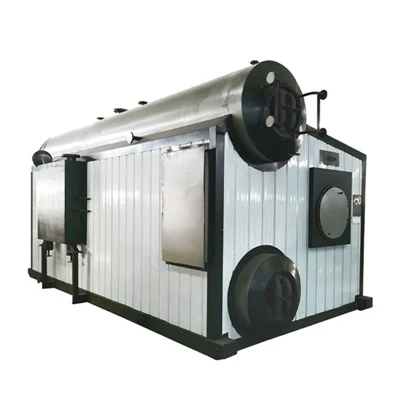
First off, I need to clarify: clearance isn’t a random number I pull out of thin air. It’s a mix of three big things—safety codes (the non-negotiable stuff), manufacturer’s specs (your boiler’s instruction manual, because every unit’s a little different), and real-world practicality (like being able to service it when something breaks). A lot of first-timers think, “If it fits, it’s fine,” but that’s a trap. For example, I once worked with a guy who crammed a 100 HP oil boiler into a 2-foot space on the sides; six months later, it overheated because it couldn’t get enough combustion air, and he had to tear out the wall to fix it. Total waste of time and money, not to mention the safety hazard.
Let’s start with the basics: what clearance are we even talking about? There are two main types: clearance for combustion air and ventilation, and clearance from combustible materials. Combustion air is what the boiler needs to burn the oil cleanly—no that, you get incomplete combustion, which means carbon monoxide (super dangerous, invisible, toxic) and soot buildup. Combustible materials are things like wood framing, drywall, plastic pipes, even old rags stacked next to the boiler. You don’t want that getting too close, because the boiler’s surfaces (flue gas outlet, door, outer casing) can get really hot—hot enough to ignite stuff if it’s too near.
Now, let’s get to the actual numbers, but with a caveat: I can’t give you one size fits all, but I can tell you the general ranges most boilers and codes follow. For side clearances (left and right of the boiler), it’s usually between 18 inches and 3 feet. For the front, where you’d open the door to check the flame or change the oil nozzle, you need more—2 to 3 feet, minimum. The back, where the flue pipe exits, is often 12 to 18 inches, but again, check your manufacturer’s specs because some bigger boilers need more back space to route the flue properly. And then there’s the top clearance—where the boiler vents or has controls—usually 18 to 24 inches, so you can access pressure gauges or any sensors.
Wait, but hold on—codes are key here. I’m in the U.S., so I follow NFPA 31, which is the Standard for the Installation of Oil-Burning Equipment. That’s the big one for oil-fired boilers. NFPA 31 says that for most small to medium oil boilers (up to 50 HP), side clearance from combustibles is 18 inches, front is 30 inches, and back is 12 inches. But if your boiler is larger than 50 HP, that jumps to 30 inches side, 3 feet front, 18 inches back. That makes sense—bigger boilers burn more fuel, get hotter, and need more air. But here’s the thing: some local building codes might have stricter rules than NFPA, so always check your city or county’s mechanical code before you finalize the layout. I’ve had customers in New York City tell me their code requires 2 feet front clearance, not 3, because of tight urban spaces—code varies, so don’t skip that step.
Then there’s the manufacturer’s specs. Let’s say you buy a 75 HP oil steam boiler from us. Our instruction manual says side clearances minimum 24 inches, front 36 inches, back 18 inches. That’s not us being picky—it’s because we tested that unit, and those numbers ensure proper airflow and heat dissipation. If you go smaller than that, you might void your warranty. Yep, that’s right—most boiler warranties require you to follow the manufacturer’s clearance rules, so if your unit breaks because you didn’t leave enough space, you’re on the hook for repairs. I saw a customer last year who tried to save 6 inches of side space, and when the boiler’s heat exchanger cracked, the manufacturer refused to cover it. He ended up paying $4,000 for a new part—way more than the 6 inches of space would’ve cost in his layout.
Now, let’s talk about the practical stuff you don’t see in a manual. Like, where are you going to store the oil tank? That’s another clearance thing. You need space to pull the oil delivery truck up to fill the tank, right? So even if your boiler itself is fine, if you blocked the access path to the tank with the boiler, the driver can’t unload. Also, service—when a tech comes to clean the burners, replace the filter, or adjust the controls, they need to move around the boiler. If the front is crammed tight, they can’t get the tools in, and they might have to do a rush job, which leads to missed issues down the line. I once had a customer who had a 12-inch front clearance; the tech couldn’t reach the flame sensor, so he just said it looked fine. A week later, the boiler was spewing carbon monoxide, and the building had to be evacuated. No one got hurt, but it was a total headache that could’ve been avoided with a little extra space.
Wait, what about if you’re putting the boiler in a smaller space, like a closet or a mechanical room with limited room? A lot of people ask me, “Can I get away with less than NFPA or manufacturer specs?” The short answer is, only if you can get a variance from your local code official. Variances aren’t impossible, but you have to prove that you’ll have adequate ventilation, maybe add a fan for combustion air, or use a boiler that’s designed for compact spaces. Even then, I’d caution against it. A compact designed boiler from us might have lower clearance, but it also costs a bit more, and you’re still trading off some efficiency for space. I’d rather advise you to adjust your room design than risk safety or efficiency.
Another common mistake: mixing clearance for combustibles with clearance for airflow. Sometimes people think, “If I leave 18 inches, that’s enough,” but the airflow part is separate. Combustion air can come from two places: either directly from the room (so the room has to be big enough, or you have vents to outside) or through dedicated ducts. If you have a small mechanical room with no outside vents, you need to make sure you’re not blocking those vents—even if the side clearance is fine, if a stack of cardboard is covering the intake vent, the boiler will starve for air. That’s a quick fix, but it’s another thing to keep in mind when measuring.
Let me give you a quick example from a recent install: a customer in Chicago needed a 60 HP oil steam boiler for a small apartment building. His original layout had 18 inches sides, 24 inches front, which was just under our spec of 24 inches sides and 36 inches front. We told him upfront he’d need to adjust, so he moved the boiler over 6 inches on the side and added a couple feet to the front. A few months later, he texted me saying the boiler runs perfectly, no issues, and the techs can service it in 10 minutes instead of 30. That’s the difference between doing it right and cutting corners.
So to wrap up the key points here: first, always check NFPA 31 for your base clearance numbers. Then, look at your boiler’s manufacturer manual—those are the hard rules for warranty and proper function. Next, confirm with your local building code, because some areas have stricter requirements. Finally, leave a little extra space for practical stuff—service access, oil delivery, and avoiding that “I wish I had more room” regret later.
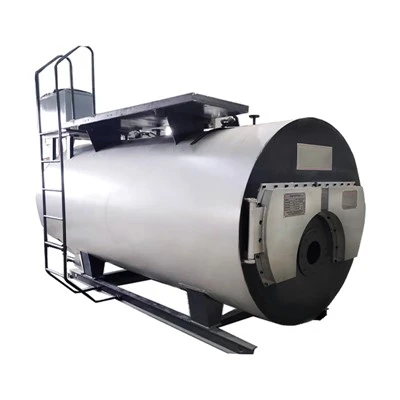
If you’re in the middle of planning your oil steam boiler install and aren’t sure how to calculate your clearance, or what size boiler is right for your space, hit me up. We don’t just sell boilers—we help with layout, code checks, and making sure you get all the clearance right the first time. No hidden fees, no jargon, just straight advice from someone who’s installed hundreds of these units over the years. Don’t let a bad clearance plan mess up your project—let’s work it out together.
LNG Cryogenic Pump Skid References:
- National Fire Protection Association. (2020). NFPA 31: Standard for the Installation of Oil-Burning Equipment. Quincy, MA: National Fire Protection Association.
- Cleaver-Brooks. (2022). Oil Steam Boiler Installation and Maintenance Manual. (Specific to model line; example reference for manufacturer specifications)
- International Code Council. (2021). International Mechanical Code. Washington, DC: International Code Council.
Xinxiang Huayuan Container Equipment Co., Ltd.
With abundant experience, we are one of the most reliable oil steam boiler manufacturers and suppliers in China. We warmly welcome you to buy durable oil steam boiler made in China here from our factory. If you have any enquiry about cooperation, please feel free to email us.
Address: No.2, South Road, Industrial Cluster Zone, Genghuang Township, Fengquan District, Xinxiang City, Henan Province
E-mail: cncd527@gmail.com
WebSite: https://www.huayuanequipment.com/
