Can ultrasonic water meters be used for commercial applications? This is a question I’ve fielded dozens of times in the 12 years I’ve worked in the ultrasonic water meter supply industry, mostly from commercial building managers, facility engineers, and even small business owners who’ve relied on traditional mechanical meters for decades. Let me start with a simple, honest answer: yes—but not without understanding the unique tradeoffs, requirements, and long-term value that make ultrasonic technology a game-changer for commercial use cases, instead of just a fancy upgrade. Ultrasonic Water Meter
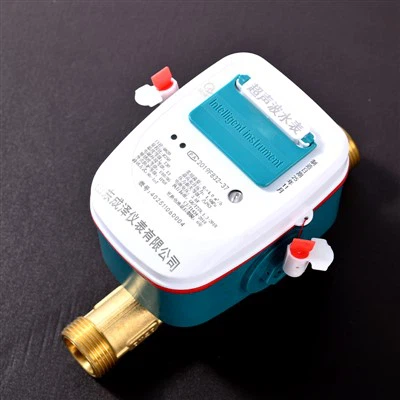
I still remember the first commercial project I consulted on back in 2011: a mid-sized retail chain with 12 locations across the Midwest, all struggling with unexplained water bill spikes. Their old mechanical meters were fouled with sediment, so their readings were off by as much as 18% per location—enough to add up to $47,000 in annual overcharges, plus a bunch of time spent manually testing meters every quarter to spot errors. When we installed ultrasonic meters at those sites, the discrepancy dropped to less than 2%, and within two years, the chain had saved enough to justify switching all their locations. That’s the kind of real-world win I see every time a commercial client gives ultrasonic tech a fair shot.
But why did that work? Let’s break down what makes ultrasonic meters different from the mechanical ones commercial operations have used for generations. Mechanical meters work by forcing water through a spinning turbine or gear; how fast that part moves translates to volume. But in commercial settings, water isn’t always the clean, steady flow you get in a residential line. Think of a restaurant with a commercial dishwasher that sends high-pressure bursts of water, or a factory with pipes that carry sediment from well water, or a shopping mall where water use spikes during holiday seasons. All of that wear and tear gums up mechanical parts, leading to drift, under-reading, and frequent maintenance.
Ultrasonic meters, by contrast, use sound waves to measure flow without any moving parts. Most of our commercial-grade models use two transducer pairs: one sends a sound pulse upstream, another sends one downstream. The difference in time it takes for the pulses to travel is directly tied to water speed, and we convert that to volume. That means zero friction from moving parts, no sediment buildup causing errors, and no need to stop the line to replace a broken gear every 18 months. For commercial applications, that’s not just a convenience—it’s a massive long-term cost saver.
Now, the question isn’t just “can it work” but “when is it the right fit?” Commercial use cases aren’t one-size-fits-all, so let’s go through the most common ones I see, and where ultrasonic meters shine, and where they might need a little extra setup.
First, multi-tenant commercial buildings. Apartment complexes, office parks, and mixed-use spaces often struggle with accurately allocating water use between units or tenants. Mechanical meters for each unit can drift, leading to tenants overpaying for someone else’s waste, or property owners missing out on revenue from unaccounted water. Ultrasonic meters, especially our compact inline models, install easily in residential unit lines and large main building lines, with reading accuracy that stays consistent for years. A 2022 study from the International Association of Plumbing and Mechanical Officials (IAPMO) found that ultrasonic commercial meters reduce billing disputes by 72% compared to mechanical alternatives, because their precision means there’s no room for “my meter read low” arguments. That’s a huge win for property management teams who spend hours mediating tenant complaints.
Next, food service and hospitality operations. Restaurants, hotels, and bars have some of the most volatile water use in commercial spaces: a busy restaurant can go from 100 gallons an hour at 9 a.m. to 1,200 gallons an hour during lunch service, with peaks and surges that would knock a mechanical meter off its calibration. Ultrasonic meters handle variable flow rates far better than mechanical models—our commercial units are rated for flow ranges from as low as 0.5 gallons per minute (for a small bar’s soda system) up to 10,000 gallons per minute for hotel main lines. They also don’t suffer from mechanical wear from frequent high-flow spikes, which means less downtime for maintenance. One of our 2019 clients, a boutique hotel in Portland, reported cutting their water maintenance costs by 65% in the first year after switching from mechanical.
Then there’s industrial commercial use, but wait—here’s where I’ve seen a common misconception: people think all industrial sites need the same heavy-duty meters, but even mid-sized manufacturing facilities, car washes, or laundromats benefit from ultrasonic tech. A car wash, for example, uses high-volume water at pressure that would bend or break a mechanical meter’s turbine, but our ultrasonic meters are built with robust, corrosion-resistant transducers that handle that kind of stress. For manufacturing facilities, many of which are required to track water use for regulatory reporting or sustainability goals, the data logging capabilities of ultrasonic meters are a big plus. Most of our commercial models store hourly or even 15-minute interval readings, which can be integrated into a facility’s building management system (BMS) to track usage trends, spot leaks early, and report to local regulators—something mechanical meters can’t do natively without additional sensors.
But that’s not to say there aren’t challenges, especially for commercial applications where upfront costs can be a barrier. I get it: a mechanical meter might cost $200-$300, while a comparable ultrasonic commercial meter starts at $800-$1,200. It’s a higher initial investment, and for small commercial operations like a single café or a small retail store, that cost can be hard to justify. But here’s the math I walk clients through: mechanical meters need to be replaced every 3-5 years, with installation and labor adding $150-$200 per swap. Ultrasonic meters last 15-20 years, with almost no routine maintenance, and their accuracy means no more overbilling from the water utility. For a 10,000 sq ft office building, that $1,000 upfront cost turns into $8,000 in savings over a decade when you factor in reduced water bills and maintenance. For larger operations, the return on investment (ROI) is often less than two years. I’ve seen small restaurants with 5-year ROI, and mid-sized retail chains with ROI in 18 months.
Another common hurdle: installation concerns. Commercial pipes are often larger and harder to access than residential ones, and some building managers worry that ultrasonic meters need special setup to work properly. It’s true that for maximum accuracy, ultrasonic meters need to be installed with straight pipe runs before and after the unit (typically 10 times the pipe diameter before, 5 times after) to ensure water flow is straight and not turbulent. For most commercial buildings, that’s not a big issue—existing main lines usually have enough space, or we can recommend minor modifications that are low-cost and non-disruptive. For older buildings where pipe space is tight, we also have a model with clamp-on transducers that mount to the outside of the pipe, so there’s no need to cut into the line at all. That’s a game-changer for retrofits, because it means no downtime for water service, which is a huge relief for restaurants or hospitals that can’t afford to shut off water during business hours.
Wait, let’s talk about leaks too—something every commercial property hates to deal with. Undetected leaks in commercial buildings can cost thousands of dollars a month, and mechanical meters often can’t spot small, slow leaks because their low-flow accuracy is poor. Ultrasonic meters measure down to 0.1 gallons per minute, so even a small leak under a floor or in a pipe wall will show up in the meter’s data. A client of mine in Chicago, a 15-story office building, had a hidden pipe leak in the basement that was wasting 40 gallons a day—their mechanical meter didn’t pick it up until their quarterly testing, but the ultrasonic meter alerted them to the anomaly after just two weeks of installation. They fixed the leak within a day and saved $3,200 a year on water bills. That’s the kind of proactive savings that make ultrasonic meters worth the investment, not just for accuracy but for operational efficiency.
I’ve also had clients ask about durability, especially for extreme commercial environments—think a manufacturing plant with high temperatures, or a car wash with chemical additives in the water. Our commercial ultrasonic meters are rated for IP68 waterproofing, meaning they can be submerged in water or exposed to harsh conditions without damage, and their transducers are made with materials that resist corrosion from common water chemicals. We’ve had a client in a steel factory install our meters 8 years ago, and they’ve had zero failures due to corrosion or high-temperature wear. That’s another big plus over mechanical meters, which often degrade faster in harsh environments.
But let’s be clear: ultrasonic meters aren’t the right fit for every commercial operation. If you’re a small business with a single 1-inch pipe, and your water bill is under $500 a month, the ROI might not be worth it—mechanical meters will work fine for you. If you have a well line with extreme sediment that’s not filtered, you might need a pre-filter before the ultrasonic meter to keep the transducers clear, which adds a small upfront cost. And for operations with extremely low flow (like a small office that only uses 10 gallons a day), some older ultrasonic models might have trouble measuring that accurately, though our latest generation commercial meters can handle very low flow with just as much precision as high flow.
So, putting it all together: yes, ultrasonic water meters absolutely can be used for commercial applications, and for most operations that want to reduce costs, eliminate billing disputes, and improve operational efficiency, they’re a better long-term choice. The key is understanding your specific use case, working with a supplier that can tailor the right meter for your pipe size, flow range, and environment, and looking beyond the upfront cost to the long-term savings.
I’ve worked with hundreds of commercial clients over the years, and the stories that stick with me are the ones where they go into the switch skeptical, and come out telling me it was the best operational investment they made that year. A bakery in Cleveland that went from $1,200 a month in overcharges to $900. A hotel in Atlanta that stopped spending $15,000 a year on mechanical meter replacements. A manufacturing plant that cut water waste by 22% in six months. These aren’t abstract stats—they’re real businesses, with real problems, that solved them with ultrasonic technology.

If you’re a commercial building manager, facility engineer, or small business owner who’s tired of overpaying for water, dealing with frequent meter maintenance, or struggling to track usage accurately, I’d encourage you to reach out. We work with commercial operations of all sizes, from small retail spaces to large industrial complexes, and we can help you evaluate if an ultrasonic water meter is the right fit for your needs, answer any questions about installation or cost, and walk you through the ROI calculations specific to your business. Don’t let outdated technology keep your business from saving money and operating more efficiently.
IoT Remote Water Meter References:
- International Association of Plumbing and Mechanical Officials (IAPMO). (2022). Ultrasonic Water Meters for Commercial Applications: Performance and Reliability Study.
- Water Technology International. (2021). “Long-Term Performance of Ultrasonic vs. Mechanical Meters in Commercial Settings.”
- U.S. Environmental Protection Agency (EPA). (2020). Water Efficiency Opportunities for Commercial Buildings.
Shandong Chengze Instrument Co., Ltd.
We’re well-known as one of the leading ultrasonic water meter manufacturers and suppliers in China, featured by quality products and good service. Please rest assured to buy high-grade ultrasonic water meter for sale here from our factory. Also, customized service is available.
Address: No.7, Wensi Road North Industrial Park, Liguan Town, Lanshan District, Linyi City, Shandong Province, China
E-mail: czwatermeter@163.com
WebSite: https://www.cz-watermeter.com/
