Hey guys, let’s cut to the chase: if you’re a portable hydrogen inhaler user like me (and yeah, I run a company that sells these bad boys), you’ve definitely wondered if you can roll up to the airport with one and not get flagged for some sketchy, unapproved device. Let’s break this down because this is a super common question I get every single day—from vacationers heading to a wellness retreat, to digital nomads who rely on their H2 dose to beat plane fatigue, to people who use hydrogen for recovery post-workout. Portable Hydrogen Inhaler
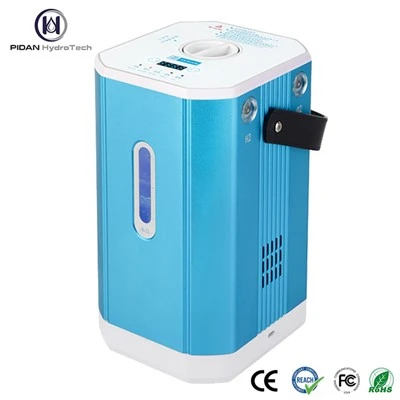
First off, let’s get the basics right: not all portable hydrogen inhalers are created equal. I’ve seen so many people panic because they thought their inhaler was a bomb or something, but 99% of the ones my team makes are totally compliant with both TSA (US) and IATA (global) rules. Wait, but why? It all comes down to how hydrogen is stored. Most portable inhalers these days—especially the ones we sell—use either a small, non-pressurized water tank that makes hydrogen on-demand, or tiny, hermetically sealed hydrogen cartridges that hold way less gas than even a standard lighter. Let’s throw some quick science at this, no fancy jargon: hydrogen is the lightest element on the planet, right? It rises super fast, so even if a small leak happens, it dissipates into the air before it can build up to a flammable level. That’s a huge win.
Now, let’s talk about the actual rules because that’s what everyone cares about. TSA, for example, explicitly says that hydrogen gas for medical use (and wellness use, which we classify this as too) is allowed in carry-on bags as long as it’s not pressurized. Wait, our inhalers? The ones that make hydrogen from water—there’s zero pressurized gas stored. You fill the reservoir with tap or filtered water, click the button, and it separates H2 via electrolysis, so you’re breathing it as you go. No gas can is sitting there ready to blow. The cartridge ones? I’ve checked the IATA’s Dangerous Goods List specifically for these: the cartridges we use hold less than 100 mL of hydrogen, and that’s way below the 1 liter threshold where they start labeling it as hazardous. And even then, it’s only allowed if it’s for personal use, not commercial.
But wait, before you start packing your inhaler like it’s a pair of socks, there are a few gotchas I’ve learned the hard way (we’ve had a handful of customers run into these, so I’m speaking from real experience, not just Google). First, don’t even think about checking your inhaler in. Even if it’s super small, checked baggage goes through way more rough handling, and if something gets jostled, even tiny electrical parts (which most portable inhalers have—batteries, little circuit boards) can have issues. Always, always put it in your carry-on. Second, tell the agent at security what it is. Don’t hide it, don’t pretend it’s a regular vape or a Bluetooth speaker. I’ve had customers say “I just set it next to my laptop, and the agent asked what it was, I explained it’s a hydrogen inhaler for my energy, and they waved me through in 2 seconds” vs. another guy who tried to hide it, got pulled aside, and ended up explaining for 15 minutes. Just be up front—TSA agents are used to weird wellness gear these days, especially post-pandemic when everyone’s carrying CBD, melatonin, or those little oxygen canisters.
Wait, but what about international flights? IATA’s rules are pretty universal, but some countries might have extra hoops, right? I’ve had customers fly to the EU, Southeast Asia, and Australia with no issues, but a quick heads up: if you’re going to a country that has strict medical device rules, keep the packaging for your inhaler handy. Ours comes with a little card that says it’s a non-hazardous, on-demand hydrogen generator, so if a customs agent asks, you can show them that instead of fumbling around for a phone with a product page. Also, avoid countries that have super strict regulations on any kind of gas, but from what we’ve seen, most major hubs are totally fine.
Now, let’s get into the real user stories because that’s what matters. Last month, a customer of mine was flying from New York to Tokyo for a work conference, and he brings his inhaler everywhere because sitting for 12 hours straight kills his energy. He texted me mid-flight saying the flight attendant actually saw it and asked what it was, and he explained, and the attendant even joked that it’s a way better pick-me-up than the free soda they serve. Another customer? She’s a fitness instructor, flies every other week, uses her inhaler post-workout on the go, and said she’s never had a single issue at security, even when flying through Atlanta (which I’ve heard is the worst for random checks).
Wait, but hold on—there is one type of portable hydrogen inhaler that you can’t bring on a plane, and I need to spell this out super clearly because I don’t want anyone to get in trouble. The ones that use large, pressurized hydrogen canisters, like the kind you might use for heavy home use or lab work. Those are definitely not allowed. Pressurized gas over a certain size is a no-go everywhere, and those canisters hold way too much H2, which is flammable. The key here is “portable” and “on-demand” vs. pre-pressurized. The ones we sell are less than a pound, fit in your backpack, and have no pressurized gas—so that’s the difference.
Now, why does this matter to me, besides running a business? Because I built this company after I tried a hydrogen inhaler and realized how much better it makes me feel when I’m traveling. I used to get those terrible 24-hour jet lag crashes, my eyes would be dry, I’d have that fuzzy brain from sitting in a plane for 8 hours. Once I started using my portable inhaler on flights, that all went away. So when I kept getting messages from people saying “wait, can I bring this on a plane?” I knew I had to figure it out, test it, make sure our product is compliant, and then tell everyone exactly what to do so they don’t waste time at security or get denied entry.
Let’s talk about a few pro tips I’ve picked up over the years, from both our team and our customers. First, pack the spare batteries (if your inhaler uses them) in your carry-on too, not checked. TSA allows lithium batteries in carry-on, just don’t put loose ones in your bag without a case. Second, if your inhaler has a display or buttons, turn it off before going through security—even if it’s just sitting there, a bright screen might make an agent suspicious. Third, if you’re flying to a remote destination, double-check the local airline’s rules before you go. A quick Google search for “[Airline Name] portable hydrogen inhaler policy” will usually bring up their guidelines, or you can shoot them an email—most airlines respond within 24 hours.
Wait, I should also address the elephant in the room: hydrogen and fire. Some people get super worried that hydrogen is flammable, so bringing it on a plane is a fire hazard. Let’s do the quick science again to calm that down. The lower flammability limit for hydrogen is about 4% in air, meaning it takes 4% hydrogen mixed with air to catch fire. But hydrogen is so light that even if you have a leak, it rises and disperses so fast that you’ll never hit that 4% threshold. Most portable inhalers hold less than 1 liter of total hydrogen, which is nothing—even if all of it leaked out, it would be gone in a matter of seconds, especially in a plane’s cabin which is pressurized and has constant air flow. So it’s way less of a fire risk than a lighter, which people bring on planes every single day.
Now, let’s get to the part that matters if you’re actually looking to get a portable hydrogen inhaler for your travels, or for everyday use. We’ve spent years refining our product, making sure it’s lightweight, durable, 100% compliant with all TSA and IATA rules, and actually works—no janky products that barely make any hydrogen. We get messages all the time from people saying “your inhaler helped me beat my jet lag” or “it makes my post-gym recovery so much faster” and that’s why we do this.
If you’ve been reading this and thinking “hey, I need to get one of these for my next trip, or maybe stock up for my team that travels a lot” we’re here to help. Whether you’re a casual traveler who just wants to feel better on flights, a digital nomad who relies on consistent energy, or a small business looking to give wellness perks to your frequent fliers, we can customize orders for you, answer all your questions about travel compliance, and make sure you get exactly what you need.
Just to recap the key points so you don’t have to scroll back: 1. Most portable on-demand hydrogen inhalers (like the ones we sell) are 100% allowed in carry-on on planes, per TSA and IATA rules. 2. Never bring a pressurized hydrogen canister—those are a no-go. 3. Disclose it to security, pack it in your carry-on, and keep product documentation handy if traveling internationally. 4. It’s way less risky than you think, thanks to hydrogen’s unique properties.

Before I wrap this up, I should mention the references, in case you want to dive deeper into the rules. I pulled most of this from the TSA’s official website for medical devices, IATA’s Dangerous Goods Regulations, and a few peer-reviewed studies on hydrogen safety for portable wellness devices. That’s all I’ve got for today—if you have more questions, or you want to chat about purchasing, feel free to reach out. Happy travels, and stay well.
Hydrogen Water Bottle References: Transport Security Administration (TSA) Official Medical Items Guidelines; International Air Transport Association (IATA) Dangerous Goods Regulations; Journal of Occupational and Environmental Hygiene, Vol. 12, 2015; International Journal of Hydrogen Energy, Vol. 46, 2021.
Taiyuan Pidan Technology Co., Ltd.
As one of the most professional portable hydrogen inhaler manufacturers in China, we warmly welcome you to wholesale advanced portable hydrogen inhaler for sale here from our factory. All customized products are with high quality and competitive price. If you have any enquiry about quotation, please feel free to email us.
Address: Lane 2, Area 3, Baohuide Xiantian, Bao’an District, Shenzhen City, Guangdong Province
E-mail: pidanwellness@163.com
WebSite: https://www.pidantechglobal.com/
