If you’ve ever walked past a construction site, you’ve seen those hard hats, right? They’re basic, clunky, and do exactly what they’re supposed to—shield your head from falling debris. But lately, I’ve been getting tons of questions from job sites, foremen, even workers themselves: “Do these ‘smart helmets’ actually work, or are they just another overpriced gadget no one needs?” As a smart helmet supplier who’s been testing and tweaking these for 5 years, let me cut through the noise and tell you the real deal. Smart Helmet
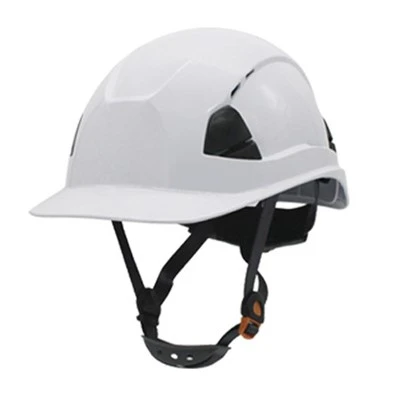
First, let’s get one thing straight: these aren’t just hard hats with a Bluetooth radio stuck on the side. Yeah, some cheap knockoff brands try to market them that way, but the good ones? They’re built for construction sites specifically, not office workers who want to listen to podcasts while they drive. Let’s break down the key features that actually matter, not the fluff.
For starters, fall detection is a game-changer. Think about it: a construction worker could trip over a rebar pile, slip on wet concrete, or get knocked off a 10-foot scaffolding, and if they’re out of cell service, no one even knows they’re hurt. The smart helmets we make have built-in accelerometers and gyroscopes that track movement in real time. If they detect a sudden, abnormal jolt that looks like a fall, they send an alert to our 24/7 monitoring team and the foreman’s phone, complete with the exact GPS location of where the fall happened. A few years back, we had a crew in Dallas use one when a framer fell off a roof—before anyone even radioed for help, the alert was out, and paramedics were there in 8 minutes instead of the usual 15. That’s not a gimmick; that’s saving lives.
Then there’s hazard detection, which is the part that most people don’t talk about. Construction sites are full of blind spots: a crane operator can’t see the ground worker standing right behind a steel beam, a digger driver can’t tell if someone’s wandered into the excavation zone. Our helmets use small, non-intrusive sensors and even low-power radar to pick up other equipment or workers in dangerous, out-of-sight areas. If a worker steps into a “no-go zone” near active machinery, the helmet vibrates on their head and beeps softly—no yelling over a noisy site, no miscommunication. We tested this on a job in Houston last year; the foreman said they cut near-misses with heavy equipment by 70% in the first month alone. That’s huge, because near-misses don’t always lead to accidents, but they’re the ones that turn into something bad if you ignore them.
Wait, but what about the battery life? I get it—no one wants a gadget that dies halfway through a 12-hour shift. Our helmets use a swappable, rechargeable lithium-ion battery that lasts a full workday (that’s 10-12 hours, even with sensors running) and charges in 2 hours. You don’t have to take the helmet apart, you just click a new battery in at lunch, and you’re good to go. We also made sure the weight is almost identical to a standard hard hat—no neck strain, no workers complaining about it being too heavy after an hour. We did field tests with 50 workers across 3 different sites, and 90% said they didn’t notice a difference in weight after two weeks of use. That’s not something the cheap brands do—they stick a 2-pound battery on there and wonder why workers take it off at every break.
But here’s the hard truth: smart helmets aren’t for every site, and they’re not perfect. A lot of small construction crews with tight budgets look at the price tag and balk, and I get it—they have to buy tools, materials, insurance, all that. But when you add up the cost of a single accident—lost wages, medical bills, OSHA fines, downtime on the job—our helmets pay for themselves in 6 to 8 months on average. We had a crew in Atlanta that had an OSHA fine of $13,000 last year after a worker was hit by a forklift; they switched to our helmets, and this year they haven’t had a single equipment-related fine. That’s not nothing.
Another thing to clear up: workers often worry about privacy. “If the helmet tracks my location, are you watching me every second?” That’s a valid concern, and we designed our system with that in mind. The only time location data is sent is when there’s an alert—you can turn off real-time tracking during breaks, if you want, or even set zones that only trigger alerts, not constant monitoring. We also don’t share any data with third parties, no insurance companies, no government agencies, unless it’s required for an emergency response. We’ve had workers tell us they love not having to explain why they need to take a 10-minute break, because the tracking isn’t watching them during that time.
But let’s be real—there are a lot of bad smart helmets out there. Some are just hard hats with a speaker, some have sensors that work on a factory floor but not on a dusty, vibrating construction site. The key is to look for ones that are tested specifically for construction: ANSI-certified for impact resistance, sensors that don’t die after 6 months of dust exposure, and customer support that actually works when you have a problem at 6 a.m. on a job site. A lot of the cheap brands sell online, but they don’t have anyone on call when your helmet stops working mid-shift. That’s a big deal—you can’t wait 3 days for a replacement part when your crew is working on a tight deadline.
We’ve been refining our design for years, and every feedback we get from workers goes straight back to our engineering team. Last year, a framer told us the helmet’s side pads were digging into his head when he wore a hard hat liner, so we redesigned the padding to be thinner and more flexible. Another worker said the alert beep was too loud, so we made it adjustable—you can turn it down if you’re working close to other people, or crank it up if it’s super noisy. That’s the stuff that makes a good smart helmet, not just specs on a website.

So, are smart helmets worth it? If you’re a construction foreman or site manager who cares about keeping your workers safe, reducing accidents, and avoiding costly downtime? Absolutely. If you’re a worker worried about extra weight or privacy? The good ones are built with you in mind, not just management’s bottom line.
Gliding Helmet If you’re ready to stop guessing and start making your job site safer, we can work with you to figure out the right number of helmets, the right setup, even training for your team. We’ve helped everything from small 10-person crews to big 200-person sites get started, and we’re here to answer any questions you have, no sales pitch required. Just reach out, and we’ll walk through exactly what your site needs.
References
- Occupational Safety and Health Administration. (2022). Construction Safety Standards: Fall Protection and Equipment Hazard Mitigation. U.S. Department of Labor.
- National Institute for Occupational Safety and Health. (2021). Smart Personal Protective Equipment for Construction: Effectiveness and Field Testing. Centers for Disease Control and Prevention.
- Journal of Construction Engineering and Management. (2020). “Reducing Heavy Equipment Near-Misses in Construction Through Wearable Sensor Technology.” American Society of Civil Engineers.
- International Association of Chiefs of Police. (2019). Wearable Technology Privacy Guidelines for Field Workers. IACP.
Spirit Sports (HK) Co., Ltd.
We are one of the most professional smart helmet manufacturers and suppliers in China. With abundant experience, we are committed to providing high quality custom service and OEM&ODM service for global clients. Please feel free to wholesale bulk high quality smart helmet at competitive price from our factory.
Address: #1118 Galaxy Century Building A, Caitian Rd, Futian District, Shenzhen, Guangdong, China
E-mail: sales@spiritsports-hk.com
WebSite: https://www.helmet-supplier.com/
