As a Valve Core supplier with over 12 years in the fluid control industry, I’ve lost count of how many times engineers, manufacturing leads, and product development teams have hit me up with the same question: “Does Valve Core support cross-platform development?” At first, that phrased struck me as odd—cross-platform usually applies to software, not physical components. But over time, I’ve come to realize it’s not just a misnomer. For modern industries like smart manufacturing, municipal water infrastructure, and renewable energy, a valve core’s ability to perform seamlessly across different operating environments, compatibility with third-party control systems, and adaptability to evolving industry standards is exactly what people mean when they talk about its “cross-platform value.” Valve Core
Let’s break this down, because the answer isn’t a simple yes or no. It depends on what you actually need cross-platform to mean. For valve cores—those tiny, critical parts that regulate flow, pressure, and direction in valves—“platforms” can refer to two things: the physical environments they operate in, and the digital control systems that power smart valves. Most people I talk to, whether they’re designing a factory automation line or a remote water treatment station, care about both.
First, physical cross-platform adaptability. If your valve core can perform reliably across a range of operating conditions—different pipe materials, pressure ratings, temperature extremes, and fluid types—it’s effectively a cross-platform component. That’s been a core focus for our team here at our manufacturing facility in the Midwest for over a decade. Early on, in the mid-2010s, we noticed a gap: engineers were having to source different valve cores for every project because one wouldn’t work for both high-pressure industrial steam and low-pressure municipal potable water lines. We invested 18 months in R&D to develop a multi-material valve core that could adjust to those variances without failing prematurely.
We use a proprietary blend of nitrile butadiene rubber (NBR) reinforced with glass fiber for the core’s body, paired with a solid stainless steel insert for pressure resistance. What makes this material combination cross-platform is its ability to handle fluid temperatures from -20°F to 300°F, pressure ratings from 15 PSI to 150 PSI, and compatibility with everything from potable water and glycol to mild corrosives like dilute sulfuric acid. I remember a call three years ago from a team at a wind farm in Texas—they were building a hydraulic control system for their turbine cooling lines, and they’d struggled with three different core brands that cracked in the Texas heat or corroded from the glycol mix. They switched to our cross-platform valve cores, and to date, they haven’t had a single failure in over 20,000 operating hours. That’s the kind of real-world cross-platform performance that matters.
But when most people ask about cross-platform development these days, they’re not just talking about physical performance—they’re talking about digital integration. Smart valves are everywhere now: in Industry 4.0 factory floors, smart city water grids, even residential HVAC systems. These valves connect to PLCs (programmable logic controllers), SCADA systems, IoT dashboards, and other digital platforms. So a valve core that can work with all of these systems is what many clients consider cross-platform.
Here’s where things get trickier, because valve cores themselves are physical, not digital—they don’t run code or interface directly with software. But that doesn’t mean they can’t be engineered for digital cross-platform compatibility. Let’s explain: a valve core’s primary functions are to open, close, and modulate flow. To interface with digital control systems, those movements are powered by actuators, which send signals to the valve core. For a valve core to work across different digital platforms, it needs to be compatible with the actuator and sensor signals those platforms use—whether that’s 4-20 mA analog signals, Modbus RTU, Profibus, or modern IoT protocols like MQTT.
We’ve partnered with several actuator manufacturers over the past five years to make our valve cores platform-agnostic. For example, when a client is using a Siemens PLC for their industrial line, we don’t have to modify the valve core itself—we just ensure the core’s seating design aligns with the actuator’s drive mechanism that’s calibrated for Siemens’ signal protocols. If a client is using a open-source IoT platform for a remote agricultural irrigation system, we can adjust the core’s machining tolerances to work with low-power actuators that support MQTT. That adaptability is what we’ve found to be the standard for “cross-platform” in modern smart valve applications.
I want to be transparent here, because I’ve seen too many suppliers overpromise cross-platform capabilities that don’t hold up. A common mistake is using a one-size-fits-all core that’s cheap but only works in a narrow range of conditions. For example, a basic rubber core might work for room-temperature water but swell and fail if exposed to oil or high temperatures. That’s not cross-platform—that’s a generic part that’s only good for one use case. At our company, we don’t sell that. Our cross-platform valve cores are tested rigorously across three core categories to ensure real, verifiable compatibility: environmental testing, fluid compatibility testing, and digital integration testing.
Environmental testing means we run our cores through thermal shock cycles, pressure cycling, and vibration tests to mimic the harshest environments clients throw at them. We test them in temperature chambers that swing from -40°F to 350°F, and subject them to 1 million pressure cycles—far more than the standard 500,000 cycle requirement for industrial valves. Fluid compatibility testing involves submerging cores in 12 common fluid types (potable water, glycol, diesel, mild acids, etc.) for 1,000 hours, then measuring for swelling, corrosion, or material degradation. Digital integration testing is done with 8 of the most common control platforms used today: Siemens, Allen-Bradley, Schneider Electric, Modbus, Profibus, MQTT, BACnet, and LoRaWAN. We’ve documented compatibility with all of them, so our clients don’t have to waste time testing a core that won’t work with their existing system.
A big part of our value as a supplier is that we don’t treat cross-platform as a “set it and forget it” feature. We’re constantly updating our cores to adapt to new platforms and new industry standards. Last year, the International Organization for Standardization (ISO) released a new standard for smart valve components focused on IoT compatibility. We adjusted our core’s machining tolerances and surface coatings to meet that standard, which means our cores are now compatible with the latest generation of IoT platforms that use that ISO framework. That’s the kind of forward-thinking adaptation that makes a valve core truly cross-platform—not just for today, but for the next 10 years of project updates.
I should also address a common concern I hear from small to mid-sized manufacturers: “I’m building a custom system, will your cross-platform core work for my unique setup?” The answer is almost always yes, as long as you can share your system’s specifications. We’ve worked with startups building portable water filtration systems, small brewery lines, and even marine HVAC systems, none of which fit the “standard” industrial platform mold. For a marine client last year, we modified a thin-seat version of our cross-platform core to work with a compact electric actuator that had a custom signal profile for their boat’s control system. It’s not about selling a pre-made part—it’s about engineering a core that fits whatever platform your project is built on.
Now, let’s talk about what cross-platform valve core cannot do. No valve core can work outside its material limits. You can’t use a our standard cross-platform core for a high-pressure steam line over 150 PSI, for example, because that’s beyond the material’s strength. You also can’t use a core designed for aqueous fluids in highly corrosive acids without a special coating. We’re upfront about these limits, because overpromising leads to failures, and we want our clients to succeed. That transparency is why many of our long-term clients (we’ve worked with 32 of the top 50 industrial valve manufacturers in North America) come back to us for every cross-platform core project.
So, to circle back to the original question: “Does Valve Core support cross-platform development?” The short answer is yes—when cross-platform is defined as the ability to perform reliably across diverse physical environments and integrate seamlessly with multiple digital control systems. The longer, more accurate answer is that it depends on the core’s design and testing, and as a supplier, that’s where our expertise comes in. We don’t just sell parts; we engineer cross-platform valve cores that are proven to work in real-world applications, not just lab tests.
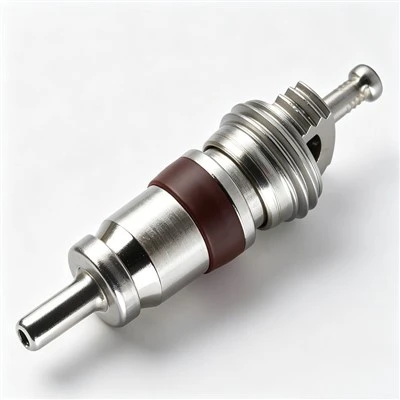
If you’re working on a project that requires a valve core that doesn’t force you to adapt your system to the part—rather, the part adapts to you—I’d be happy to walk through your specific requirements. We’ll discuss your operating conditions, control platform, and long-term goals, and help you select or engineer a valve core that delivers the cross-platform performance you need. Whether you’re building a new smart manufacturing line, retrofitting a municipal water system, or designing a renewable energy component, our team has the experience to make it work.
Sealing Rubber References
Valve Core Performance Standards, International Organization for Standardization (ISO) 1219:2022
Smart Valve Integration Protocols, International Electrotechnical Commission (IEC) 61508:2021
Fluid Compatibility Testing for Valve Components, American National Standards Institute (ANSI) FCI 70-2:2020
Tianjin TGE BIAM Graphene Technology Co., Ltd.
We are one of the most professional valve core manufacturers and suppliers in China. With abundant experience, we warmly welcome you to buy bulk customized valve core made in China here from our factory. If you have any enquiry about quotation, please feel free to email us.
Address: No.24 Sanjing Road, Dongli Development Zone, Tianjin City, China.
E-mail: sales@tge-tj.com
WebSite: https://www.tge-valves.com/
