If you work in electrical maintenance, asset management, or quality testing for high-voltage equipment, you know a tan delta tester is non-negotiable. It’s the tool that tells you how healthy your insulation is—no guesswork, no vague estimates, just hard data on whether your transformers, cables, bushings, or switchgear are holding up. But here’s the thing: a tan delta tester is only as good as the measurements it puts out. I’ve been supplying these testers for years, and I’ve seen way too many folks skip simple steps that turn accurate, actionable readings into garbage numbers that lead to wasted time, unnecessary repairs, or even missed failures. Tan Delta Tester
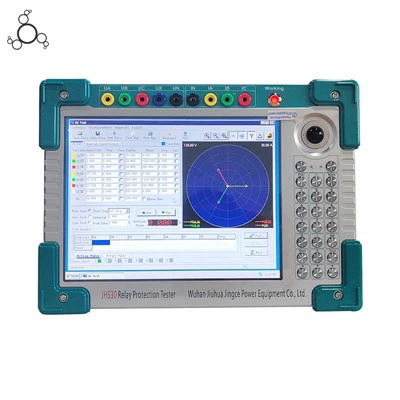
Most people think reliability just means buying a “good” tester. Nope. Even the best machine on the market will give you wonky results if you mess up how you use it, prep the equipment, or handle the data. Today I’m breaking down exactly what you can do to make sure your tan delta measurements are trustworthy—no fancy jargon, just the stuff we actually walk through with customers when they pick up a unit from us.
First, let’s start with the basics: pre-test prep, and I don’t just mean “turn the machine on.” A huge number of bad readings come from skipping the equipment’s “rest period.” Insulation doesn’t like being messed with. If you just shut down a transformer, pulled a cable, or worked on a bushing, you can’t run a test right away. We always tell customers to wait at least 12 hours for low-voltage stuff, 24 hours for high-voltage (like 11kV and above). Why? Because when you energize de-energized insulation, it builds up residual surface charge and dipole polarization. If you test too soon, that leftover charge will skew your tan delta numbers—you’ll get a reading that looks higher than it actually is, making you think insulation is failing when it’s totally fine, or vice versa if you discharge it wrong.
Speaking of discharge: this is non-negotiable before every test. I’ve had customers tell me they “tapped it with a screwdriver” to bleed charge, but that’s a mistake. A proper discharge should be slow and controlled. Use a calibrated 100kΩ resistor (not a bare metal tool) to connect the test object to ground, wait at least 5 minutes, then double-check with a voltmeter to make sure there’s less than 1V left. Skipping that step? You’re bringing stray DC voltage into your tan delta measurement, and that’s the #1 cause of inconsistent readings. We include a discharge tool with every tester we sell, and I always remind folks to use it—don’t wing it.
Next up: environmental controls. Tan delta is super sensitive to what’s around you. Humidity and temperature are the big culprits here. If humidity is over 70%, condensation forms on the insulation’s surface, which creates a parallel leakage path that inflates your tan delta number. We’ve had customers test a cable in a 75% humidity room and get a tan delta of 2.5%—which would signal a critical failure—only to re-test it the next morning at 55% humidity and get a normal 0.8%. That’s a night and day difference. Rule of thumb: test when humidity is under 70% if you can, or at least shield the test connections from direct moisture (we sell small test booths for this, just saying).
Temperature matters too. Tan delta changes with how hot or cold the insulation is. Most standards (like IEC 60247) say you should test at 20°C, and if you test at a different temp, you have to correct the number or at least note it. I’ve seen a customer test a transformer at 40°C and get a tan delta of 1.2%—which is within limits for their asset—ignoring that the standard correction would bring it to 0.8%, which is still normal. But another guy tested a cable at -5°C and thought a 1.0% tan delta was bad, not realizing that at low temps, insulation’s tan delta naturally rises a bit. Always log the ambient temp when you test, and use the correction factor specific to your insulation type (paper, cross-linked polyethylene, whatever) so you’re comparing apples to apples.
Now, test setup—this is where a lot of people cut corners without even knowing it. First, the test connections. You can’t just clip leads to a random spot on the equipment. For most tan delta tests, you need to connect the high-voltage lead directly to the insulation’s conductor, and the low-voltage lead to the outer grounded shield of the insulation (or the equipment’s frame, if there’s no shield). If you run the test lead parallel to power cables or other high-voltage gear, you’re picking up electromagnetic interference (EMI) that messes with the current readings. Keep test leads as short as possible, twist the high and low leads together to cancel out EMI, and don’t run them next to power lines.
Also, never test two pieces of equipment at the same time. If your test stand is sitting on a metal rack that’s holding two transformers, you’re capacitively coupling them, which will throw your measurement off. We always tell customers to isolate the test object completely—disconnect it from all other equipment, ground it only through your tester’s discharge step, and don’t let any other metal parts touch it during testing. One of our recent clients tried testing two bushings side-by-side and got a tan delta difference of 0.7% between them; after isolating each, the difference dropped to 0.05%, which is the real reading.
Then there’s the tester’s own calibration. This isn’t something you can set it and forget. Even a high-quality tan delta tester will drift over time if it’s not calibrated. Most manufacturers recommend annual calibration, but if you use your tester a lot (like 20+ tests a month), do it twice a year. We offer calibration services for all the testers we sell, and I always push customers to not skip this. How do you know if it’s working? Use a standard reference capacitor (we also sell these) to run a quick check before every job. If your tester reads the reference’s tan delta within ±0.05% of its rated value, you’re good. If not, don’t use it until you get it calibrated. I’ve had a customer blame a transformer for a bad reading when it was just their uncalibrated tester giving a 0.3% error—cost them a useless replacement part.
Wait, another thing: test frequency. Most of our testers run at 50Hz or 60Hz, which matches the grid’s frequency, but some people try to use variable frequencies to check for issues. If you’re doing that, make sure your tester is set to a frequency that’s compatible with the insulation’s type, and that you’re using the same frequency every time you test a specific asset. If you test a 10kV cable at 50Hz one year and 40Hz the next, you can’t compare the readings—tan delta changes with frequency, so you’ll think the insulation is degrading when it’s just a frequency difference.
Let’s talk about common mistakes people make when interpreting data, too. A lot of folks have a “one size fits all” tan delta limit. That’s wrong. The limit depends on the insulation’s age, type, and voltage rating. A 20-year-old paper-insulated transformer will have a normal tan delta around 1.5%, while a brand-new XLPE cable should be under 0.5%. If you use a generic limit, you’ll misjudge assets. We always include a quick reference guide with every tester we sell that breaks down typical limits for common equipment, so customers don’t have to guess. Also, track your data over time—tan delta doesn’t jump from 0.5% to 5% overnight. If you have consistent annual readings, a small rise (like 0.1% a year) is normal, but a sudden jump of 0.3% or more is a red flag. That’s way more useful than a single measurement.
Oh, and don’t forget about surface contamination. If the bushing you’re testing has dust, oil, or dirt on its surface, that creates a leakage current that’s not part of the insulation itself, which makes tan delta higher. Wipe the test area with a clean, dry cloth right before testing—no solvents, because solvents can leave a residue. One customer tested a bushing covered in recent transformer oil and got a tan delta of 3.0%; after wiping it, it dropped to 0.7%, which was totally normal. That’s an easy fix that makes a huge difference.
Wait, let’s address a thing people ask all the time: “Can I use my multimeter instead of a dedicated tan delta tester?” No, no, no. A multimeter measures resistance, not the dissipation factor (tan delta) which is the ratio of resistive current to capacitive current. You need a dedicated tester that can measure both the small capacitive current from insulation and the resistive current—those are often microamps, so a multimeter can’t pick them up. Using the wrong tool is the fastest way to get unreliable results. All the testers we supply are calibrated for that exact measurement, so you don’t have to worry about missing those tiny currents.
Now, what if you’re testing a live asset? A lot of people don’t know that live tan delta testing is possible, but it has its own rules. You have to use a tester designed for live-line work (we have those, by the way), make sure you’re within safety distances, and that you don’t pick up interference from the actual grid voltage. Never use a standard tester on live equipment—you risk damaging both the tester and yourself. Stick to the right tool for the job, which we can help you pick.
Let me wrap this up with a quick recap to make sure you don’t miss anything: wait for proper rest time and discharge the test object, test in low humidity, log and correct for temperature, keep test connections isolated and short, calibrate your tester regularly, use the right frequency, wipe off contamination, and track your data over time. None of these steps are hard, but they’re the difference between a measurement you can trust and one that’s going to cause you headaches.

If you’re struggling to get consistent readings, or you need a tester that’s built to handle all these steps automatically (we designed our latest models to walk you through pre-test checks so you don’t skip anything), reach out to our team. We can help you pick the right tester for your assets, walk you through the setup process, and even answer any questions you have about your specific test cases. Don’t waste another day on unreliable measurements—let’s make sure your tan delta data is actually useful for keeping your equipment running safely and efficiently.
DC Withstand Voltage Test Equipment References
- International Electrotechnical Commission. (2019). IEC 60247: Insulating liquids – Measurement of relative permittivity, dielectric dissipation factor (tan δ) and d.c. resistivity.
- IEEE Power & Energy Society. (2021). IEEE Guide for Tan Delta Testing of Power Apparatus (IEEE Std 437-2021).
- Klein, N., & Vogl, R. (2018). Field measurement uncertainties in tan delta testing of high-voltage insulation. Electrical Insulation Magazine, IEEE, 34(3), 18-25.
- ASTM International. (2020). ASTM D150: Standard Test Methods for AC Dielectric Properties of Solid Electrical Insulation.
Wuhan Jiuhua Jingce Power Equipment Co., Ltd.
As one of the most experienced tan delta tester manufacturers in China, we offer a wide range of products with superior quality. Please feel free to wholesale bulk durable tan delta tester from our factory. For price consultation, contact us.
Address: 601,Unit 1,Building D4-02,Optics Valley Center,303 OpticsValley Avenue,Wuhan
E-mail: market@wuhanjhjc.com
WebSite: https://www.powertransformertester.com/
