Hey there! If you’re here, chances are you’ve got a round bar cutting machine (or you’re looking to pick one up) and you’re stuck on what blades actually work for it. Let me cut to the chase as a supplier who’s been in this game for over a decade—blades aren’t one-size-fits-all here. Skip the generic “use any old blade” tip, because that’s how you’ll burn out your machine, waste materials, and go through 10 blades a week instead of 1. Round Bar Cutting Machine

First off, let’s talk about what a round bar cutting machine actually needs from a blade. Round bars aren’t flat metal sheets—they’re cylindrical, so the blade’s got to make clean, consistent contact around the entire circumference, right? If your blade’s too thick or the teeth are the wrong shape, you’ll get uneven cuts, burrs, or even the bar slipping mid-cut. I’ve seen so many new customers grab a random band saw blade for their round bar machine and wonder why they’re ending up with crooked pieces that won’t fit their assembly line. Been there, fixed that.
Let’s break this down by material first, because that’s the biggest factor here. You wouldn’t use a bread knife to cut steak, and same logic applies to metal blades. If you’re working with mild steel—super common for everything from bolts to construction bars—you want a blade with moderate tooth density and a tough backing. Not too many teeth, not too few. Wait, let’s get specific: for mild steel round bars under 2 inches, go for 10-14 teeth per inch (TPI). For bars over 2 inches, drop down to 6-10 TPI. Why? Fewer teeth can handle the thicker material without clogging, and more teeth on smaller bars keep the cut smooth. I recommend bi-metal blades here—they’re made with a high-speed steel edge welded to a flexible steel body, so they last way longer than carbon steel. One of my regulars, a construction supply shop, used to go through 3 carbon blades a month on their mild steel bars, now they run bi-metal and only change blades every 2 months. Game changer.
Now, if you’re cutting stainless steel? That’s a whole different beast. Stainless is sticky, it work-hardens super fast, and it’ll tear your blade apart if you don’t get the right stuff. You need a blade with finer teeth here—14-18 TPI for smaller stainless bars (under 1.5 inches) and 10-14 TPI for larger ones. And don’t skip the variable tooth pitch! Wait, what’s that? Variable pitch means the teeth aren’t evenly spaced, so they don’t chatter as much. Chatter is that annoying vibration that leaves deep grooves on your cut and wears out the blade fast. For stainless, bi-metal is still good, but we also push carbide-tipped blades for really thick or high-volume runs. Carbide edges are way harder than HSS, so they resist that work-hardening way better. Yeah, they cost a bit more upfront, but if you’re cutting 50+ stainless bars a day, they pay for themselves in 2 weeks. I had a customer in the food equipment industry cutting 304 stainless all day—switched from bi-metal to carbide blades, cut their blade cost per bar by 40%. No lie.
What about non-ferrous metals? Aluminum, brass, copper—those soft, ductile ones. You gotta watch out for clogging here, because soft metal gets packed into the blade’s gullets (the spaces between teeth) and makes the cut rough. For aluminum, go for 14-18 TPI for small bars, 10-14 for medium, and make sure the teeth have a “rake angle” that’s positive. Positive rake means the teeth angle forward like a chisel, so they slice through soft metal instead of pushing it and clogging it. For brass and copper, you can even go a bit coarser—8-12 TPI for larger bars, since those metals cut easier. Oh, and if you’re cutting really thin walled round aluminum, maybe look for a blade with a specialized “non-ferrous” tooth grind—those have less hook angle so they don’t grab and warp the thin material. Spoken from experience, I had a customer messing up thin wall aluminum tubing because he used a standard blade, switched to non-ferrous, and zero warps now.
Wait, there’s more to blades than just tooth count and material—blade type matters too. Your round bar cutting machine is probably either a bandsaw machine, a circular saw machine, or a cold saw machine, right? Let’s cover each quick. If it’s a bandsaw (the most common for round bars), stick to the bi-metal or carbide-tipped blades I mentioned, but make sure the blade width matches your machine’s guide rollers. Too narrow, and the blade will twist; too wide, and it’ll bind on thick bars. We always tell customers to measure their machine’s roller distance—most recommend a blade width between ½ inch and 1 inch for general round bar work.
If you’re running a circular saw for round bars—you know, the ones that spin a disc blade—then you need a circular saw blade, not a bandsaw blade. For mild steel, a 10-14 TPI carbide-tipped circular blade works great, stainless needs 14-18 TPI, and non-ferrous needs 12-16 TPI with a non-stick coating (like titanium nitride) to prevent metal from sticking. Cold saw machines? Those are for really heavy, thick round bars, the ones where you need a super precise cut with minimal burr. For cold saws, solid carbide blades are your go-to, usually with a lower TPI (4-8) because they handle the heavy cuts without overheating. I work with a steel fabricator that uses a cold saw for 6-inch round steel bars—they run solid carbide blades, get cuts within 0.005 inches of their spec, no burrs at all.
Also, don’t sleep on blade maintenance—even the best blade will suck if you don’t take care of it. For bandsaws, track tension: if the blade’s too loose, it’ll wander and cause crooked cuts; too tight, it’ll snap. For circular and cold saws, make sure the blade’s sharpened correctly—dull blades force the motor to work harder, waste energy, and ruin your cuts. We sell blade sharpening service as an add-on, because I’d rather our customers get 2x the life out of each blade than buy new ones every week. Pro tip: if you see blue discoloration on your blade teeth, that’s heat damage from cutting too fast—slow down the feed rate. Too slow, and you’ll work-harden the metal, too fast, and you burn the blade. Balance is key.
Wait, let’s talk about common mistakes I see all the time. New customers will buy the cheapest blade they can find on Amazon, pop it in, and blame the machine when it doesn’t work. Or they’ll use a blade meant for flat bar on round bar—flat bars have different tooth spacing, so the teeth don’t engage evenly around the round bar. Another one: not matching the blade’s material to the bar. I had a guy bring in 20 stainless round bars that he’d tried to cut with a mild steel blade—they came out so rough, he had to grind all the burrs off, cost him 2 hours of labor and 10 ruined blades. That’s the stuff I’m here to help with—no fluff, just what works.
So, to wrap up what blades are suitable for your round bar cutting machine, it all boils down to three things: 1) the material of the round bar you’re cutting, 2) the size of the bar, and 3) the type of cutting machine you’re using. Mild steel = bi-metal bandsaw or 10-14 TPI carbide circular. Stainless = fine-tooth bi-metal or carbide, variable pitch. Non-ferrous = positive rake, non-clog teeth. Bandsaw = match blade width to machine guides. Circular/cold saw = solid carbide for heavy or precise cuts. And don’t skip maintenance—tension, speed, sharpening, that’s half the battle.
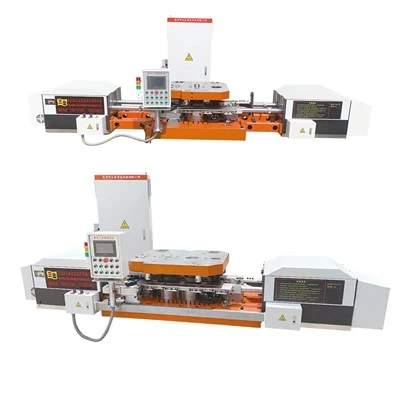
If you’re still not sure what blade you need, or you’re in the market for a round bar cutting machine that’s actually set up for easy, cheap blade changes (no more fighting to fit the right blade), hit me up. I’ve worked with hundreds of fabricators, construction shops, food equipment makers, all kinds of people cutting round bars, so I can point you exactly to the blades that’ll save you time, money, and headaches. No pushy sales stuff, just real advice from someone who’s in the field every day fixing these exact problems.
Busher Former Machine References:
- ASM International. (2005). Machining of Stainless Steels. ASM Handbook, Volume 16: Machining.
- Groover, M. P. (2019). Fundamentals of Modern Manufacturing: Materials, Processes, and Systems (7th ed.). Wiley.
- Saw Blade Manufacturers Association. (2021). Best Practices for Band Saw Blade Selection for Round Bar Cutting.
Quanzhou Sanye Intelligent Technology Co., Ltd.
As one of the most professional round bar cutting machine manufacturers and suppliers in China, we have world-leading production equipment and strong manufacturing capabilities. Please rest assured to buy customized round bar cutting machine made in China here from our factory. Welcome to contact us for quotation.
Address: Anhai Town, Jinjiang City, Fujian Province, China
E-mail: jack_tmm@163.com
WebSite: https://www.qzsymanipulator.com/
