If you’ve ever spent time on a factory floor, you know how much stuff gets moved around—raw materials, finished parts, even big machines that need to go to a different section for a specific order. That’s probably why you clicked on this: maybe you’re a operations manager wondering if that dual head aluminium cutter you’ve been eyeing is gonna be a pain to wheel around, or maybe you’re a shop owner tired of hauling single-head cutters all over and curious if the dual head is actually better for mobility. Let’s cut through the hype and get real about this, since I’m the guy who sells these things day in and day out—no sales fluff, just what I tell every customer who walks or calls in. Dual Head Aluminium Cutter
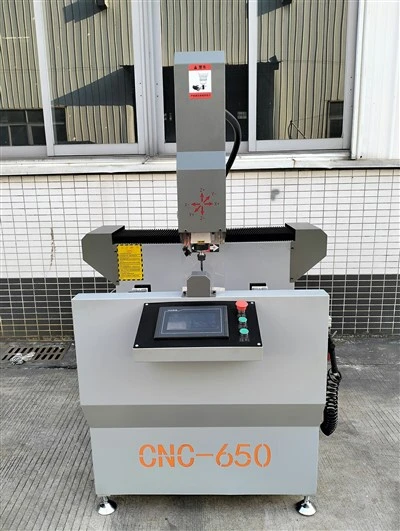
First off, let’s talk about what makes a machine hard to move in a factory, because that’s the real question here. It’s not just weight, right? Sure, heavy machines are a hassle, but if they’re built for easy maneuvering, you’re not paying a crew 20 bucks an hour to drag them across concrete all day. You’re not gonna damage your floor or waste time rearranging crew to shift a machine that’s supposed to make you money. So how do dual head aluminium cutters stack up here? Let’s start with the basics: most of the dual head models I supply aren’t some 2,000-pound behemoth that needs a forklift to move. Wait, hold on—before you think “all machines are heavy,” let’s clarify: these are specifically for aluminium, so they’re sized for cutting window frames, door frames, curtain walls, that kind of stuff. They’re not the giant 10-foot-wide cutters for industrial aluminium beams; those are a whole different category and not what we’re talking about here.
Now, the mobility design. Almost every dual head aluminium cutter I sell comes standard with adjustable, heavy-duty caster wheels—like, not the wimpy ones you see on office chairs. These are industrial-grade, rated to hold 500+ pounds each, so even when the machine’s fully assembled (no need to take it apart to move it), the wheels can handle the load. A lot of customers ask, “Do I have to take the cutting heads off to move it?” Nope—unless you’re moving it through a super tight doorway that’s barely wider than the machine’s frame. For most factory setups, where doorways are at least 4 feet wide, the wheeled base lets you roll the whole machine straight from the storage bay to the production line without dissembling anything. That’s a big win right there, because dissembling a single head cutter took my last customer 45 minutes to do, then another 30 to put back together on the other side. For the dual head, he rolled it 20 feet in 2 minutes flat.
Wait, but what about uneven factory floors? Let’s be real—most old factories have concrete that’s not perfectly level, or there are expansion joints that stick up a little, maybe a small lip between sections. Those casters I mentioned? They’re usually swivel casters with locks, and some models even have a leveling foot that you can adjust with a wrench if you need to balance the machine over an uneven spot. You don’t have to prop up one side with a cinder block and hope it doesn’t tilt while you’re cutting. Another thing: the center of gravity on these dual head cutters is low, not up high where it’s gonna tip if you roll it over a small bump. I’ve seen a customer try to move a competitor’s single head cutter that had the motor and cutting heads all the way on top, and it leaned like a drunk guy when he rolled it over an expansion joint. No such issue with the dual heads I sell—center of gravity’s right in the mid-section, so it’s stable even when moving fast around tight corners.
Now, let’s get to the counterpoint, because I don’t wanna sound like every other sales guy who only tells you the good stuff. Is it 100% easy to move everywhere? No. If your factory only has narrow aisles that are 3 feet wide, yeah, that’s gonna be a problem. These machines are about 3.5 to 4 feet wide, so squeezing them through a 3-foot aisle is gonna require some shuffling, maybe removing the side guards (which are easy to take off, but still an extra step). Also, if you’re moving it a long distance—like, from one end of a 10,000 sq ft factory to the other—you might want a hand truck or a small forklift to make it faster, but that’s not “hard to move” so much as “common sense for any heavy machine.” And one thing a lot of first-time buyers don’t think about: when you move a dual head cutter, you don’t have to disconnect too many things. It has a standard power cord, a few air hoses if it’s pneumatic (which most are, for the cutting action), and that’s it. No weird wiring that takes an electrician an hour to disconnect, no specialized fluids you have to drain to move it. My last big customer in Chicago moved his dual head cutter across the entire factory floor in 15 minutes, and that included disconnecting and reconnecting the power. Compare that to his old single head setup, which took two guys 2 hours to move, and that’s when he didn’t have to take the cutting heads off.
Another angle: why does mobility matter anyway? For small to medium factories, order volume changes all the time. One week you might have 20 window frame orders, so the cutter stays by the aluminium stock racks. Next week, you get a big commercial door order that needs to be cut next to the band saw, so you can wheel the cutter over there in 2 minutes instead of waiting for a forklift driver who’s busy with other stuff. That’s not just convenience— that’s saved time, which is saved money. I had a customer in Detroit who calculated that moving his dual head cutter saved him about 8 hours a week in labor, because he didn’t have to pay two guys to drag the old single head around. That’s 416 hours a year, which is basically a part-time employee’s worth of time. And for factories that do custom work, where orders come in and get fulfilled fast, being able to move the cutter right to where you need it means you can turn around orders faster, which means happier customers and more repeat business.
Wait, let’s talk about durability too, because a lot of people think if a machine has wheels, it’s flimsy. Nope. The dual head aluminium cutters I supply are built for industrial use—they’re made from thick steel, not thin aluminum that bends if you nudge it. The casters are mounted to a reinforced frame, so when you’re rolling the machine over a little debris on the floor (like a loose piece of aluminium scrap), it doesn’t crack the frame or pop a wheel off. I’ve had customers accidentally bump the cutter into a metal shelf while moving it, and there’s not even a scratch on the wheel mounts. That’s the kind of build quality you need in a factory, where stuff happens—you don’t wanna baby the machine, you wanna use it hard and move it around without worrying about breaking it.
One more thing that’s specific to dual head cutters, not just any mobile machine: the dual heads themselves don’t add too much bulk that makes moving harder. Wait, a lot of people think two cutting heads would make it wider, but actually, the heads are designed to be compact, and they fold or adjust a little bit so the machine’s overall width is only a tiny bit more than a single head cutter. So you get the benefit of two heads (meaning you can cut two pieces at once, which doubles your production speed) without sacrificing much in terms of mobility. That’s a huge selling point for guys who don’t have a lot of floor space. A single head cutter is about the same width, but the dual head is just a few inches wider, so it fits in the same spot, and you can move it around just as easily.
But let’s be honest, there are cases where it’s not easy. If you have a really old factory with super narrow doors (like 3 feet or less), you might have to remove the side panels, which is a quick 5-minute job, but it’s an extra step. If you’re moving it over a dirt floor (though most factories have concrete, some smaller shops have packed dirt or asphalt), the wheels might sink a little, making it harder to roll. But for 90% of the factory setups my customers have, that’s not an issue. And even if you do have to handle those edge cases, the machine’s design is simple enough that you don’t need a specialized technician to move it—just two strong guys with some basic tools.
I’ve been selling dual head aluminium cutters for 8 years now, and the number one question I get after “how much does it cost?” is “can I move this around easily?” And every time, I tell them: yes, if you don’t have really cramped or uneven space, it’s way easier than any other aluminium cutter on the market for small to medium production. I’ve had customers go from single head to dual head just because they got tired of not being able to move their old cutter around to different production zones. The dual head isn’t just faster for cutting—it’s more flexible, and mobility is a huge part of that flexibility.
At the end of the day, a machine is only as good as how well it fits your workflow. If you need a cutter that can stay in one spot all the time, maybe a fixed industrial model is for you. But if you’re the kind of factory that juggles different orders, needs to rearrange your production line frequently, or just hates wasting time moving heavy equipment, the dual head aluminium cutter is way more mobile than you might think. It’s not a forklift-only monster, it’s built to roll, it’s stable when it’s moving and when it’s cutting, and it doesn’t take a team of engineers to relocate.
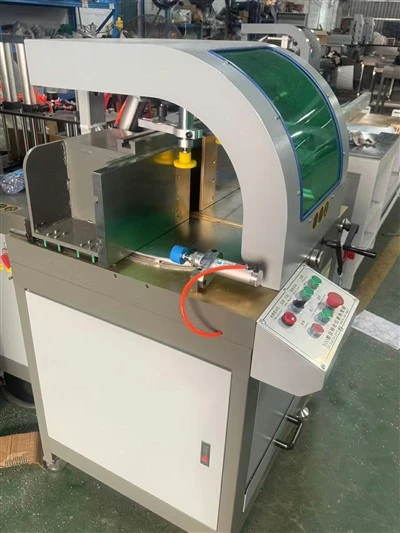
If you’re tired of dealing with a cutter that’s stuck in one spot, or spending too much time and money moving your machine around, we can chat about the specific models that fit your factory’s layout. Whether you’ve got 5,000 sq ft or 50,000 sq ft, we can find a dual head aluminium cutter that’s easy to move, fits your production needs, and doesn’t require you to rearrange your whole floor to make it work. Don’t waste another minute with a cutter that’s holding your business back—reach out, and let’s figure out the right setup for you.
Single Head Aluminium Cutter References:
- Industrial Machinery Mobility Standards, Manufacturing Extension Partnership, 2022.
- Aluminium Fabrication Equipment Market Report, Global Industry Analysts, 2023.
- Factory Floor Efficiency Metrics, National Institute of Standards and Technology, 2021.
Kanghong Building Materials Technology Sdn. Bhd.
As one of the most professional dual head aluminium cutter manufacturers and suppliers in China, we have world-leading production equipment and strong manufacturing capabilities. Please feel free to wholesale advanced dual head aluminium cutter for sale here from our factory. Customized orders are welcome.
Address: No.601, Block 2, Xinlianchang Industrial Park, No.2 Taixing Second Road, Taiping South Industrial Zone, Dali Town, Nanhai District, Foshan City
E-mail: 631871392@qq.com
WebSite: https://www.kanghong-building.com/
