If you’ve ever walked a factory floor where big stuff gets assembled—like inflatable boats, industrial liners, or even those giant traffic barrier bladders—you’ve probably seen a large high frequency (HF) welding machine in action. These things are total workhorses, right? They blast electrical energy into thermoplastic materials, melting them together fast and strong enough to hold up to way more stress than most people think. As someone who’s been supplying these machines for over a decade, I’ve sold probably hundreds of them to factories across three continents, and let me tell you: for all their hype, they aren’t magic. Every single one has real limits that I’ve had to help customers navigate, and if you’re thinking about buying one (especially a large model), ignoring these will save you a lot of headaches later. Large High Frequency Welding Machine
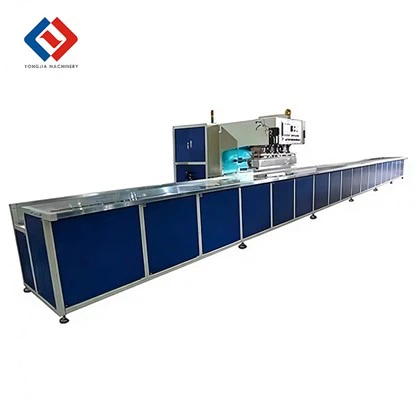
First off, let’s get one thing straight: “large” here doesn’t mean “better for everything.” A lot of customers come to me thinking a bigger machine will let them weld any size part they throw at it, and that’s where the first big miss happens. Large HF welders are built with a fixed work area—usually between 10 and 20 square feet, depending on the model—so if you need to weld something even a tiny bit wider than that? You’re stuck. Sure, you can try to piece two welds together, but that’s risky. The seams where the two welds overlap are almost always weaker than a single continuous weld, and you’ll deal with gaps that let air, water, or chemicals leak through. I had a customer in Texas last year who bought a 15-foot large HF welder for welding 18-foot truck tarp panels. He thought he’d just line them up and weld in two passes, but the overlap gap ended up causing a bunch of the tarps to tear during hauling. We had to go back, redo half the orders, and even then, he lost a few clients. That’s the kind of mistake you make when you forget a large machine’s work area is a hard limit, not a flexible guideline.
Then there’s the material restriction, and this one’s way more complicated than just “can only weld plastics.” Large HF welders work by exciting the dipoles in polar thermoplastics—think PVC, polyurethane, or PET—because those molecules flip back and forth with the HF energy, generating heat and melting the material. Non-polar plastics, like polyethylene (PE) or polypropylene (PP)? They don’t have those dipoles, so they barely heat up at all. You can crank the power on a large HF machine as high as it goes, and you’ll still end up with a cold, weak seam that won’t hold. I’ve had customers try this over and over, thinking “more power fixes everything,” and it never does. Even some blended plastics, like PE mixed with a little PVC to cut cost, will mess up the weld. The small amount of PE in the mix doesn’t have dipoles, so it creates uneven heat that leaves soft spots or skipped areas. I once had a customer who tried welding inflatable kayaks with a “cheap PVC-PE blend” he found online, and his large HF welder left 30% of the seams defective. He ended up throwing out 50 kayaks before he realized the material, not the machine, was the problem.
Next, power requirements and energy costs—this is a big one that people don’t talk about until their utility bill shows up. A large HF welding machine isn’t something you can plug into a standard wall outlet. Most of them need 3-phase power, 220V or higher, and some even pull 50 amps or more. If your factory doesn’t have that kind of power line running to the welding area? You’ve got to pay to have an electrician run new wiring, upgrade your substation, maybe even add a dedicated transformer. That’s tens of thousands of dollars in extra costs no one budgets for. On top of that, those big machines use way more energy than small ones. I did the math for a customer in Ohio last year: his large HF welder cost him $1,200 a month in electricity alone, compared to $300 a month for his old small model. That’s a huge recurring cost, especially if you’re only running the machine a few days a week. Some factories have even had to scale back production because the power bills became too much. I always warn customers to check their power setup first, and to do a test run on power use before signing off—you don’t want to be stuck with a machine that’s eating half your profits.
Then there’s the precision thing. People assume large machines are more accurate, but that’s not true. The bigger the work area, the harder it is to get even, consistent heat across the entire weld. Think about it: a small tabletop HF welder has a tight, even plate that distributes the HF energy perfectly, but a 15-foot large machine has to spread that energy over a much wider space. If the machine’s electrodes aren’t perfectly aligned, or if the generator has even a tiny power fluctuation, you’ll get hot spots in some areas and cold spots in others. That leads to weak seams or even burning the material right through. I had a customer in Poland last year who was welding giant pond liners with his large HF welder. The first batch had uneven welds because the electrodes were slightly warped, and half the liners leaked when they filled them with water. We had to replace the electrodes for free, but that still cost him production time and a lot of stress. Precision is way harder to maintain on a large machine, and you need regular calibration to keep it working right—another cost and hassle most customers don’t plan for.
Also, maintenance and downtime. Large HF welders are heavy, complex pieces of equipment, and parts wear out faster than people think. The electrodes get scratched or bent, the high-frequency generator can overheat, the capacitors need replacing every couple years, and that’s just the basics. If something breaks, getting parts for a large model can be a pain. A lot of small machine parts are generic, but large ones are custom-made, so you might have to wait weeks for a replacement. And because they’re big, you can’t just drag the machine to a local repair shop—you need a technician who specializes in HF welding, and they’ve got to come to your factory, which adds more cost. I had a customer in Brazil whose large HF welder’s generator died right before a big order of tarps was due. It took two weeks to get the replacement part, and he lost a $50,000 order because he couldn’t deliver on time. Downtime on a large machine is way more expensive than downtime on a small one, because you’re not just losing time—you’re losing big orders.
Oh, and let’s not forget about noise and safety, which can turn into big regulatory and operational issues. Large HF welders are loud—like, 85 to 90 decibels loud, which is as loud as a lawnmower. You can’t have people working right next to them without hearing protection, and if your factory has OSHA or EU safety standards, you might need to build soundproof barriers around the machine. That’s more money. Plus, the high-frequency energy itself is a safety risk if it’s not shielded properly. If the machine’s shielding has even a small gap, HF radiation can leak out, which isn’t great for people working nearby. Some factories have had to adjust their workspaces to keep employees away from the machine, which takes up extra floor space and can slow down production. I always tell customers to check their local safety rules before buying, because what works in one country might not work in another.
Now, I’m not here to say large HF welders are bad—far from it. They’re essential for big jobs: welding giant pool liners, inflatable event structures, agricultural covers, that kind of stuff. But their limitations are real, and if you go into buying one blind, you’re setting yourself up for problems. The key is matching the machine to your actual needs, not just the biggest machine you can afford. If you only need to weld parts 5 feet wide, a large 15-foot machine is overkill—you’ll pay more, use more power, and have more maintenance headaches. But if you’re consistently working with parts that are 10 to 18 feet wide, a large HF welder is the only way to get a strong, continuous weld.
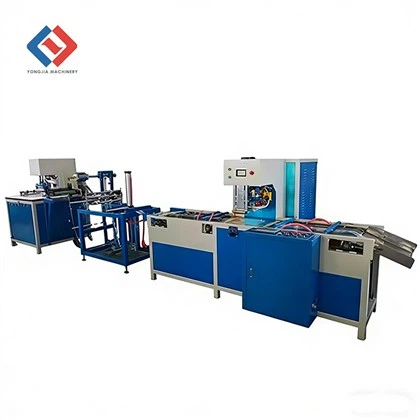
At the end of the day, these machines are tools, not solutions to every problem. I’ve been supplying them for years, and my best customers are the ones who come to me with a clear idea of what they need to weld, how big their parts are, and what their power and space limitations are. We work together to pick the right size model, adjust it for their materials, and make sure they know how to maintain it properly. If you’re in the market for a large HF welding machine and want to talk through what will work for your business, I’m here to help. No pushy sales pitches, no hidden fine print—just real advice from someone who’s been in this for way too long to sugarcoat the limits.
HF Welding Machine References
- The Welding Institute. (2021). High Frequency Welding: Material Compatibility and Operational Limitations. Cambridge: TWI Publishing.
- Occupational Safety and Health Administration (OSHA). (2022). Safety Standards for High Frequency Industrial Equipment. Washington, DC: U.S. Department of Labor.
- European Machinery Directive 2006/42/EC. (2020). Guidelines for High Frequency Welding Machine Compliance. Brussels: European Commission.
- American Society for Testing and Materials (ASTM). (2019). Standard Test Methods for Seam Strength of Thermoplastic Welds. West Conshohocken, PA: ASTM International.
- Industrial Power Users Association (IPUA). (2023). Energy Cost Analysis for Large Industrial Welding Equipment. Chicago: IPUA.
Dongguan Yongjia Machinery Equipment Co., Ltd.
We are one of the most reliable large high frequency welding machine manufacturers and suppliers in China, specialized in providing high quality customized service. Please feel free to wholesale advanced large high frequency welding machine at low price from our factory. For quotation, contact us now.
Address: No. 240, Chashan South Road, Chashan Town, Dongguan City, Guangdong Province, China
E-mail: info@yjwelding.com
WebSite: https://www.yjhighfrequencymachine.com/
