If you’ve ever walked along a coastal pier, stood on a commercial ship’s deck, or visited a desalination plant tucked into a bay, you’ve probably glanced at slotted perforated metal without giving it much thought. For decades, this versatile material has quietly solved some of the biggest challenges in marine environments—areas where saltwater, wind, and constant moisture destroy weaker materials. As a slotted perforated metal supplier who’s worked with coastal engineers, shipbuilders, and offshore facility managers for 12 years, I’ve seen first-hand how many industries still question whether our product stands up to the harsh conditions of salt air and saltwater. The short answer? Yes—but only when it’s specified and finished correctly. Let’s break down why slotted perforated metal is far more than a basic industrial component for marine settings, and how we make sure it performs when every other material fails. Slotted Perforated Metal
First, let’s clarify what makes a marine environment unique, because not all salt-exposed spaces are the same. I’ve had customers come to me thinking “coastal” and “offshore” are interchangeable, and that’s a costly mistake. Near-shore facilities like marinas, beach resorts, and piers are exposed to salt spray carried by wind, which hits surfaces at high speed and seeps into every crevice. Offshore rigs, on the other hand, deal with constant full submersion in saltwater, plus extreme pressure and moving debris. Even boat interiors? Salt residue tracked in by crew and passengers builds up over time, leading to corrosion that eats through standard steel in just a few years. The biggest threat here is chloride-induced corrosion, a process where chloride ions from salt break down the passive oxide layer that protects most metals. This isn’t just rust—it’s a chemical reaction that weakens structural integrity, clogs small openings, and creates unsafe conditions. So any material for marine use needs to resist that, not just tolerate it.
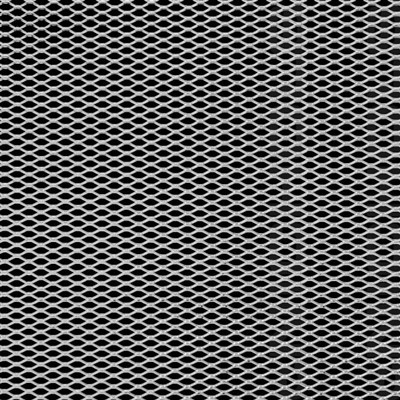
Slotted perforated metal’s core design gives it a head start over solid plates or other perforated types, and here’s where a lot of customers miss the mark. Unlike round holes, slots (usually rectangular, with a length 2–10 times their width) offer two key advantages for marine work: they drain and ventilate far better, and they have less surface area exposed to salt spray. When you have a slotted plate used for deck grating, for example, water runs through quickly instead of pooling on a round-hole surface. Standing water is a corrosion catalyst—it traps salt against the metal, speeding up pitting and crevice corrosion. I once supplied slotted grating to a coastal city’s park department for a new boardwalk; before that, they’d used round-hole grating that pooled rainwater and salt spray, requiring replacement every 3 years. The slotted version installed 8 years ago is still intact, needing only minor touch-ups to its finish. Slots also have smoother edges than punched round holes (when manufactured with our precision CNC slitting process), which means fewer sharp burrs that can catch debris or provide tiny pockets for salt to accumulate. That small design difference adds up to years of extra life.
But here’s the catch: slotted perforated metal’s performance in marine environments isn’t just about shape—it’s about the base material and the surface finish. I’ve seen too many projects where a customer buys low-carbon steel slotted metal, slaps on a cheap paint, and wonders why it rusts within a year. For marine use, base metal selection is non-negotiable. The top three options we recommend, based on the application, are galvanized steel, aluminum, and stainless steel. Let’s break each down, because one size never fits all.
Galvanized steel is a go-to for low-to-moderate salt exposure, like marina fences, dock bollard mounts, or walkways in areas that get occasional salt spray. Galvanization applies a zinc coating that acts as a sacrificial barrier: if a scratch exposes the steel underneath, the zinc corrodes first, protecting the base metal. We use hot-dip galvanizing (HDG) for all our marine-grade galvanized slotted perforated parts, not the cheaper electro-galvanizing. HDG creates a thicker, more durable coating that can handle the constant abrasion from foot traffic or marine debris. I had a small boat repair shop come to us 5 years ago with a project for slip railings—they’d tried electro-galvanized slotted metal that corroded through in 18 months after a storm. Since switching to our HDG slotted railings, they haven’t had a single return. That said, galvanized steel isn’t for heavy submersion; chloride levels in full saltwater will eat through the zinc over time, so that’s where aluminum comes in.
Aluminum is lightweight, rust-free, and ideal for applications where weight matters—like boat trim, ventilation grilles belowdecks, or offshore equipment housings. Its natural oxide layer (aluminum oxide) is even more corrosion-resistant than steel’s, and it doesn’t flake like rust, so any scratches heal on their own. But aluminum has a downside: it’s softer than steel, so it bends more easily under heavy loads. We recommend marine-grade 5052 aluminum for slotted perforated parts that need strength plus corrosion resistance; it’s the industry standard for marine work because it has extra magnesium to boost durability. A fishing boat manufacturer we work with uses our 5052 aluminum slotted vents for their cockpits—they used to use fiberglass vents that cracked in salt spray, and the aluminum ones have outlasted three generations of boat models. Just remember: aluminum can react with other metals (like steel or copper) in saltwater, causing galvanic corrosion, so we always add a plastic or rubber spacer between aluminum and steel components if they’re paired.
For the harshest marine environments—deep offshore rigs, desalination plant intake screens, or ship hull components—stainless steel is non-negotiable. Not all stainless is equal, though. We only use 316L stainless steel for marine applications, not 304. Why? 316L contains molybdenum, an element that resists pitting corrosion caused by chloride ions far better than 304. 304 is great for indoor kitchen equipment or mild climates, but it will pit and corrode within a few years in saltwater. I once had an offshore engineering firm come to us with a problem: they’d installed 304 stainless slotted screen for their water intake, and it was already showing small holes after 2 years in the Gulf of Mexico. We swapped it for 316L, and 7 years later, that screen is still operating without issues. The “L” in 316L also means low carbon, so it’s less likely to sensitize (form brittle chromium carbides) during welding, which keeps the metal strong and corrosion-resistant around joints.
Even the best base metal won’t last without proper surface treatment, and that’s where we see a lot of mistakes from suppliers who cut corners. For slotted perforated metal used in heavy marine settings, powder coating isn’t always enough—unless it’s a marine-grade powder coating, with UV resistance and high adhesion. We offer a ceramic coating option for extreme submersion applications, which is thinner than paint but far more durable, resisting both corrosion and abrasion from moving sand or debris in coastal waters. For parts that need to be unpainted (like structural grating), we test all our marine-grade slotted metal for salt spray resistance per ASTM B117, the standard test for corrosion in artificial salt fog. That test exposes a sample to 5% salt spray for a set number of hours, and we require our products to pass at least 1,000 hours without significant rust before leaving our shop. A lot of cheaper suppliers don’t do this testing, so their products fail when real salt spray hits.
Another common question I get: is slotted perforated metal as easy to maintain as solid materials for marine use? The short answer is yes, because its design cuts down on the buildup that causes corrosion. Solid steel plates hold salt residue, algae, and marine growth in every scratch and crevice, so you have to scrub them constantly. Slotted perforated metal’s open design lets hoses blast away salt, algae, and debris in minutes—no need for hours of scraping. For deck grating, that means less time your crew spends on maintenance and more time on other work. I’ve had a tugboat captain tell me that after switching to our slotted perforated deck plates, his crew’s maintenance time on deck dropped by 70% because they no longer had to chip away at caked-on salt and rust. That’s a huge cost saver for any marine operation.
But no material is indestructible, so there are a few best practices to get the most out of slotted perforated metal in marine environments. First, avoid overloading slotted parts: they’re strong, but slots create gaps that can lead to bending if you exceed their load capacity. We always provide engineering data for each grade so customers know exactly what weight their slotted parts can handle. Second, keep slotted sizes appropriate for the application: for deck grating, slots should be wide enough to drain water but narrow enough to prevent slipping or small objects from falling through. Too wide, and you create a tripping hazard; too narrow, and water pools. Third, if you’re welding slotted parts (to attach them to a structure), use the same base metal filler rod to avoid galvanic corrosion. I once had a customer who welded 316L slotted grating to a steel beam with a mild steel rod, and the steel beam corroded within a year—all because of that small welding choice.
At the end of the day, slotted perforated metal is suitable for marine environments, but only when it’s made with the right material, design, and finish. It’s not a one-size-fits-all product—you can’t use the same slotted metal for a marina railing and an offshore intake screen. That’s why I spend so much time working with customers to assess their specific environment: how much salt spray they’re exposed to, whether parts are submerged, what loads they need to carry, and how much maintenance they can handle. Over the years, we’ve supplied slotted perforated metal to marinas, fishing fleets, offshore energy companies, and coastal cities, and almost every one comes back when they need a replacement or a new project.

If you’re working on a marine project—whether it’s a new boardwalk, a boat’s ventilation system, an offshore screen, or any other component that needs to stand up to salt—reach out to our team to discuss your needs. We can provide custom slotted perforated metal sized and finished for your specific environment, with testing to ensure it meets marine corrosion standards. There’s no reason to waste time and money on materials that will fail after a few years; slotted perforated metal, when specified correctly, is a long-lasting, low-maintenance solution for the toughest marine conditions.
Square Hole Perforated Metal References:
ASTM International. Standard Practice for Operating Salt Spray (Fog) Apparatus (ASTM B117).
International Organization for Standardization. Corrosion of Metals and Alloys: Marine Corrosion Testing (ISO 9227).
National Association of Corrosion Engineers. Materials Selection for Marine Environments.
American Society of Mechanical Engineers. Performance Requirements for Perforated Metal Grating for Marine Applications.
Metal Powder Industries Federation. Design Guidelines for Slotted Perforated Metals for Structural Use.
Anping Yilida Metal Wire Mesh Co., Ltd.
Anping Yilida Metal Wire Mesh Co., Ltd. is one of the most reliable slotted perforated metal manufacturers and suppliers in China, also supports customized service. Please feel free to buy bulk high quality slotted perforated metal made in China here from our factory.
Address: Wire Mesh Development Zone, Anping, Hebei Province, China
E-mail: sales@wiremesh-yg.cn
WebSite: https://www.yilidametal.com/
