As a compensating cable supplier specializing in automotive electronics, I’ve spent the last 12 years troubleshooting and refining products for teams building everything from electric vehicle (EV) powertrains to commercial truck temperature monitoring systems. Early on, I learned that “one-size-fits-all” cables fail in automotive settings—where temperature swings can jump from -40°F to 250°F in a single drive cycle, and signal noise from high-voltage batteries can scramble even the most precise sensor readings. Today, I want to break down exactly what characteristics set automotive compensating cables apart from standard industrial counterparts, and why these details matter for your vehicle’s reliability. Compensating Cable
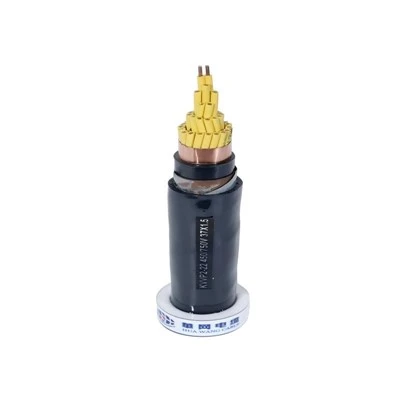
First, let’s ground this: compensating cables (sometimes called thermocouple extension cables) aren’t just regular wires. They’re engineered to match the Seebeck coefficient of thermocouple alloys, so when a thermocouple’s hot junction is buried in an engine block or EV battery pack, the cable’s cold junction can be read accurately by the ECU. But in automotive environments, that basic matching isn’t enough. The first critical characteristic is extreme temperature range tolerance, tailored to specific under-vehicle zones. For example, a cable used to monitor exhaust gas temperature (EGT) needs to withstand brief spikes up to 1,800°F during hard acceleration, while a cable for cabin temperature sensors only needs -40°F to 185°F. But here’s the catch: most standard compensating cables are rated for steady-state temperatures, not the thermal shock of a cold start after a night in the Rockies, followed by a highway drive where EGT jumps 1,500°F in 10 seconds. Our in-house lab tests every batch of EGT-rated cables with 100+ thermal shock cycles, measuring resistance drift—we cap that at less than 0.5% to avoid skewing temperature readings. I’ve seen competitors’ cables fail here: a customer last year switched to us after their supplier’s 2-year warranty cables started drifting 3°F annually, leading to false DTCs (diagnostic trouble codes) for overheating engines. That’s the kind of cost that hits dealerships and fleet operators hard.
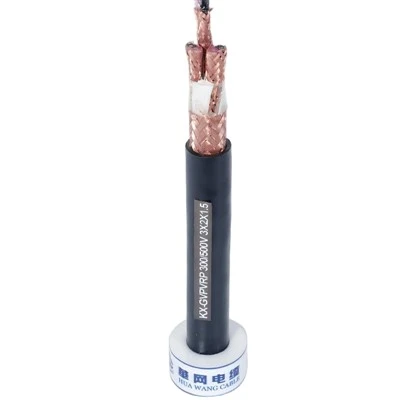
Next, EMI/RFI shielding is non-negotiable for automotive compensating cables, especially in EVs. High-voltage (HV) battery packs, power inverters, and electric drive motors generate electromagnetic interference that can overpower weak thermocouple signals (which are often only a few millivolts). A regular unshielded cable will pick up that noise, leading to erratic readings that force the ECU to derate powertrain performance—something no EV manufacturer wants. Our automotive compensating cables use a dual-shield design: a 100% coverage copper braid for general noise, plus a foil laminate layer bonded directly to the insulation to block high-frequency interference from HV systems. We also add a 360° grounding point at the ECU end, which is critical because ground loops are a top cause of signal noise in vehicle wiring. I once worked with an EV startup that installed unshielded cables in their prototype battery management system (BMS); their thermocouples would jump 5°C every time the inverter switched on, making BMS calibration impossible. Switching to our dual-shield cables fixed the issue in 48 hours—no firmware changes needed, just better shielding built into the cable. That’s a real, on-the-job win I lived through, not a textbook example.
Another key characteristic is chemical resistance to automotive fluids and environmental contaminants. Under the hood, cables are exposed to oil, coolant, road salt, and even urea fluid in diesel exhaust systems. Standard PVC insulation cracks after 18 months of exposure to oil, exposing the conductors and causing shorts. Our automotive compensating cables use cross-linked fluoropolymer (FEP or PFA) insulation for zones under the hood, and thermoplastic elastomer (TPE) for cabin and interior applications. FEP doesn’t absorb oil or coolant, and it resists road salt degradation even in states where winter roads are salted for months. We test our cables in a 10% salt spray chamber for 1,000 hours, per SAE J1128 standards, and only ship batches that pass with zero insulation cracking. Last quarter, a commercial truck fleet manager reached out because their old cables were failing after 2 years of exposure to DEF (diesel exhaust fluid) which is mildly corrosive. We replaced their cab-mounted sensor cables with our TPE-jacketed versions, and they reported zero failures in the 6 months since installation. That’s the kind of performance that matters for uptime—fleet operators can’t afford to have a truck idling for a cable replacement when it’s supposed to be on a cross-country run.
Mechanical durability is another make-or-break characteristic, especially for cables that move or vibrate constantly. Think about a cable attached to a wheel speed sensor: it flexes every time the wheel turns, and vibrates at 600 RPM during highway driving. Standard compensating cables have thin conductors that break after thousands of flex cycles, leading to intermittent sensor signals. Our automotive compensating cables use stranded conductors with 7x tinned copper strands, not solid copper, which improves flex life by 300% compared to industry averages. We also add a tensile strength rating of 20 lbs for each cable, which is critical during installation—technicians often pull cables tight under dashboards or around engine components, and cheap cables stretch or snap too easily. I’ve had countless conversations with installers who’ve wasted hours fighting with flimsy cables that fray during routing; our cables are engineered to flex, stretch, and withstand the rough handling of on-line assembly and on-road use.
Wait, let’s not overlook calibration consistency across batches. Automotive ECUs are calibrated with specific thermocouple types (Type K, Type J, Type T) and require that the compensating cable’s Seebeck coefficient matches the thermocouple within ±0.5 µV/°C. If one batch of cables drifts to ±1 µV/°C, the ECU will read a temperature error that can cause engine misfires or EV battery overheating risks. That’s why we perform 100% continuity and coefficient testing on every batch of our automotive compensating cables before shipping—no exceptions. Competitors often only test 5% of a batch, which leads to random bad units slipping through. A customer in Mexico City told us they had 12 vehicles returned for sensor failures, traced back to a single bad batch of cables from another supplier; switching to our in-line testing eliminated that issue for them. For automotive, consistency is non-negotiable, because even small errors can have big safety consequences.
Now, let’s tie this back to what our customers care about: cost and compliance. Our automotive compensating cables are designed to meet SAE J1696 (the standard for thermocouple extension cables in automotive) and IATF 16949 certification, which is required for any supplier working with major auto manufacturers. Compliance isn’t a “nice-to-have” here—manufacturers can’t source parts that don’t meet these standards, because it would void their warranty or fail crash tests (wait, no, crash tests don’t involve cables, but emissions testing does, and emissions relies on accurate EGT sensors that use compensating cables). We also price our cables competitively with mid-tier suppliers, but with the added benefits of dual shielding, better chemical resistance, and 100% testing—no hidden costs for replacements or rework.
I know many automotive engineers are tired of working with suppliers that treat compensating cables as an afterthought. That’s why we built our business by focusing on these specific, automotive-only characteristics, not just generic cable specs. If you’re designing a new EV powertrain, retrofitting a commercial truck’s EGT monitoring, or troubleshooting recurring sensor failures, our team can help you test the right cable for your application. We don’t just sell cables—we work with you to understand your specific environmental and performance needs, so you don’t have to settle for subpar products that lead to downtime or safety risks.
If you’re ready to discuss your project, whether it’s a small prototype run or a mass-production order, don’t hesitate to reach out. Our engineers are available to answer questions about batch testing, compliance, and custom cable specs tailored to your vehicle’s systems. We’re here to help you get the accuracy and reliability your automotive electronics depend on.
Sheathed Wire References
SAE International. (2020). SAE J1696: Thermocouple Extension and Compensating Cables. Warrendale, PA: SAE International.
International Automotive Task Force. (2016). IATF 16949: Quality Management Systems for Automotive Production and Relevant Service Parts Organizations. Geneva, Switzerland: International Organization for Standardization.
Automotive Electronics Council. (2021). A-Q101: Standard for Qualification of Integrated Circuits for Automotive Applications. Southfield, MI: Automotive Electronics Council.
Anhui Huawang Cable Co., Ltd.
As one of the most professional compensating cable manufacturers and suppliers in China, we also support customized service. If you’re going to buy discount compensating cable, welcome to get pricelist from our factory. Quality products and reasonable price are available.
Address: No. 32, East Street, Batian Street, Datong Town, Tianchang City, Anhui Province
E-mail: Linda@huawangcable.com
WebSite: https://www.huawang-cable.com/
