Hey there! I’m a supplier of gate valves, and today I wanna talk about how to calculate the flow coefficient of a gate valve. It’s a crucial thing to know, especially if you’re in the business of using or selling these valves. Gate Valve
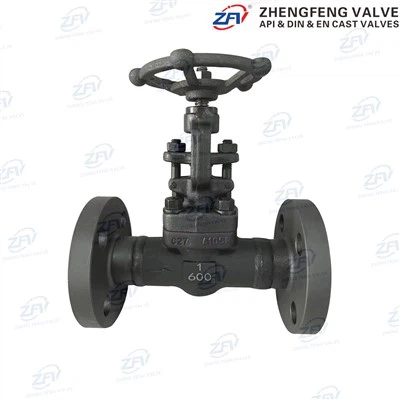
First off, let’s understand what the flow coefficient, often called Cv, actually means. The flow coefficient is a measure of a valve’s ability to pass fluid. It tells you how much fluid can flow through the valve under a certain set of conditions. A higher Cv value means the valve can pass more fluid.
To calculate the flow coefficient of a gate valve, we’ve got a few different methods, and I’ll go through the most common ones.
Method 1: Using the Manufacturer’s Data
Most of the time, gate valve manufacturers provide Cv data in their product catalogs. This is super handy because you don’t have to do any complex calculations. All you gotta do is look up the valve’s size, type, and other relevant details in the catalog, and you’ll find the corresponding Cv value.
For example, if you’re using a 2 – inch gate valve, you can find the Cv value for that specific size and model in the manufacturer’s documentation. This data is usually based on tests conducted under standard conditions, like a specific fluid (usually water) at a certain temperature and pressure.
But here’s the thing, if you’re using the valve in a different situation than the standard conditions, you might need to make some adjustments. For instance, if you’re using a different fluid with a different density or viscosity, the Cv value might change.
Method 2: Empirical Formulas
If you don’t have access to the manufacturer’s data or if you need to calculate the Cv value for a custom – made gate valve, you can use empirical formulas. One of the most commonly used formulas is based on the valve’s physical characteristics.
The basic formula for calculating the flow coefficient of a gate valve is:
[C_{v}=\frac{Q}{\sqrt{\Delta P}}]
where (C_{v}) is the flow coefficient, (Q) is the flow rate (in gallons per minute, GPM), and (\Delta P) is the pressure drop across the valve (in pounds per square inch, psi).
Let’s break this down a bit. The flow rate (Q) is how much fluid is passing through the valve in a given time. You can measure this using flow meters or estimate it based on the system requirements. The pressure drop (\Delta P) is the difference in pressure between the inlet and the outlet of the valve. You can measure this using pressure gauges.
For example, if you’ve got a flow rate of 100 GPM and a pressure drop of 10 psi across the gate valve, you can calculate the Cv value like this:
[C_{v}=\frac{100}{\sqrt{10}}\approx 31.62]
However, this is a simplified formula. In reality, the flow through a gate valve is affected by many factors, such as the valve’s design, the roughness of the internal surface, and the type of fluid. So, there are more complex formulas that take these factors into account.
Method 3: Computational Fluid Dynamics (CFD)
If you want a really accurate calculation of the flow coefficient, you can use Computational Fluid Dynamics. CFD is a powerful tool that uses computer simulations to model the flow of fluid through the valve.
With CFD, you can create a detailed 3D model of the gate valve and simulate the flow of fluid under different conditions. This allows you to take into account all the factors that affect the flow, such as the valve’s shape, the fluid’s properties, and the operating conditions.
But CFD is not without its challenges. It requires specialized software and expertise to set up and run the simulations. And it can be time – consuming and expensive. So, it’s usually used for high – precision applications or when designing new valve models.
Factors Affecting the Flow Coefficient
There are several factors that can affect the flow coefficient of a gate valve. Let’s take a look at some of them:
- Valve Size: Generally, larger gate valves have higher Cv values because they can pass more fluid. For example, a 4 – inch gate valve will have a higher Cv than a 2 – inch gate valve.
- Valve Design: The design of the gate valve, such as the shape of the gate and the internal passage, can have a big impact on the flow coefficient. A well – designed valve with a smooth internal surface will have a higher Cv than a valve with a rough or irregular surface.
- Fluid Properties: The properties of the fluid, such as density and viscosity, can affect the flow coefficient. For example, a more viscous fluid will flow more slowly through the valve, resulting in a lower Cv value.
- Operating Conditions: The pressure and temperature of the fluid can also affect the flow coefficient. Higher pressures and temperatures can change the fluid’s properties and the way it flows through the valve.
Why Knowing the Flow Coefficient is Important
Knowing the flow coefficient of a gate valve is crucial for several reasons.
- System Design: When designing a fluid system, you need to make sure that the valve can handle the required flow rate. By knowing the Cv value, you can select the right size and type of valve for the system.
- Performance Evaluation: The flow coefficient can be used to evaluate the performance of a gate valve. If the measured Cv value is significantly different from the expected value, it could indicate a problem with the valve, such as blockage or damage.
- Energy Efficiency: A valve with a higher Cv value can pass more fluid with less pressure drop. This means that the system will require less energy to operate, resulting in lower energy costs.
Conclusion
Calculating the flow coefficient of a gate valve is an important part of valve selection and system design. Whether you use the manufacturer’s data, empirical formulas, or CFD, it’s essential to understand the factors that affect the flow coefficient and how to use this information to make informed decisions.
Butterfly Valve If you’re in the market for gate valves or if you have any questions about calculating the flow coefficient, don’t hesitate to reach out. We’re here to help you find the right valve for your needs and provide you with all the technical support you need. Let’s have a chat and see how we can work together to get the best results for your fluid systems.
References
- Crane Technical Paper 410, "Flow of Fluids Through Valves, Fittings, and Pipe"
- ASME MFC – 1M – 2012, "Measurement of Fluid Flow in Closed Conduits Using Transit – Time Ultrasonic Flowmeters"
- Perry’s Chemical Engineers’ Handbook, 8th Edition
Zhejiang Zhengfeng Valve Co., Ltd.
We’re well-known as one of the leading gate valve manufacturers and suppliers in China. With abundant experience, we warmly welcome you to buy bulk advanced gate valve from our factory. If you have any enquiry about cooperation, please feel free to email us.
Address: Hengtong Road, Wuxing Industrial Park, Wenzhou, Zhejiang, China. 325105
E-mail: sales@zfvalve.com
WebSite: https://www.zfvcns.com/
